







Introduction
AI audience segmentation outreach gives marketers and sales leaders a practical way to automate how audiences are divided and targeted for outreach campaigns. By applying machine learning to behavioral, demographic, and intent-based data, AI-driven segmentation reveals patterns and groupings that may not be visible through manual analysis. This approach enables teams to move beyond rigid rules, ensuring every segment reflects current customer behavior and market shifts. Compared to traditional methods, AI-powered audience targeting adapts as new data arrives, providing marketers with up-to-date segments for more relevant outreach.
The result is a scalable workflow that supports lead qualification automation, streamlined messaging, and improved conversion opportunities. Automated audience targeting helps you deliver the right message to the right group, at the right time—without the ongoing burden of manual list updates. This guide delivers a clear, step-by-step blueprint for implementing AI segmentation as the foundation for modern outreach automation. You will learn where to make critical decisions, how to safeguard against bias or data quality pitfalls, and what to look for when selecting and evaluating your segmentation tools. The outcome: a workflow that is more precise, efficient, and resilient to change.
AI segmentation solutions operate by ingesting large datasets from diverse sources—such as CRM records, web analytics, purchase histories, and engagement metrics. Advanced algorithms process this data to identify correlations and segment boundaries, shifting away from static demographic categories to dynamic, behaviorally informed clusters. This enables real-time adjustments as user behaviors or market conditions evolve. Decision-makers can configure input data channels, define custom segment parameters, and set criteria for segment refresh intervals. Internally, segmentation models are maintained and monitored for performance, requiring periodic review to validate group accuracy. The combination of automation with transparent controls allows marketers to scale outreach while maintaining oversight, making AI segmentation a foundation for outreach strategies that align with changing business goals and regulatory demands.
Visual summary: How AI segmentation automates outreach
AI segmentation transforms how marketers target audiences by dynamically organizing leads into actionable groups based on real behavioral and contextual data. Unlike static segmentation that relies on fixed rules, machine learning models evaluate inputs from CRM systems, web analytics, and purchase histories to identify evolving patterns within the audience. This enables outreach teams to align messaging with current customer intent and value, rather than historical assumptions. KI-gestützte Kundensegmentierungsstrategien | Mailchimp documents the relevant background and implementation boundaries.
The segmentation workflow is fundamentally data-driven: incoming data streams are continuously ingested and analyzed by the AI system. The model assigns contacts to segments—such as high-intent, dormant, or high-value—using attributes like engagement frequency, recency of interactions, and transaction records. These segments are then activated by automated outreach tools, which launch personalized campaigns or sales workflows tailored to each group.
Key to this approach is the reduction of manual rule-building. Rather than having marketing teams define every segment boundary, the AI adapts as new data arrives, refreshing group membership in near real time. This minimizes operational lag and ensures that campaigns respond to changes in customer behavior or lifecycle stage without constant human intervention.
By automating both segmentation and activation, marketers gain the precision to prioritize high-value leads and the scale to reach large audiences efficiently. The workflow also supports rapid iteration; as segments shift or campaign results are measured, the AI model can recalibrate its grouping logic for ongoing relevance and compliance. This cyclical process underpins outreach automation strategies that demand both accuracy and speed.
Visual Workflow Example
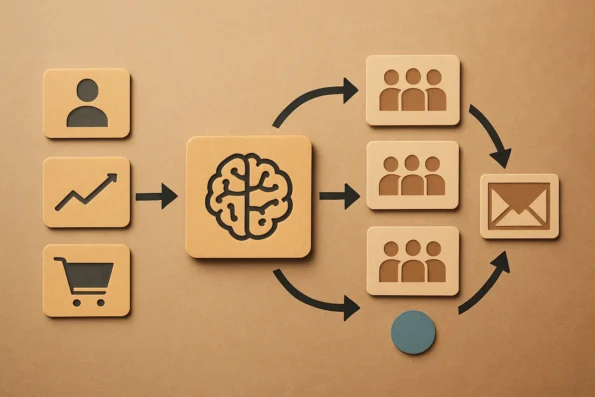
- Data sources (CRM, analytics, purchase records) continuously feed the segmentation engine.
- Machine learning analyzes patterns and dynamically updates segment assignments.
- Automated outreach tools trigger campaigns aligned to each segment’s behavior and value profile.
- Segment definitions and campaign performance inform ongoing AI model refinement.
How the Segmentation Engine Operates
Within the AI segmentation engine, incoming records are parsed and merged in a unified data layer. Each contact’s behavioral footprint—such as website visits, email opens, and purchase history—is normalized to create a multi-dimensional profile. The machine learning model evaluates these profiles using clustering or classification algorithms, grouping similar contacts based on detected trends and predictive signals. As new behaviors are detected (e.g., a spike in engagement or a recent transaction), the engine recalculates segment membership, ensuring that outreach reflects the most recent customer context.
To ensure relevance and compliance, the system may incorporate exclusion logic for contacts lacking critical data or falling into restricted categories. Segment definitions can be fine-tuned through adjustable thresholds for engagement or value, giving marketers granular control even as the core grouping adapts automatically. The engine records changes to segment definitions and membership, supporting audit trails and performance analysis.
Key Distinctions in AI-Powered Outreach
- AI segmentation adapts groups in real time, minimizing manual intervention.
- Activation of these dynamic segments via automation boosts targeting precision and campaign responsiveness.
- Effectiveness depends on both the breadth and quality of integrated data sources.
- Segment refresh cycles and value thresholds can be configured to fit campaign goals and compliance requirements.
- Marketers retain visibility into how segments are formed and updated, enabling oversight and adjustment as outreach scales.
Visual summary
AI segmentation workflow at a glance: Data flows from diverse sources into the AI engine, which evaluates and updates audience segments in real time. Automated outreach tools pull from these segments to trigger personalized messaging, allowing for continuous adaptation to changing behaviors and preferences. Marketers monitor segment evolution and campaign performance, adjusting parameters as needed to maintain targeting accuracy and compliance.
Decision steps: Planning AI-driven audience targeting
Before automating outreach with AI-powered audience segmentation, it is essential to map out a structured, evidence-based decision process. Effective segmentation depends not only on machine learning models but also on careful alignment of business goals, data integrity, and workflow integration. Each step below outlines a critical choice point for teams planning to leverage AI audience segmentation outreach for sustained results. Learn more about AI lead qualification automation to inform your segmentation planning decisions. 2016 Report | One Hundred Year Study on documents the relevant background and implementation boundaries.
- Clarify your outreach objectives. Define whether the primary aim is lead generation, nurturing, conversion, retention, or upsell. Outreach strategies—and the AI segmentation logic behind them—should be tailored to these distinct goals. For example, segmentation for retention may prioritize behavioral data and lifetime value signals, whereas lead generation often focuses on demographic or intent-based triggers. Clearly documented objectives also inform downstream measurement frameworks and help prevent misalignment between marketing and sales teams.
- Audit and select your data sources. Identify and validate all relevant data inputs, including first-party (CRM, website analytics), third-party, behavioral, and demographic fields. The completeness, freshness, and relevance of this data will directly shape AI segmentation accuracy. Insufficient or outdated data can undermine both the creation and the ongoing refresh of audience segments. It is important to determine data access protocols, field mapping, and update schedules for each source to maintain a consistent and trusted data pipeline.
- Choose segmentation logic and governance. Decide between rule-based, behavior-based, or predictive machine learning models for segment creation. Rule-based segmentation relies on explicit business criteria, while machine learning models can detect hidden patterns in large, multi-source datasets. Evaluate the need for human review and establish governance to oversee model outputs, particularly if outreach impacts compliance or equity-sensitive domains. Organizations should define thresholds for segment inclusion, criteria for periodic model retraining, and escalation procedures for disputed or anomalous segment assignments.
- Select and align outreach channels. Match segment activation to the most suitable outreach channels, such as email, paid ads, or conversational chatbots. Channel choice should reflect both segment preferences and operational capabilities. For example, segments flagged for high conversion probability might warrant automated, personalized email sequences, while colder leads could be routed to retargeting ads. This step also involves configuring channel-specific messaging rules and ensuring technical compatibility with each platform’s API or delivery requirements.
- Integrate with CRM and automation platforms. Plan for technical integration between your AI segmentation engine and existing CRM or marketing automation platforms. Seamless integration is required to enable real-time segment refresh, accurate lead qualification, and actionable targeting. This step ensures that AI-driven insights translate into operational outreach workflows without manual bottlenecks. Consider integration mapping, data sync frequency, and security permissions to ensure consistent and compliant data flow. For further workflow detail on automatic lead qualification, see the internal article on AI strategies that fix costly mistakes.
With these steps, organizations can establish a robust foundation for automated audience targeting, minimizing the risk of inefficiency or compliance gaps. The next section addresses expert caution: data quality, bias, and regulatory risks that must be actively managed throughout this process.

Expert caution: Data quality, bias, and compliance risks
AI audience segmentation outreach depends on the integrity, completeness, and freshness of underlying data. When datasets are incomplete or outdated, segmentation algorithms may misclassify leads, causing outreach efforts to target the wrong recipients or miss promising segments altogether. This risk is especially acute in fast-changing markets or when data flows from multiple channels are not regularly synchronized with your segmentation platform. Data input pipelines should be monitored not only for technical uptime, but also for consistent field definitions, data type conformity, and recency, as stale or mismatched attributes can introduce subtle errors into segment logic and downstream targeting. Periodic data quality assessments and cross-system reconciliations help ensure that updates from CRM, analytics, and transaction sources are accurately reflected in segment assignments. Digital Marketing: Customer Engagement Strategy | Coursera documents the relevant background and implementation boundaries.
Algorithmic bias presents another significant challenge. AI models learn patterns from historical data, which may reflect unintentional biases based on previous targeting or legacy business practices. If unchecked, these models can perpetuate or even amplify biases, leading to unfair exclusion of certain groups or over-representation of others. For example, if past campaigns favored specific demographics, the model could continue to skew outreach, undermining both campaign fairness and regulatory expectations on equity. It is essential to analyze the underlying training data for representativeness and to periodically measure model outputs for disparate impact, using statistical parity or equal opportunity metrics where appropriate. Model retraining schedules, feature selection protocols, and bias detection processes should be documented and reviewed by qualified personnel, with interventions applied when evidence of skew emerges.
Human oversight remains essential in reviewing AI-driven segment assignments, particularly when automated decisions influence eligibility for offers, messaging, or sales follow-up. Without expert review, errors in model logic or data mapping can yield unintended consequences—such as sending irrelevant communications to sensitive groups or systematically excluding qualified leads. Regular audits and transparent documentation of segmentation logic are prudent safeguards for any outreach automation workflow. Governance frameworks should establish escalation procedures for flagged assignments, define the scope of automated versus manual decision-making, and specify criteria for model override or rollback when errors are discovered. Logging and versioning of segmentation rules enable traceability and facilitate root cause analysis in the event of outreach anomalies.
Privacy and regulatory compliance add a further layer of responsibility. When segmentation involves personal data, organizations are subject to data protection laws such as the General Data Protection Regulation (GDPR) in the European Union. Compliance requires more than technical controls; it demands explicit consent management, data minimization, purpose limitation, and clear documentation of outreach logic and data flows. Both controllers and processors must ensure that AI segmentation systems do not process or share personal data beyond agreed purposes and that individuals’ rights—such as access, correction, or erasure—remain protected throughout the automation pipeline. Jurisdictions may impose additional restrictions on automated decision-making or require algorithmic transparency, making it crucial to involve legal and privacy specialists in the design and ongoing review of segmentation workflows. For detailed jurisdiction-specific requirements, see this GDPR compliance guide.
Finally, privacy controls and process documentation are not optional add-ons. Effective mitigation strategies include regularly reviewing data sources for relevance and accuracy, monitoring segment outputs for bias and fairness, and updating privacy notices to reflect automated processing of audience data. Building these safeguards into your segmentation and outreach workflow supports operational trust and provides a defensible position in the event of audits or regulatory scrutiny. Automated monitoring should be complemented by clearly assigned accountability for risk review, and by periodic training for staff responsible for managing data and AI models. Maintaining a current log of data processing activities, segmentation criteria, and decision rationales not only helps achieve compliance, but also supports continuous improvement of outreach effectiveness and ethical standards.
Illustrative scenario: Automated segmentation in action
Illustrative scenario: Consider a mid-sized SaaS provider aiming to enhance its outreach precision without expanding manual workload. The marketing team implements an AI-powered audience segmentation workflow to systematically identify and prioritize new leads for outreach automation. AI-driven customer service automation workflows demonstrate how segmentation translates to real-world user journeys. To deepen your understanding of scalable messaging logic and dynamic segment handling, see how automated personalization in AI outreach campaigns adapts templates based on real-time segment data. How artificial intelligence is transforming the world | documents the relevant background and implementation boundaries.
Each day, inbound leads from web forms and product trials enter the company’s CRM. The AI segmentation engine—configured to prioritize behavioral and engagement data—draws from multiple sources: CRM fields, website navigation patterns, and responses from recent email campaigns. Unlike static rule-based segmentation, the system uses machine learning models to analyze patterns in how leads interact with webinars, pricing pages, and support content, updating each lead’s segment classification dynamically.
How machine learning drives daily segment updates
Every 24 hours, the segmentation model runs a full refresh. It processes the latest CRM entries, matches web activity logs, and incorporates real-time feedback on email engagement—such as opens, clicks, and replies. This process enables the model to detect shifts in lead interest and intent, reflecting new behaviors that would be difficult to track manually. Evidence from industry platforms indicates that such dynamic, AI-driven segmentation can uncover emerging patterns and adapt faster than traditional, manually configured rules.
The segmentation logic is based on both static attributes (such as company size or industry from the CRM) and dynamic behaviors (such as frequency and recency of site visits, webinar attendance, or content downloads). The model may assign weighted scores to these signals, recalculating each lead’s likelihood to convert in near real-time. When leads demonstrate a sudden increase in engagement—such as multiple product page views or a recent webinar interaction—the model raises their segment priority, moving them into outreach-ready categories. The system also supports configurable thresholds, allowing the marketing team to adjust sensitivity to specific behaviors according to campaign goals or seasonal trends.
Triggering automated, tailored outreach
Once the machine learning model completes its daily update, high-potential leads—those demonstrating sustained engagement and strong behavioral indicators—are automatically routed into tailored email sequences. For leads with especially high predicted conversion value, the system simultaneously schedules chatbot follow-ups to provide instant responses to questions or offers. This multichannel activation ensures that the most promising segments receive timely, relevant outreach without delay or manual intervention.

Behind the scenes, the outreach automation platform integrates with the segmentation engine via API, pulling in refreshed segment data and triggering pre-built communication workflows. Each workflow is mapped to a specific segment, with messaging tailored to the observed interests and behaviors of its members. For example, leads identified as interested in advanced features may receive detailed product walkthroughs, while those new to the platform are sent introductory guides. This level of specificity is only practical with automated, data-driven workflows.
Human oversight for quality and compliance
Before each campaign is launched, the marketing team reviews the AI-assigned segments within the outreach platform. This review includes spot-checking segment logic, inspecting recent segment changes, and verifying that the content and timing of outreach sequences align with brand standards and compliance requirements. This blend of algorithmic segmentation and human oversight addresses the need for accuracy and ethical targeting, a practice highlighted in industry guidance on AI-powered audience targeting.
The interplay of automation and expert control
This scenario demonstrates the practical interplay between automated AI segmentation and expert review. Machine learning models provide the scale and adaptability needed for modern outreach, updating segments and triggering campaigns in response to real user behaviors. At the same time, human stakeholders remain responsible for reviewing outputs, refining segmentation criteria, and ensuring compliance, balancing the strengths of automation with the need for accountable decision-making.
Implementation notes: Integrating AI segmentation tools
Integrating AI-powered audience segmentation with your outreach automation stack requires careful evaluation of both technical and operational fit. Begin by verifying that the segmentation platform you select offers seamless compatibility with your existing CRM and primary outreach channels. Many advanced solutions offer API-level integration, allowing for direct data exchange and activation of segments across tools. Without this interoperability, segmentation insights may remain siloed and limit automation impact. For guidance on connecting dynamic segments to actionable sales processes, review key considerations in AI outreach CRM integration for maintaining data accuracy and effective lead tracking.
For organizations operating in multilingual or multichannel environments, it is essential to confirm that the chosen platform natively supports all required languages and communication formats. For example, the NextlerAI Assistant is designed for multilingual outreach and can route messages through multiple channels, including email and chat platforms (nextlerai.com). This capability is crucial for consistent engagement with diverse audience segments and helps maintain brand coherence across regions.
Real-time data synchronization is another core requirement for effective outreach targeting. Ensure that the integration between your segmentation engine and automation systems supports frequent or continuous syncing of audience data. This approach allows segments to reflect the most current behavioral and contextual information, which is a documented advantage of machine learning-based segmentation over traditional batch processes. Delays or gaps in data transfer can result in missed opportunities or outdated targeting logic.
Before deploying segmentation logic at scale, pilot the integration using a limited subset of your audience. This controlled approach helps validate technical workflows, uncovers edge cases, and minimizes the risk of propagating errors to large recipient groups. Early-stage pilots can reveal mapping inconsistencies or automation race conditions that are easier to address before full rollout. Documenting integration steps—including field mappings, API endpoints, and trigger conditions—further supports troubleshooting and future audits (nextlerai.com).
Practical integration mechanisms and ownership
When implementing AI segmentation tools, establish clear ownership of integration tasks across both technical and marketing teams. Assign responsibility for configuring API connections, defining data field mappings, and maintaining endpoint security. This cooperative approach reduces ambiguity and ensures that both data integrity and outreach requirements are met. Integration documentation should cover not only technical endpoints and data schemas but also the business logic behind segment definitions and trigger rules. This level of detail is essential for maintaining transparency, supporting compliance reviews, and enabling future platform upgrades or vendor changes.
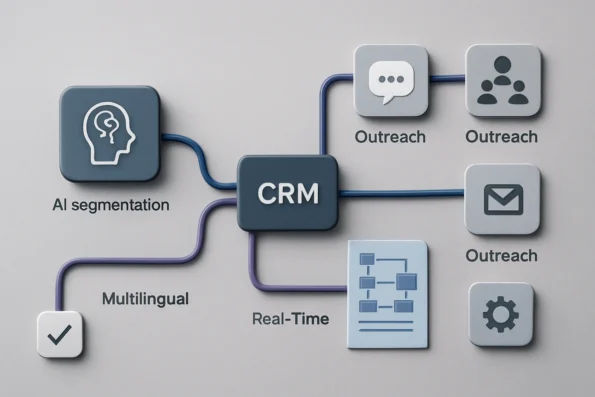
Synchronizing segmentation outputs with outreach platforms often requires custom middleware or dedicated connectors. Evaluate whether your chosen segmentation provider offers prebuilt integrations or if you will need to develop and maintain custom connectors. When custom development is required, versioning practices become even more critical. Use version control systems to track changes to connector logic, data mapping scripts, and automation triggers. Thoroughly test all updates in a non-production environment to prevent regressions or data loss in live campaigns.
It is important to map and document each data transformation that occurs between the segmentation system and outreach platform, including field normalization, value translation, and error handling protocols. Define how data discrepancies—such as mismatched user IDs or incomplete records—will be flagged and resolved. Establish automated validation routines to check for schema drift or unexpected payloads, and log all integration events for auditability. Assign designated team members to monitor these logs and respond to integration failures or anomalies in a timely manner. Additionally, formalize a process for updating connector configurations when either platform introduces schema or API changes, ensuring that service disruptions are minimized and rollback options are available if needed.
Finally, ongoing monitoring is necessary to ensure the integration remains robust as your outreach tactics evolve. Set up automated alerts for failed syncs, data mismatches, or unexpected drops in segment population. Regularly review audit logs and integration reports to detect subtle issues before they impact campaign performance or data quality. This proactive oversight closes the loop on integration best practices, enabling your organization to scale AI segmentation confidently and sustainably.
Criteria table: Selecting AI segmentation solutions
Choosing an AI audience segmentation tool for outreach automation requires a clear side-by-side evaluation of key technical and operational criteria. The following table distinguishes between traditional and AI-powered segmentation approaches, outlines must-have features, and highlights which requirements should be prioritized to ensure scalability, compliance, and actionable targeting. This comparison is grounded in published product documentation and authoritative industry sources; only capabilities explicitly supported in the evidence are included. Use this table as a decision aid to match your organizational needs with relevant tool attributes before procurement or integration. If your outreach targets specialized industries, examine design strategies in a custom AI outreach pipeline for niche WordPress markets, focusing on unique segmentation and plugin configuration challenges.
| Criterion | Traditional Segmentation | AI-Powered Segmentation | Source |
|---|---|---|---|
| Data Integration (CRM, Analytics) | Manual import/export; limited to pre-defined fields | Supports complex, multi-source data ingestion (first- and third-party) | liveramp.com |
| Segmentation Logic | Rule-based (static segments, manual criteria) | Machine learning models detect patterns and create dynamic segments | liveramp.com, mailchimp.com |
| Real-Time Updates | Batch processing; segments updated on schedule | Near real-time refresh as new data flows in | mailchimp.com |
| Privacy and Compliance Safeguards | Manual processes for data minimization and consent tracking | Embedded privacy controls require configuration; active monitoring needed for regulatory compliance (e.g., GDPR) | mailchimp.com, GDPR-Compliant AI Outreach |
| Reporting and Interpretability | Standard reports; segment criteria are transparent but inflexible | Advanced reporting; segment boundaries may be less transparent due to model complexity | cdp.com |
| Channel Compatibility | Typically supports email or one channel at a time | Designed for multi-channel activation (email, ads, chatbots, etc.) | liveramp.com |
| Scalability | Manual scaling limited by team capacity and rule complexity | Automatic scaling across large datasets and multiple segments | liveramp.com |
| Ease of Use | Relies on manual configuration; requires domain expertise | Requires training to interpret outputs; model tuning may require data science support | mailchimp.com |
| Support for Compliance Requirements | Relies on manual documentation and oversight | Must be reviewed for jurisdictional fit; privacy controls and audit trails must be configured | GDPR-Compliant AI Outreach |
This table highlights key mechanisms and decision points when evaluating audience segmentation solutions. Traditional segmentation is often managed via static rule sets, requiring extensive manual maintenance and field mapping, which can slow adaptation and introduce errors during data transformation. In contrast, AI-driven segmentation operates using algorithmic models that continuously ingest and analyze diverse data sources—such as CRM, web analytics, and behavioral datasets—enabling dynamic updates as new information is captured. AI segmentation workflows typically require the implementation of configurable data pipelines, field normalization routines, and monitoring dashboards to ensure consistent data quality and traceability. Privacy and compliance are addressed by embedding granular controls at multiple stages, including data ingestion, segment definition, and activation logic, with audit logs and access controls established to support both internal governance and regulatory review. Collaboration between marketing, data, and compliance teams is necessary to tailor model settings, interpret segment outputs, and adapt to evolving legal or operational requirements. Additionally, organizations should assess the extensibility of reporting features to accommodate custom metrics or regulatory disclosures, and verify that each candidate platform’s architecture supports integration with both current and anticipated outreach channels. As you proceed, use the criteria in this table to develop a requirements checklist and validate that candidate platforms are not only technically compatible but fit your operational, governance, and regulatory landscape. For deeper integration and workflow guidance, the next section explores implementation notes for successful deployment.
FAQ
How does AI audience segmentation automate outreach targeting?
AI segmentation applies machine learning to analyze audience data and identify clusters with shared behaviors, interests, or predicted value. This enables marketing automation systems to assign tailored outreach actions to each group without manual rule creation. Segments can be refreshed in near real time as new data is received, allowing for more relevant, precisely targeted communications than static lists.
What decisions are critical before automating segmentation?
Key decisions include defining your outreach objectives, selecting and validating the necessary data sources, specifying the segmentation logic or modeling approach, and determining how outreach channels will be mapped to segments. You must also establish data governance protocols and ensure technical compatibility with existing CRM or marketing automation platforms.
What risks or pitfalls should experts watch for?
Experts should monitor for incomplete or outdated data, which can mislead AI models and reduce targeting precision. Algorithmic bias is another risk, as models trained on skewed data may unfairly exclude or misclassify segments. It is essential to provide human oversight, implement regular data quality audits, and maintain clear documentation for compliance and accountability.
Can you illustrate a real-world outreach workflow using AI segmentation?
In a practical scenario, a B2B company uses AI to score and segment leads based on both engagement history and predicted conversion potential. The automation system initiates targeted email sequences and assigns high-value leads to personalized chatbot follow-ups. Marketing oversees segment quality and adjusts campaigns based on observed outcomes, ensuring both effectiveness and responsible use.
What criteria should guide tool and data selection for AI outreach segmentation?
Selection should focus on the platform’s integration compatibility with your CRM and outreach channels, support for real-time data sync, transparency in segmentation logic, and compliance features such as privacy controls and auditability. Additional criteria include scalability, multilingual support for global outreach, and the ability to adapt to evolving data governance requirements.
Conclusion
Implementing AI audience segmentation outreach is most effective when you treat it as a living workflow—one that evolves as new data, compliance requirements, and business objectives emerge. The precision and adaptability of machine learning segmentation depend on continual oversight and a willingness to interrogate both the underlying data and the automation outcomes. Rather than relying on static configurations, regularly revisit your segmentation logic and activation triggers to ensure outreach remains relevant and fair.
Behind this approach lies a need for structured governance and documented decision-making. Each adjustment to segmentation parameters should be tracked, with clear attribution for both human and algorithmic input. Establishing a feedback loop—where results of automated outreach are systematically compared to expected outcomes—enables early detection of drift or emerging bias. Additionally, role-based access and change controls help protect data integrity and ensure compliance with evolving privacy and regulatory requirements. The oversight process should include scheduled audits, validation checks on input data quality, and transparent escalation paths for detected anomalies. By embedding these mechanisms, organizations can confidently adapt their segmentation and outreach as business and legal contexts change, while maintaining full accountability across all stakeholder roles.
As a practical next step, assign a cross-functional team—combining marketing, data, and compliance expertise—to review the first campaign’s segment assignments and outreach results. Document discrepancies between AI-driven recommendations and human judgment, then feed these insights back into your segmentation criteria and automation rules. This approach not only improves technical reliability but also builds organizational confidence in responsible AI-powered outreach targeting.