






Introduction
AI lead qualification automation empowers sales and marketing teams to streamline how leads are scored and routed, directly addressing common inefficiencies in manual outreach processes. By systematically analyzing data such as industry, role, intent signals, and engagement behavior, AI-driven systems can qualify or disqualify leads far faster than human review—minimizing human error and reducing the risk of costly pipeline mistakes. Unlike traditional manual scoring, these solutions work around the clock, ensuring each new inquiry is assessed consistently against pre-defined business rules and data-driven models.
With this guide, you will clearly understand what AI lead qualification automation can and cannot accomplish. You will learn how leading platforms—like Salesforce Einstein, Zoho Zia, SAP Sales Cloud, and specialized WordPress tools including NextlerAI Assistant—apply configurable scoring logic to prioritize leads and accelerate movement through the sales funnel. Most importantly, this resource will help you avoid common pitfalls such as low-quality data, misaligned scoring criteria, and over-reliance on automation without appropriate oversight. Each section provides practical methods, tested configuration examples, and actionable steps grounded in up-to-date product documentation and peer-reviewed research.
Modern AI-powered qualification systems rely on aggregating and interpreting both structured and unstructured data, often drawing from CRM records, web forms, email interactions, and behavioral analytics. Decision-making is shaped by dynamic rule sets or scoring models that can factor in multiple dimensions—such as organization size, purchase readiness, and past engagement patterns. The degree of automation is determined by the specificity of business rules and the platform’s integration depth with your existing technology stack. While initial deployment requires careful calibration, most enterprise solutions also include audit trails and diagnostic reports, which support ongoing refinement and transparency for both compliance and operational improvement.
By following this framework, you will be equipped to implement, monitor, and refine AI-driven lead qualification within your outreach pipeline, ensuring both efficiency and accuracy from first contact through to conversion.
Implementation table: Configuring and comparing AI lead qualification workflows
Effective AI lead qualification automation rests on a clear understanding of how automation models process firmographic, demographic, and behavioral data to assess leads. Unlike manual scoring—where sales teams apply frameworks such as BANT or CHAMP by hand—AI-driven approaches use rule-based or model-assisted logic, configured within CRM or outreach platforms, to standardize decisions and minimize human bias. However, proper setup, monitoring, and adjustment remain essential at every stage, especially when integrating these systems into existing pipelines. For broader context on how automation shapes operational workflows, see AI workflow automation for teams. Just as AI multilingual content automation pitfalls highlight the risks of unchecked automation, lead qualification also demands careful human review to prevent costly errors or regulatory missteps.
| Approach | Core Mechanism | Data Inputs Used | Frameworks Supported | Configuration Steps | Human Oversight Needed | Source |
|---|---|---|---|---|---|---|
| Manual Scoring | Sales staff apply rules and score leads individually. | Firmographic, demographic, and limited behavioral data as collected by forms or conversations. | BANT, CHAMP, custom scorecards | Define criteria, train staff, update as business needs evolve. | Continuous—required for every lead; prone to inconsistency and subjective bias. | N/A |
| Automated Rule-Based AI | Rules engine applies logic to structured data; no learning. | Firmographic, demographic, explicit behavioral triggers | BANT, CHAMP, custom logic | Configure qualification rules, map fields, test workflows, revise logic as needed. | Required at setup and for periodic rule audits or business change. | RelevanceAI |
| Model-Assisted AI Scoring (e.g., Salesforce Einstein, Zoho Zia, SAP Sales Cloud) | Predictive models analyze multi-source data for lead fit and readiness. | Firmographic, demographic, behavioral interaction (e.g., email opens, site visits), CRM history | BANT, proprietary models, custom weighting | Define data sources, set scoring thresholds, monitor model outputs, retrain or adjust periodically. | Critical during initial model setup, data quality checks, and ongoing validation of results. | Salesforce Help, Zoho CRM AI Features Documentation, SAP Help Portal |
| AI-Powered Sales Agent Integration (e.g., NextlerAI Assistant for WordPress/WooCommerce) | AI agent captures, qualifies, and routes leads via chat or forms, integrating with knowledge base. | Structured qualification data, conversational inputs, pre-configured business rules | BANT-compliant forms and chat flows | Configure data capture, map qualification logic, connect routing rules, monitor for drift or misclassification. | Oversight required to review edge cases, retrain routing logic, and ensure compliance with business standards. | NextlerAI Assistant guides |
This table highlights the specific configuration and oversight requirements for each lead qualification approach. Manual scoring relies on the expertise and consistency of individuals, which can introduce variation and slow down response times. Automated rule-based AI systems require detailed mapping of business logic and validation of field mappings to ensure that only qualified leads proceed. When using model-assisted AI scoring, such as Salesforce Einstein or Zoho Zia, organizations must carefully select and preprocess data sources, calibrate scoring thresholds, and conduct regular audits to ensure the predictive model aligns with changing business needs and avoids bias. With AI-powered sales agent integrations—like those available for WordPress and WooCommerce—the focus shifts toward accurate data capture in conversational contexts, precise mapping of qualification flows, and proactive human review of outlier or ambiguous cases.
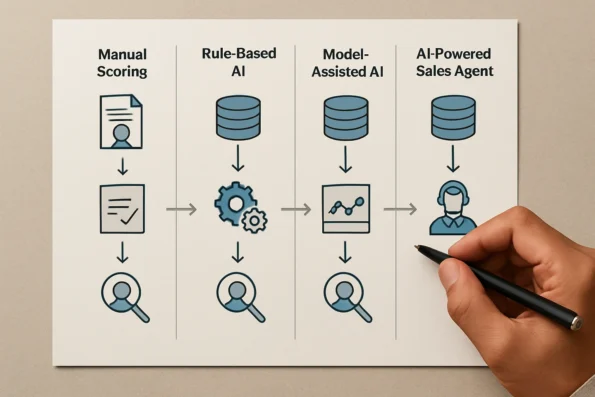
It is important to note that the shift from manual to automated qualification introduces new decisions and mechanisms. For instance, when configuring AI models, organizations must determine which data fields are most predictive of lead quality—often requiring cross-team collaboration to select firmographic and behavioral indicators that match their sales process. Implementers must also decide between strict rule-based logic, which offers transparency but less flexibility, and model-based scoring, which can surface complex patterns but requires careful validation and ongoing monitoring. Integration with CRM systems may also demand unique data normalization steps or field mapping to ensure accurate scoring. In all implementations, establishing a feedback loop—where human reviewers audit AI-driven decisions and adjust criteria over time—remains a critical safeguard against drift, bias, or misclassification. These details shape the effectiveness and reliability of the automated workflow, directly influencing lead management outcomes. This understanding is foundational before moving to the practical steps of setup and integration covered next.
Key takeaways: What AI qualification delivers and where it falls short
AI lead qualification automation delivers substantial gains in speed and consistency compared to manual processes. By rapidly evaluating firmographic, demographic, and behavioral attributes, automated models reduce the incidence of human error and accelerate movement through the pipeline. These benefits are most pronounced when data inputs are well-structured, rules are clear, and integration with CRM or outreach platforms is robust.
However, automation does not remove the need for data quality management or human oversight. AI models—whether rule-based or predictive—are only as reliable as the criteria and information provided. If qualification logic is ambiguous or data is incomplete, the risk of misclassifying leads rises sharply. This limitation is echoed in official product documentation from providers such as Salesforce, SAP, and Zoho, which underline the continued necessity for regular rule audits and data maintenance.
Continuous adjustment is a non-negotiable requirement
Automated lead scoring models must be periodically reviewed and recalibrated as market conditions, products, and sales strategies evolve. Without ongoing monitoring, even sophisticated systems can experience qualification drift or reinforce historical biases. Leading platforms recommend implementing audit trails and structured feedback loops—enabling teams to identify where AI decisions diverge from expected outcomes and to correct rules or retrain models accordingly.
Key triggers for model adjustment include significant shifts in target audiences, changes to product offerings, or evidence of systematic over- or under-qualification in historical data. For example, a sudden spike in unqualified leads being advanced through the pipeline may signal either input data quality issues or that business rules no longer reflect current sales strategies. Establishing clear criteria for reviewing model outputs—such as periodic sampling of qualified and rejected leads—helps ensure ongoing alignment with business goals and regulatory requirements.
Integration with pipeline automation enhances, but does not replace, expert judgment
AI-driven sales agents, such as those supported by NextlerAI Assistant, are effective at handling routine qualification and lead routing tasks by interfacing with chat, forms, and knowledge bases within outreach workflows. This orchestration frees staff for higher-value engagement but still requires clear escalation paths and manual review when leads do not fit standard patterns or when business stakes are high. Automated qualification should be seen as augmenting, not eliminating, expert decision-making.
Where pipeline automation is leveraged for qualification, organizations must decide which lead attributes and behaviors should be handled exclusively by AI and which require human intervention. For example, straightforward criteria—such as company size or budget thresholds—are easily automated. However, nuanced factors like intent signals from complex conversations or exceptions for strategic accounts often demand manual review. Maintaining detailed documentation of escalation thresholds and ensuring that pipeline tools can flag ambiguous or high-value leads for further assessment are critical for balanced automation.

Set realistic expectations for performance improvement and risk
While automation can reduce manual effort and speed up conversion cycles, it does not guarantee perfect accuracy or completely hands-off operation. Organizations should plan for initial tuning, regular monitoring, and rapid intervention on edge cases. The most effective deployments treat AI lead qualification as a dynamic system—balancing the strengths of automation with the vigilance and expertise of experienced sales and operations professionals.
It is also important to recognize that measurable improvements in lead quality and pipeline velocity are influenced by the quality of both input data and business logic. Even the most advanced AI frameworks cannot compensate for incomplete or inconsistent information at the source. Accordingly, teams must make explicit decisions about data governance, establish clear ownership of model configuration and review processes, and allocate dedicated resources for troubleshooting and refinement. This approach supports sustainable improvements while minimizing the risk of qualification errors or lost opportunities.
Another critical factor is the underlying mechanism by which AI models qualify leads. Vendor documentation, such as the Salesforce Einstein Overview, explains that AI models evaluate data points using either deterministic rules (if/then logic) or predictive models trained on historical conversion outcomes. The choice between these mechanisms affects not only accuracy but also transparency: rule-based models provide traceable decision paths, while predictive models may require additional diagnostic tooling and interpretability features to ensure their outputs align with business intent. Teams implementing these systems should define clear success metrics and establish review checkpoints—such as regular validation against closed-won and closed-lost deals—to detect shifts in model performance early. Furthermore, decisions about which lead stages to automate versus those requiring manual sign-off should be revisited as organizational priorities evolve. Ultimately, the effectiveness of AI qualification depends on continuous investment in both the technology and the surrounding process governance.
Actionable how-to steps: Setting up automated qualification and routing
- Audit and structure your lead data. Begin by compiling all available lead information—firmographic, demographic, and behavioral. Verify that fields such as company size, role, industry, engagement source, and recent activity are consistently formatted. Inconsistent or incomplete data is the root cause of most qualification errors. Standardize field naming and permissible values before any integration; this step is critical for both rule-based and predictive AI models. Where possible, use data enrichment tools or CRM deduplication features to fill in missing fields and eliminate duplicates, ensuring your dataset is both comprehensive and accurate for downstream automation.
- Define business-specific qualification criteria. Collaborate with sales and marketing leaders to document what constitutes a qualified lead for your pipeline. Typical frameworks include BANT (Budget, Authority, Need, Timing), but use only those dimensions that align with your actual sales process. Translate each criterion into explicit, machine-readable rules or thresholds. For example, you may set minimum deal size, required job titles, or specific behavioral triggers such as a demo request. Document these rules clearly to facilitate future audits and handoffs, and ensure that each rule can be operationalized within your chosen AI platform.
- Select and integrate an AI qualification tool. Evaluate AI-enabled platforms that are compatible with your CRM and outreach stack. Products like Salesforce Einstein, Zoho Zia, SAP Sales Cloud, and NextlerAI Assistant (for WordPress/WooCommerce) support automated lead scoring and routing. Confirm that your choice allows direct mapping of your required fields and scoring logic to its configuration interface. Integration should synchronize data in near real-time to avoid pipeline delays. Verify API compatibility and data flow direction (one-way or bi-directional), and configure field-level access permissions to ensure only necessary data is shared with the AI tool, enhancing both data privacy and operational efficiency.
- Configure lead capture points for data quality. Update your web forms, chatbots, or virtual sales agents to collect all essential qualification data at the first touchpoint. For example, with NextlerAI Assistant, configure required fields for contact and company information, and set up guided questions that clarify intent or authority. Ensure validation is enforced to prevent incomplete or ambiguous submissions. Program conditional logic where possible—such as follow-up questions that display based on prior answers—so that only relevant information is collected, reducing entry friction while supporting qualification accuracy. Refer to official configuration guides (e.g., NextlerAI Assistant lead capture) for platform-specific implementation.
- Map qualification logic to automated workflows. Within your chosen AI tool, encode your business rules as explicit logic or weighted criteria. For instance, Salesforce Einstein and Zoho Zia allow you to combine scoring models with custom rules to prioritize leads. Assign routing rules to distribute qualified leads to appropriate sales teams based on geography, segment, or value. Document every configuration for auditability. Use version control or workflow change logs if provided by the platform to track rule adjustments over time, supporting both troubleshooting and compliance documentation.
- Test and calibrate the workflow with sample records. Before launching, use a diverse set of test leads—covering both typical and edge cases—to verify that qualification and routing behave as intended. Review scoring outputs and route assignments for accuracy. Adjust rules or thresholds as needed to address false positives or negatives. Repeat this process until results align with business requirements. Where available, leverage built-in sandbox or preview modes for testing changes without impacting live data, and involve stakeholders from sales, compliance, and IT to validate outcomes across different perspectives.
- Implement ongoing monitoring and continuous improvement. Set up alerts or dashboards to track qualification outcomes and lead conversions. Schedule periodic audits to review both successful and rejected leads for potential misclassification. Update rules and retrain models to reflect changing criteria or market shifts. Maintain clear escalation paths so ambiguous or high-value leads can be flagged for manual review by experienced staff. Establish a feedback mechanism for sales reps to flag issues directly in the CRM, and use these insights to iteratively refine both qualification logic and data capture processes.

Illustrative scenario: Correcting a qualification failure in a live outreach pipeline
This scenario demonstrates the practical realities of managing AI lead qualification automation by tracing a plausible misclassification in a sales outreach workflow, from detection to remediation and process improvement. The purpose is to clarify how organizations must combine clear monitoring, targeted adjustments, and continuous learning to sustain reliable AI-driven outcomes in real-world operations. For adjacent strategies on automating customer service and support, see AI-powered customer service automation. When tuning your lead qualification workflow, understanding the boundaries of workflow automation triggers in NextlerAI can help you avoid accidental misclassification or gaps in oversight.
Scenario: AI misclassifies a high-value lead as unqualified
Imagine a B2B technology company using an AI-powered outreach platform, such as NextlerAI Outreach, to qualify incoming leads for its enterprise software. The system employs automated lead scoring based on firmographic and behavioral inputs—company size, industry, prior engagement, and download history. During a routine audit, the sales operations manager notices that a strategic account, recently active on the website and matching the ideal customer profile, was rejected by the AI model and excluded from the current sales pipeline.
Detecting the failure: Audit logs and monitoring tools
The first step is to pinpoint where and why the misclassification occurred. AI-enabled outreach solutions typically provide logs or dashboards that track lead qualification decisions. In this case, the manager reviews detailed qualification logs available in the outreach dashboard. The logs reveal that the AI model assigned a low score due to missing industry code data and an old email domain, both flagged as negative signals in the current configuration. However, recent behavioral data—multiple downloads of high-value content—was not weighted sufficiently in the scoring logic.
Analyzing the criteria and workflow logic
Upon further review, the team compares the current AI scoring configuration to business requirements. The lead was penalized because the system’s rules gave excessive weight to static firmographic fields while undervaluing recent engagement. This configuration drifted from original intent as new business goals placed higher importance on behavioral intent signals. The audit also reveals that routine periodic reviews of scoring logic have lapsed, allowing the model’s effectiveness to decline unnoticed.
Remediation: Updating criteria and retriggering workflows
To address the error, the sales operations team updates the lead scoring configuration within the platform. They adjust the weightings to emphasize recent content engagement and reduce penalties for missing firmographic values, provided there is evidence of current interest. After saving the new configuration, they identify all leads rejected in the last 30 days under the faulty logic. Using the platform’s workflow tools, they batch retrigger the qualification process for these affected leads, ensuring valid prospects are promptly restored to the pipeline for follow-up.
Deepening the process: Root-cause analysis and governance controls
After updating the scoring criteria, the team conducts a root-cause analysis to understand how the drift occurred. They utilize the configuration change logs within the outreach platform to trace when and why the original weighting was altered. This investigation uncovers that a previous update, intended to filter out irrelevant leads, inadvertently deprioritized behavioral intent due to a lack of cross-functional review. As a result, governance controls are strengthened: the company implements mandatory peer review for future changes to scoring logic and documents all rationale in a centralized knowledge base. Additionally, they configure automated alerts for any significant shifts in lead disposition rates, ensuring that similar issues are flagged for prompt investigation.
Closing the feedback loop: Collaboration and knowledge transfer
To institutionalize learning from this incident, the sales operations team collaborates with both marketing and IT stakeholders to update internal documentation, including annotated screenshots of the qualification dashboard and a detailed change log. They schedule regular cross-departmental reviews and establish notification protocols so that any user with appropriate permissions can quickly flag anomalies in lead disposition. Furthermore, they leverage the outreach platform’s audit trail capabilities to export decision histories and use these as training material for new team members, reinforcing a culture of transparency and accountability. Collectively, these actions reduce the risk of recurring errors and ensure that insight gained from a single incident informs ongoing operational best practices.
Lessons learned: Continuous oversight and model governance
This scenario highlights key lessons for any organization implementing AI lead qualification automation. First, consistent monitoring—via audit logs and regular reviews of decision logic—is essential to catch drift or misalignment with business goals. Second, clear documentation of scoring criteria enables rapid troubleshooting and targeted updates. Third, effective remediation requires both flexible workflow automation and the ability to retrospectively requalify leads. Proactive governance, including approval workflows and change tracking, helps prevent silent errors. Finally, it reinforces that AI-driven qualification is not set-and-forget: ongoing human oversight, feedback loops, and periodic recalibration are necessary safeguards, as discussed in research on sales automation and in AI vendor documentation (see Communications of the Association for Information Systems and NextlerAI documentation).
Myth versus fact: Oversight, error correction, and the limits of automation
Persistent misconceptions about AI lead qualification automation often obscure crucial operational realities. Evidence from peer-reviewed research and product documentation reveals that automation is bounded by several non-obvious constraints and technical mechanisms, each demanding targeted human involvement to ensure ongoing reliability and compliance. To maintain accuracy over time, incorporating continuous improvement feedback loops ensures that scoring errors or workflow bottlenecks in your AI outreach pipeline are systematically identified and addressed.
System initialization and context boundaries
AI-driven lead qualification systems require meticulous upfront configuration of business logic, input data mapping, and model parameters. This initial setup defines the universe of scenarios the system can interpret. If qualification logic is not kept in sync with business priorities, or if input data schemas shift, the automation will process leads using outdated or incomplete context—leading to silent misclassification or missed opportunities. The system cannot autonomously recognize when organizational strategy, compliance requirements, or go-to-market segments change unless these boundaries are explicitly recoded.
Monitoring drift and silent errors
Automated scoring can be undermined by gradual changes in data quality, market conditions, or input formats—a phenomenon known as drift. Unlike explicit failures, these silent errors often remain undetected unless teams actively monitor input distributions and output patterns. Without periodic reviews of activity logs and scoring outcomes, subtle shifts risk accumulating systemic bias or reducing qualification accuracy. Audit trails and timestamped logs, as highlighted by peer-reviewed research, are essential for reconstructing decision paths and enabling targeted correction.
Error diagnosis constraints in automated logic
When automated qualification produces unexpected results, the diagnostic process depends on the transparency and granularity of available audit data. Systems that log input values, triggered rules, and scoring outcomes at each stage enable teams to isolate specific sources of error—such as missing data fields, malformed inputs, or conflicting criteria. Absent such granularity, teams may be forced to reverse-engineer outcomes or rely on trial-and-error adjustments, which can delay resolution and introduce further inconsistencies.
Coordination in troubleshooting and escalation
Resolution of qualification errors frequently extends beyond technical fixes. According to the NextlerAI troubleshooting guide, effective remediation requires coordinated action between sales, marketing, and technical stakeholders. Each party plays a distinct role in confirming business rule validity, verifying data integrity, and documenting change histories. Structured troubleshooting protocols and shared incident logs help ensure that corrections are consistently applied and that organizational knowledge is retained for future reference.
Automation edge cases and the limits of model generalization
AI qualification models are typically calibrated using historical data and existing business rules, which means novel scenarios, outlier input combinations, or atypical lead profiles may be mishandled. For instance, when new product lines are launched or when entering unfamiliar markets, the model’s prior assumptions may no longer hold. In these edge cases, automated processes can fail silently or misclassify high-value leads. Human review is indispensable for detecting and addressing gaps that the model cannot anticipate or for interpreting nuanced signals that exceed the automation’s design scope.
Traceability, compliance, and the requirement for documented intervention
Maintaining traceability is essential for diagnosing qualification issues and for meeting audit requirements from internal or external stakeholders. Leading research emphasizes that well-designed audit trails should capture every change to scoring logic, input data, and decision outcomes. This level of documentation supports both technical troubleshooting and compliance reviews, enabling organizations to demonstrate control over automated processes and to justify decisions about lead disposition when challenged.

Myth versus fact: Core misconceptions and evidence-based realities
Despite widespread marketing claims, no AI qualification automation removes the need for hands-on oversight and continual refinement. The belief that systems are truly set-and-forget is contradicted by vendor documentation and research, which consistently highlight the necessity of human review for both operational continuity and regulatory risk management. Another persistent myth is that AI-driven scoring always surfaces the best leads while never discarding promising prospects; in reality, model limitations and data anomalies can cause both false negatives and false positives. Automated systems operate within the boundaries defined during setup—they do not self-correct policy drift or data mapping errors, nor do they adapt to new business strategies without deliberate intervention. To ensure auditability and defendability of qualification outcomes, organizations must maintain detailed, time-stamped records of changes and routinely review output for anomalies. Troubleshooting resources, such as the NextlerAI master checklist, are critical reference points for establishing robust error-handling and escalation procedures.
As the next section addresses concrete troubleshooting and oversight resources, it’s important to recognize that robust, auditable automation depends on proactive human intervention at every stage of the qualification lifecycle.
FAQ
What is AI lead qualification automation and how does it differ from manual scoring?
AI lead qualification automation employs algorithms to assess leads based on structured data such as demographics, firmographics, and behavioral signals. Unlike manual scoring, which relies on human judgment and static criteria, AI models process large data sets rapidly and apply configurable rules or predictive analytics. This approach reduces inconsistency and speeds up qualification, but it requires disciplined oversight and well-maintained data inputs for reliable results. Manual approaches, in contrast, involve subjective review and are prone to variability between evaluators, while AI enables more systematic scoring—provided the underlying models are mapped correctly to business objectives and continuously monitored for drift or bias.
How do I set up and configure an AI-powered lead qualification workflow?
To configure an AI-powered workflow, first ensure your CRM is populated with complete and accurate lead data. Define clear qualification criteria (such as budget, authority, need, and timing) and map these to your platform’s rule-based or predictive model settings. Integrate lead capture tools—such as forms or chatbots—with your CRM, then assign explicit routing logic for qualified leads. Regularly audit and update these configurations to reflect changing business needs and data quality. Implementation decisions should include selecting the right model type (rule-based for transparency or predictive for adaptability), defining data ingestion pipelines, and establishing user permissions for critical configuration changes. Documenting all logic and maintaining a change log supports future troubleshooting and compliance.
What are the most common mistakes in AI lead qualification, and how can I fix them?
Typical mistakes include using incomplete or outdated data, unclear scoring criteria, neglecting to monitor model output, and insufficient human review. To address these issues, perform regular data audits, clarify business rules, and establish feedback loops with sales teams. Implement periodic testing of qualification outcomes and document every configuration change for traceability. Additionally, failure to align lead definitions across marketing and sales teams can introduce ambiguity—so cross-functional agreement on qualification rules, regular calibration sessions, and version control for business logic are recommended best practices to minimize error and maximize model relevance.
Can you provide a practical example of AI lead qualification in action?
In a real-world scenario, a business deploys an AI sales assistant that captures leads via a website chat. The assistant automatically requests key information, applies pre-set qualification rules, and assigns qualified leads to the appropriate sales representative in the CRM. Leads flagged as ambiguous are escalated for manual review, ensuring both efficiency and accuracy in the pipeline. Under the hood, the system orchestrates workflows that may include automated data enrichment, record deduplication, and event-based triggers for notifications or further scoring, all of which are centrally logged for audit and review.
Is AI lead scoring always objective and accurate, or are there limitations?
While AI lead scoring minimizes individual bias and increases consistency, its objectivity is limited by the quality of input data and clarity of configured criteria. Inaccuracies can arise from biased historical data, evolving market conditions, or rigid logic that fails to account for new lead patterns. Routine oversight and ongoing model adjustment are necessary to maintain validity. Furthermore, AI scoring systems can only operate within the parameters defined by their training data and logic—meaning that novel behaviors or shifts in buyer intent may be missed until the system is reconfigured or retrained. Human judgment remains necessary to interpret edge cases and to refine automated processes as business goals and markets evolve.
Conclusion
Automated lead qualification with AI is neither a set-and-forget solution nor a simple extension of manual scoring. Its real value lies in supporting disciplined, transparent decision-making at scale—provided you establish clear rules, maintain high data quality, and invest in ongoing oversight. Relying solely on automation without intervention risks qualification drift and missed opportunities, as demonstrated by both product documentation and peer-reviewed studies.
Moving beyond the initial deployment, organizations must recognize that AI-driven qualification is fundamentally a living system. Over time, market dynamics, data sources, and sales strategies evolve, requiring periodic recalibration of both qualification logic and supporting data pipelines. This means formalizing a governance structure: define who reviews incoming lead patterns, who has authority to modify rules or scoring thresholds, and how changes are documented and communicated across teams. Mechanisms such as change logs, routine audit cycles, and regular model performance reviews help ensure that the workflow remains transparent, defensible, and responsive to both business and regulatory requirements. This approach not only minimizes the risk of bias and error, but also empowers teams to adapt rapidly as conditions change.
For organizations ready to advance their sales pipeline, the next practical step is to formalize ownership of your lead scoring configuration and monitoring process. Assign clear responsibility for periodic audits, rule updates, and operational reviews to a cross-functional team. This ensures that your AI qualification workflow remains aligned with business goals, catches emerging errors quickly, and evolves as market conditions change. Document every adjustment and review cycle, so that knowledge is retained and improvements compound over time. In this way, you make AI lead qualification automation a reliable, adaptive asset for your outreach strategy.