







Introduction
Feedback loops are essential for continuous improvement in any process-driven environment, especially when workflows span multiple teams and approval stages. In the context of NextlerAI Publisher and Assistant, feedback loops serve as structured mechanisms for capturing, tracking, and integrating team input directly into WordPress and WooCommerce operations. By enabling actionable feedback at defined checkpoints and recording this input within audit logs, NextlerAI workflows help organizations move beyond static automation to achieve measurable workflow optimization.
As a process manager or workflow administrator, your primary challenge is ensuring that team feedback is not only collected systematically, but also linked to clear decision points within the publishing process. NextlerAI addresses this need by offering configurable approval checkpoints and comprehensive audit logs, creating a traceable path from initial submission to final publication. This approach supports both operational transparency and the ability to review, adapt, and refine processes over time—core principles of continuous improvement as recognized in quality management and process audit literature.
With NextlerAI, feedback capture is not left to chance or informal channels. Instead, checkpoints and manual review stages are embedded throughout the workflow, allowing administrators to assign roles and responsibilities for feedback at each decision point. Audit logs preserve a detailed record of actions and comments, providing visibility for compliance, accountability, and operational history. This systematic structure enables organizations to identify where feedback is most valuable, detect bottlenecks, and ensure feedback is acted upon, rather than lost in one-way logs or informal exchanges. As a result, teams can adapt their processes based on real operational data, close communication gaps between stakeholders, and support high-quality, policy-driven content publication across diverse teams and regulatory environments.
In this article, you will learn how to identify, configure, and evaluate feedback loops specific to NextlerAI workflows. The goal is practical: to empower you to implement feedback structures that drive real, observable changes in your content lifecycle, based on evidence and the functional boundaries of NextlerAI solutions.
Audit Steps for Identifying Feedback Loops
To systematically improve NextlerAI workflows, you must identify where actionable team feedback is gathered and how it drives quantifiable change. A feedback loop, in this context, is a structured process that collects input at defined workflow stages, routes it to decision-makers, and ensures that resulting adjustments are both visible and traceable within the workflow system. This approach distinguishes continuous improvement processes from isolated comments or error logs, which may lack the mechanisms to trigger or document corrective actions. For a detailed breakdown of multi-stage approval checkpoints in practice, see multi-stage approval checkpoints. What Is Feedback Loop? Continuous ML Learning | documents the relevant background and implementation boundaries.
- Understanding Feedback Loops in Workflow Optimization
- Pinpointing Entry Points in NextlerAI Workflows
- Step-by-Step Audit Process for Feedback Opportunities
- Distinguishing True Feedback Loops from One-Way Channels
- Role of Human and Automated Checkpoints in NextlerAI Publisher
Understanding Feedback Loops in Workflow Optimization
A feedback loop enables the capture, evaluation, and integration of team input directly into workflow adjustments, making it foundational to ongoing process optimization. According to established definitions, a true feedback loop is a closed system: output is evaluated, feedback is collected, and the workflow is modified in response, enhancing both accountability and operational quality.
Pinpointing Entry Points in NextlerAI Workflows
Within NextlerAI solutions, feedback collection is enabled by features such as approval checkpoints, audit logs, and manual review layers. These elements act as structured entry points where comments, approvals, or change requests are logged for later action. Approval checkpoints serve as critical decision nodes, requiring explicit human or automated sign-off before content or tasks progress to the next stage.

Step-by-Step Audit Process for Feedback Opportunities
- Map the Complete Workflow: Visually diagram each workflow stage within your NextlerAI deployment, noting where tasks are generated, reviewed, and approved.
- Catalog Existing Feedback Capture Points: Identify every location where team feedback, approvals, or comments are currently recorded—such as approval checkpoints, audit logs, or manual review flows.
- Evaluate Feedback Traceability: For each feedback point, determine whether the input is linked to a follow-up action or change in workflow status. Traceability is vital for distinguishing actionable feedback from passive commentary.
- Spot Missing or Ineffective Loops: Look for workflow stages where feedback is either not collected, is only recorded as a one-way comment, or does not lead to a documented change. These are candidates for introducing or strengthening feedback mechanisms.
- Document Gaps and Propose Adjustments: Capture instances where feedback is not currently driving measurable action. Recommend additional checkpoints, audit log enhancements, or reassignment of review roles as needed.
Distinguishing True Feedback Loops from One-Way Channels
Not all inputs captured in a workflow qualify as feedback loops. According to quality improvement research, a true feedback loop requires that input results in a documented and traceable response—such as workflow modification, quality rule adjustment, or escalation to human review. In contrast, one-way comments, passive error logs, or unmonitored suggestion channels do not complete the loop and risk leaving valuable feedback unaddressed.
Role of Human and Automated Checkpoints in NextlerAI Publisher
NextlerAI Publisher structures feedback capture through both human sign-off and automated checkpoints. Human approval stages allow for nuanced evaluation of team feedback, while automated checkpoints enforce consistent quality gates and log every decision for auditability. Both mechanisms are configurable to match the complexity and compliance requirements of your workflow, ensuring every loop is anchored to a defined stage and accountable role.
Criteria Table: What Makes Feedback Actionable?
For feedback to drive genuine improvement within NextlerAI workflows, it must be systematically captured, clearly tied to specific workflow checkpoints, and mapped to measurable changes in process or content quality. The following table defines the critical criteria that separate actionable feedback from unstructured commentary or untraceable noise, highlighting how each is operationalized within NextlerAI Publisher and Assistant environments. This structured approach ensures that feedback translates into traceable quality enhancement, rather than remaining a disconnected suggestion. Feedback Loops in Quality Improvement documents the relevant background and implementation boundaries.
| Criterion | Definition | Workflow Element | Link to Measurable Change | Open vs. Closed Loop | Source |
|---|---|---|---|---|---|
| Clarity | Feedback is specific, unambiguous, and directly tied to a workflow action or artifact. | Quality Rule, Approval Checkpoint | Enables targeted revisions and auditability of changes. | Closed (actionable within assigned checkpoint) | Publisher Quality Rules Guide |
| Traceability | Each feedback instance is logged with author, timestamp, and associated workflow stage. | Audit Log, Checkpoint Record | Ensures accountability and supports post-process review. | Closed (fully recorded and referenceable) | Publisher Quality Rules Guide |
| Role Assignment | Responsibility for acting on feedback is explicitly assigned to a defined role. | Checkpoint Assignment, Role-Based Access | Prevents feedback from being ignored; supports handoff tracking. | Closed (role-bound action required) | Publisher Quality Rules Guide |
| Integration with Quality Rules | Feedback is structured according to pre-set quality rules and standards. | Quality Rules Engine | Ties feedback to compliance and operational objectives. | Closed (enforced within workflow logic) | Publisher Quality Rules Guide |
| Link to Measurable Change | Feedback results in a defined, trackable update in the workflow or published output. | Audit Log, Revision Tracker | Enables continuous improvement and verifies feedback impact. | Closed (outcome-based, not just noted) | Glean Perspectives |
| Open vs. Closed Loop Distinction | Determines whether feedback triggers a required action (closed loop) or is only recorded (open loop). | Approval Checkpoint, Audit Log | Closed loops mandate change; open loops offer optional review. | Both, but Publisher emphasizes closed loops | Publisher Quality Rules Guide |
| Integration with Checkpoints | Feedback is collected at mandatory approval or review stages, ensuring timely intervention. | Approval Checkpoint, Manual Review Layer | Guarantees feedback is addressed before workflow advances. | Closed (required resolution) | Publisher Quality Rules Guide |
| Alignment with Existing Quality Controls | Feedback is evaluated against organizational standards and preconfigured quality thresholds. | Quality Rules, Reports Module | Ensures feedback is relevant and supports compliance objectives. | Closed (criteria-driven enforcement) | Publisher Quality Rules Guide |
| Auditability | Feedback and subsequent actions are fully logged for later inspection or regulatory review. | Audit Log, Reports Export | Supports external audits and internal governance. | Closed (compliant with recordkeeping policy) | Publisher Quality Rules Guide |
| Timeliness | Feedback is delivered and captured within defined workflow timeframes. | Checkpoint Expiry, Notification System | Prevents delays and ensures responsiveness. | Closed (time-bound closure required) | Publisher Quality Rules Guide |
Actionable feedback in NextlerAI workflows depends on the disciplined application of these criteria, each firmly embedded in the platform’s architecture. Clarity and traceability are enforced through structured audit logs and quality rules, while role assignment and checkpoint integration ensure that feedback does not fall through the cracks. By mapping feedback to measurable change—tracked via audit logs and revision trackers—organizations can systematically verify that improvement goals are met. The distinction between open and closed loops is pivotal: closed loops, which are prioritized in NextlerAI Publisher, require explicit resolution before progression, fundamentally transforming feedback from a passive record into an active driver of quality and accountability. For the full technical breakdown of configuration options and compliance controls, consult the official Publisher quality rules, reports, and safe publication guide. The next section explores the technical and operational considerations for configuring these feedback mechanisms in practice.
Implementation Notes: Configuring Feedback in NextlerAI
Establishing a robust feedback loop in NextlerAI workflows depends on aligning technical configuration with operational clarity. The platform structures feedback through explicit approval checkpoints, audit logs, and a combination of manual and automated review stages. Each mechanism serves a distinct function: checkpoints halt progression for designated review, audit logs provide a chronological trace of actions, and review flows channel submissions to team members responsible for validation or correction. The underlying architecture ensures that feedback is not incidental but integrated as a required and actionable part of the workflow, linking operational roles directly to decision points. Understanding workflow automation triggers in NextlerAI is essential for defining where feedback loops can be initiated or closed within your workflow. News & Insights | MITRE documents the relevant background and implementation boundaries.
Configuring Approval Checkpoints and Review Roles
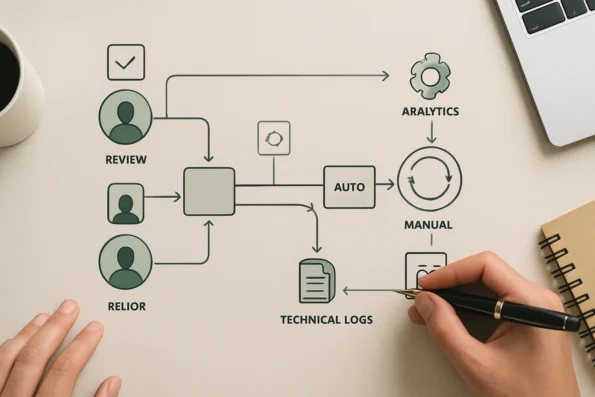
Feedback loop implementation begins by defining where approval checkpoints are required. In NextlerAI Publisher, checkpoints are inserted at critical workflow junctures—such as pre-publication or post-draft review—based on operational policy rather than generic automation. Role assignment is governed by the suite’s permission model, enabling teams to restrict who can review, approve, or request revisions at each checkpoint. This ensures that feedback is both directed and accountable: only authorized roles can halt or advance a workflow stage, and their actions are recorded for auditability. The assignment of reviewers or approvers is generally performed during workflow design and can be adjusted as team structures or compliance requirements evolve.
Enabling and Customizing Audit Logging
Audit logs form the backbone of traceable feedback in both NextlerAI Publisher and Assistant. When enabled, these logs record every workflow event: content edits, approvals, rejections, and comments. Logs are immutable and time-stamped, allowing administrators to reconstruct the decision trail for each content item or customer interaction. For teams prioritizing compliance or process transparency, audit logs support retrospective analysis and can surface patterns—such as repeated rejection reasons or bottleneck stages—critical for continuous improvement. The scope of log detail can be configured; some organizations choose to log only significant state changes, while others opt for comprehensive event capture to support granular audits.
Manual Versus Automated Review Flows
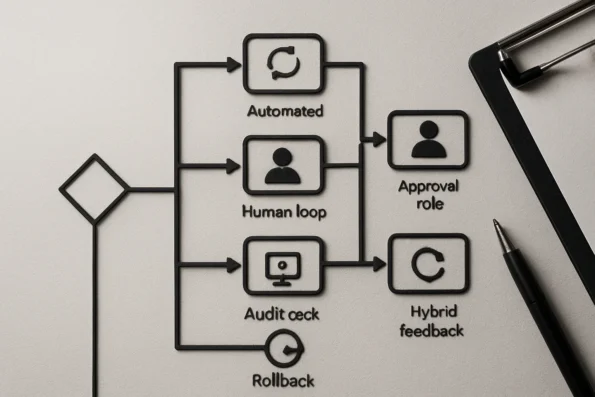
NextlerAI distinguishes between manual review flows—requiring explicit human sign-off—and automated flows, where pre-configured rules advance tasks if criteria are met. For example, in Publisher, an automated checkpoint can verify that a content draft meets preset quality rules before passing it to an editor, while manual checkpoints require a reviewer’s explicit approval. The choice between these modes should reflect the workflow’s risk profile, regulatory demands, and available team capacity. Hybrid approaches are also possible, where a sequence of automated checks is followed by a final manual review, ensuring both efficiency and oversight. In both modes, the configuration process mandates specifying which rules or triggers move a workflow forward and which roles are responsible for final sign-off or escalation.
Operational Boundaries and Configuration Limits
While NextlerAI workflows offer significant flexibility, not all aspects of feedback capture can be configured or automated. Approval checkpoints and logs must be explicitly defined within the workflow setup; the system does not infer new feedback points or adaptively adjust checkpoint placement. Automated progress is limited to the rules and criteria set by administrators—feedback outside structured checkpoints typically requires manual intervention. For example, comments left outside a checkpoint will appear in logs but do not trigger workflow state changes unless tied to a configured action. Additionally, NextlerAI does not offer automatic routing of unstructured feedback into process modifications; all changes to checkpoints, reviewer assignments, or rule thresholds must be performed by authorized administrators.
Leveraging Analytics and Technical Logs for Ongoing Improvement
Beyond immediate workflow actions, analytics and technical logs serve as key tools for iterative refinement. NextlerAI Assistant, for instance, provides analytics on contact capture, resolution rates, and unresolved demand, as detailed in its official documentation (nextlerai.com). These data points help teams identify where feedback loops succeed or break down, supporting evidence-based adjustments to checkpoint placement, rule definitions, or reviewer assignment. By combining audit logs with metrics on unresolved cases or frequent escalation triggers, administrators can proactively refine workflow design. This mechanism ensures that feedback is not only collected but systematically acted upon, closing the loop between operational events and continuous workflow optimization. Strategic review of analytics enables organizations to spot emerging process risks or inefficiencies early and adjust their feedback mechanisms accordingly.
Decision Criteria for Adopting Feedback Mechanisms
Choosing the right feedback loop structure in NextlerAI workflows demands a practical evaluation of workflow risk, compliance requirements, and team capacity. For low-risk or non-regulated content, automated feedback loops—such as checkpoint-based validations—offer efficiency and predictable results. However, in workflows with regulatory, legal, or reputational exposure, human oversight at defined checkpoints remains essential for ensuring accountability and compliance. Hybrid feedback mechanisms, which combine human review with automated checks, are particularly effective for scaling teams that require both speed and traceability. When configuring audit logs to support feedback traceability, consult audit log retention and compliance for detailed guidance on secure data handling and regulatory alignment. Checking your browser – reCAPTCHA documents the relevant background and implementation boundaries.
Key Questions Before Adjusting Feedback Structures
- What is the risk profile of this workflow? High-risk or compliance-sensitive processes should default to human or hybrid feedback loops to preserve oversight.
- How much traceability is required? If audit trails and rollback are critical, prioritize feedback mechanisms that record all changes and approvals in the audit log.
- Is the team prepared for new feedback responsibilities? Any shift from automated to manual or hybrid loops requires readiness assessment and clear assignment of review roles.
- Do we need to demonstrate compliance externally? Use feedback structures with checkpoint-based approvals and exportable logs to support audits and regulatory reviews.
- Are feedback loop boundaries clearly mapped? Confirm that workflow stages, responsible roles, and escalation points are explicitly defined to avoid ambiguity in feedback capture or approval processes.
Balancing Efficiency and Oversight
Operational efficiency often improves with automation, but this can reduce the depth of oversight. In practice, the choice between automated, human, or hybrid loops should reflect the specific integration path and complexity of your workflow. For example, integrating NextlerAI Publisher with an existing CMS typically introduces new checkpoints; these can be configured for automation, but teams must weigh the trade-off between faster throughput and the need for periodic manual review, especially when managing sensitive or high-visibility content. Additionally, consider whether your approval flow needs to include interim reviews for content flagged as higher risk—this can be accomplished by layering human sign-off over select automated checkpoints, ensuring oversight is focused where it is most needed.
Workflow Integration and Technical Boundaries
Workflow integration challenges—such as inconsistent audit logging or unclear role assignments—can undermine feedback effectiveness. In NextlerAI, audit logs and checkpoint approvals are only as robust as their configuration: incomplete mappings or insufficient granularity may leave gaps. Maintaining auditability and rollback options is non-negotiable; always ensure that changes to feedback mechanisms preserve the ability to trace, review, and, if needed, revert workflow decisions. This approach is especially important in environments where operational errors carry regulatory or brand risks. When integrating Publisher with other systems, review every handoff point to confirm that feedback captured in one platform is synchronised and traceable in the other, preventing data silos or lost approvals. Refer to official integration guidance for addressing specific CMS or plugin challenges (NextlerAI integration blog).
Visual Summary: Mapping the Feedback Loop
Understanding how feedback travels through a NextlerAI workflow is essential for anyone tasked with improving process accountability and quality control in a WordPress or WooCommerce environment. Below is a visual framework that delineates each key stage, highlights where feedback is formally captured, and clarifies the operational roles responsible for action and documentation. This summary makes the otherwise abstract concept of workflow feedback loops both concrete and traceable within the NextlerAI ecosystem. For teams seeking structured, role-based feedback systems, the advanced team feedback collection features in NextlerAI Assistant offer configurable permissions and collaboration controls.
Workflow Feedback Loop Overview
The feedback loop in a NextlerAI-powered workflow is best understood as a series of interconnected stages. Each stage is explicitly documented and monitored, minimizing ambiguity and ensuring that any team input is actionable and recorded. The standard flow includes:
- Content Generation: An author or automated process initiates a draft within the system.
- Approval Checkpoint: The workflow pauses for a required review, which may be either automated (rule-based) or human (role-assigned). Feedback is captured at this gate.
- Feedback Capture: Reviewers provide structured input, typically through designated interface forms or comment fields tied to a specific checkpoint. Each entry is attributed to a named user or system role.
- Audit Log: Every feedback event is recorded in a persistent, time-stamped log. The log is accessible via the dashboard and can be filtered by stage, user, or outcome.
- Revision: Responsible editors or automation routines make the necessary changes, referencing the logged feedback. Progress is tracked, and all adjustments are further logged.
- Publication: Once all feedback is resolved and checkpoints passed, the content advances to publication.
Feedback Capture and Accountability
Feedback is only actionable in NextlerAI when it occurs within a defined checkpoint. These checkpoints enforce role-based review, so only authorized team members can submit or resolve feedback. The audit log feature ensures traceability: every piece of feedback is associated with a user, a timestamp, and the specific workflow stage involved. This provides an objective record for auditing and compliance, as detailed in official inventory and dashboard documentation.
Monitoring Feedback Status
Operational teams can monitor real-time feedback status via the dashboard and inventory views. These interfaces summarize unresolved feedback, pending revisions, and completed approvals, empowering managers to identify process bottlenecks and reassign tasks as needed. This monitoring is not purely retrospective; it supports ongoing process audit and continuous improvement by surfacing actionable insights for future workflow refinement.

Operational Roles and Boundaries
Only assigned reviewers—whether human or automated—can act on feedback at each checkpoint. The boundaries of this system mean that feedback outside defined workflow stages won’t enter the official log or trigger action, reinforcing the need for clear configuration and operational discipline. The persistent audit log remains the authoritative source of all feedback events and is distinct from ad hoc comments or informal communication channels.
Illustrative Editorial Scenario
(Illustrative scenario, not a real measured result) Consider a multi-stage editorial workflow for a new product announcement. The content draft is first generated by a subject matter expert. At the first checkpoint, a technical reviewer submits detailed feedback on accuracy and compliance. This feedback is entered into a structured form and attached to the checkpoint stage. Each comment is logged and attributed to the reviewer. The managing editor receives a dashboard notification of pending feedback, reviews the audit log, and initiates revisions. Once all feedback items are addressed, the content passes through a second checkpoint for final approval. The process is fully traceable via the dashboard’s inventory view, which displays all feedback statuses, responsible roles, and historical outcomes. This scenario demonstrates how each feedback loop stage is explicitly mapped and enforced by the NextlerAI system, making the workflow transparent and auditable at every step.
Integration with Dashboard and Inventory Monitoring
NextlerAI’s dashboard and content inventory features (documentation) offer direct access to feedback logs, outstanding tasks, and approval status. Authorized users can filter by workflow stage, responsible role, or feedback resolution status, providing comprehensive oversight for managers and compliance teams. This level of visibility ensures that feedback is not only captured and acted upon but also systematically monitored for continuous improvement and operational accountability.
Limitations and Boundaries of Feedback Loops in NextlerAI
Understanding the operational boundaries of feedback loops in NextlerAI is critical for workflow administrators and process managers aiming to ensure reliable, traceable improvement cycles. While the platform offers powerful tools for structured feedback capture—such as approval checkpoints and audit logs—its mechanisms are intentionally constrained to maintain operational clarity and prevent unintended automation risks. Before integrating new feedback loops, auditing workflow readiness ensures that existing processes and checkpoints are properly evaluated for improvement potential.
Boundaries of Automation and Adaptation
NextlerAI’s feedback loops are not automatically adaptive. The platform does not feature any self-optimizing or learning models that alter workflows in response to feedback without direct human oversight. Automation within NextlerAI is strictly limited to what has been explicitly configured by administrators. For example, only feedback submitted and logged at designated checkpoints or through structured review layers will trigger subsequent workflow actions. This deliberate design choice ensures that all changes are both auditable and reversible, but it also means that any feedback provided outside of configured checkpoints will not be captured for automated action or escalation.
Gaps in Feedback Capture
A notable limitation of the NextlerAI feedback system is its reliance on predefined workflow structures. Feedback that arrives outside configured approval checkpoints—such as ad hoc comments, one-off suggestions, or issues reported outside the formal review process—remains outside the platform’s change automation scope. Unless these inputs are manually integrated into the workflow, they will not lead to recorded or traceable change. This gap can create blind spots if teams rely solely on automated logs and checkpoints for process improvement, underlining the importance of regular manual workflow audits.
Manual Review and Safe Rollback Requirements
When feedback integration fails or leads to unintended results, NextlerAI requires administrators to perform manual review and, if necessary, revert to a previous workflow state. The platform supports safe rollback procedures for workflow or plugin adjustments, providing a safeguard for operational stability. However, rollback is not automatic: it must be initiated by an authorized user following a guided process. This operational safeguard protects against accidental loss or misapplication of feedback, but also places responsibility for oversight squarely with the workflow administrator. Detailed rollback guidance is available for teams needing to restore a stable configuration after a failed feedback loop integration.
Absence of Self-Learning and Predictive Behavior
It is important to clarify that NextlerAI products do not incorporate artificial intelligence models that learn from user feedback or adapt workflow behavior over time. All adjustments—including changes to approval stages, audit log parameters, or quality rules—must be deliberately configured and verified by designated team members. This explicit control aligns with best practices for quality improvement and regulatory compliance, but means that continuous improvement depends on proactive human evaluation and intervention, not unsupervised model training or prediction.
FAQ
How do you systematically audit NextlerAI workflows to identify feedback opportunities?
A thorough audit begins by mapping each step of your NextlerAI workflow, with special attention to approval checkpoints and audit log entries. Review where formal feedback is consistently recorded and where informal or missing feedback leads to process gaps. Comparing documented checkpoints to actual team interactions will reveal untracked feedback opportunities and areas needing more structured input. Effective audits should also distinguish between true feedback loops—where input leads to measurable change—and passive comment logs or error reports that do not trigger workflow adjustments. This involves cross-referencing workflow documentation with audit logs and observing team practices over time to verify whether feedback is being captured, acted upon, and documented in accordance with organizational standards.
Which criteria distinguish effective from ineffective feedback loops in NextlerAI?
Effective feedback loops in NextlerAI exhibit traceability, role clarity, checkpoint integration, and auditability. Ineffective loops lack clear role assignments or fail to connect feedback to specific workflow actions, making improvements untrackable. The presence of audit logs and checkpoint outcomes is a primary indicator of a feedback loop’s effectiveness within the system. Additionally, actionable feedback must be specific, linked to workflow quality rules, and tied to a revision or approval stage. An effective loop ensures that feedback is both visible to relevant stakeholders and integrated into future workflow iterations, whereas ineffective loops result in unmonitored suggestions or unresolved issues.
What unique implementation steps and boundaries exist for feedback integration in NextlerAI workflows?
Implementation requires mapping feedback to specific workflow checkpoints, assigning reviewers, configuring audit logging, and ensuring feedback is actionable through role-based permissions. Boundaries include the restriction of automated feedback capture to configured checkpoints; feedback outside these is not systematically logged or acted upon. Manual intervention is mandatory for feedback-driven changes beyond automation scope. Furthermore, the configuration of feedback mechanisms must respect role-based access controls to prevent unauthorized adjustments or feedback injection. Only administrators or designated workflow owners can create, modify, or disable checkpoints and audit log parameters, ensuring a controlled environment for feedback management. NextlerAI’s separation of Publisher and Assistant modules means feedback integration steps may differ by module, but both require explicit linkage between feedback, workflow stage, and responsible party for effective operation.
How should teams decide which feedback loop mechanism to adopt or adjust?
Teams should assess workflow risk, compliance obligations, and the criticality of human oversight. For high-risk or regulated content, a hybrid of automated and manual checkpoints is warranted. Decision-making should be grounded in traceability needs, available operational roles, and the desired balance between efficiency and oversight. Regular review of audit logs and feedback outcomes will indicate when adjustments are necessary. Teams should also consider the technical integration landscape—ensuring that feedback mechanisms are compatible with other systems and that rollback procedures are clearly defined. Open communication between compliance, operational, and technical leads is critical for selecting, maintaining, and adjusting feedback loop structures to align with organizational goals without sacrificing auditability or quality control.
What are the practical limitations of current feedback loop approaches within NextlerAI?
Feedback loops are only as comprehensive as their configuration; they do not adapt automatically or trigger self-optimizing workflow changes. Feedback outside defined checkpoints is not captured by automation, and rollback or workflow adjustments must be performed manually. Continuous improvement depends on active review and maintenance rather than autonomous system learning. Additionally, analytics and reporting are limited to the scope of configured audit logs and checkpoints, meaning insights are only as complete as the logged data. The system cannot infer intent or context outside the explicit feedback captured at each workflow stage, so achieving continuous quality depends on maintaining detailed, role-based feedback structures and regular manual oversight.
Conclusion
Achieving continuous improvement with NextlerAI workflow feedback loops depends on deliberate configuration and disciplined oversight. By using defined approval checkpoints and structured audit logs, teams can ensure feedback is not only heard but directly influences workflow quality and compliance. Each feedback loop in NextlerAI is a traceable intervention, enabling targeted refinement without ambiguity or risk of unintentional automation drift.
Operationalizing feedback within NextlerAI involves ongoing vigilance to ensure every loop remains effective. Teams must regularly evaluate whether feedback captured at each checkpoint leads to measurable change, and confirm that all responsible roles actively engage with the audit trail. This degree of operational rigor is necessary because automation in NextlerAI is intentionally constrained to explicit checkpoints and pre-set logging mechanisms. There is no underlying adaptive or self-optimizing model, so maintaining quality and compliance is an outcome of human-led review and periodic procedural updates. Moreover, the audit log serves not just as a record, but as a critical mechanism for tracing the lifecycle of each feedback event—supporting rollback procedures and regulatory readiness when required. Leaders and workflow owners should recognize that sustained improvement comes from this explicit, hands-on management, not from assumptions of automatic system learning or correction.
For actionable progress, select one workflow—such as a multi-stage editorial process or a product listing review—and schedule a focused feedback audit. Document each checkpoint, verify responsible role assignments, and confirm every feedback action is traceable in the audit log. This targeted review will expose both strengths and areas for improvement, providing a clear foundation for optimizing your continuous improvement strategy within the platform’s operational boundaries.