







Introduction
Selecting the right AI provider for outreach automation is a pivotal decision for technical leads, outreach managers, and compliance officers. The landscape of outreach automation platforms is shaped by rapid advances—but not every provider aligns with enterprise privacy needs, cost realities, or the technical requirements of tools like NextlerAI Outreach. At its core, AI outreach provider comparison means weighing concrete factors: data privacy obligations, operational performance, true pricing transparency, and seamless integration workflows.
When your business relies on orchestrated, automated prospect engagement, the wrong provider choice can introduce unnecessary risk, unexpected expenses, or workflow friction. NextlerAI Outreach, for instance, empowers organizations with self-hosted deployment and the flexibility to bring their own AI provider API keys. This design shifts both control and responsibility to your team, making it essential to scrutinize each provider for their compatibility with BYO integration, model support, and documentation around privacy and security.
Privacy compliance is not merely a checkbox. Jurisdictional laws and organizational policies demand explicit control over data flows, particularly when using third-party models. Outreach automation also places unique weight on operational performance—where rate limits, reliability, and billing structures can directly impact campaign scale and cost management. Provider selection is therefore as much about long-term operational fit as it is about technical integration. Teams must consider whether the provider’s service architecture, data residency commitments, and documentation practices meet both the letter and spirit of regulations in their operating region. For enterprises controlling sensitive data or operating in regulated industries, the ability to audit provider data handling and ensure separation between internal and external processing is paramount. Likewise, integration with NextlerAI Outreach depends on precise API key management and the ability to map provider model endpoints to your outreach workflows without introducing bottlenecks or security gaps.
This guide is structured to give you a clear, criteria-driven path: from understanding key definitions to evaluating providers on privacy, performance, and cost; then walking through integration realities with NextlerAI Outreach. The goal is to leave you with actionable insights and decision support, ensuring your chosen provider meets all requirements for secure, scalable, and compliant outreach automation.
Key definitions for evaluating AI outreach providers
Understanding core terminology is essential when comparing AI outreach providers for automation platforms such as NextlerAI Outreach. Each provider brings distinct technical, operational, and compliance implications. This section clarifies foundational terms and distinctions that directly inform provider selection and integration decisions. Understanding the distinction between a product licence key and an AI provider API key is foundational, as explained in the licence key versus API key guide.
AI provider: model, API, and service layers
In outreach automation, an AI provider refers to an external organization that supplies machine learning models and the infrastructure for programmatic access. Providers typically expose their models—text generation, classification, summarization—through APIs that client applications can call. The provider’s model layer comprises the underlying algorithms; the API layer defines the endpoints and methods for integration; and the service layer encompasses reliability, support, and operational controls. Not all providers offer the same depth at each layer, making it critical to verify compatibility with your workflow requirements.
Product licence key vs AI provider API key in NextlerAI Outreach
For NextlerAI Outreach, two unrelated credentials must be distinguished. The product licence key proves purchase and enables access to the NextlerAI Outreach software itself. It is required for product activation, updates, and support, but it does not grant access to any external AI model or provider. In contrast, the AI provider API key is issued by the chosen provider (such as OpenAI, Azure, or another supported vendor) and authorizes your software to submit requests to the provider’s models. Misunderstanding this distinction is the leading cause of activation errors and integration failures. For a detailed credential breakdown, see the official documentation from NextlerAI.
Privacy, performance, pricing, and integration in outreach workflows
When comparing AI outreach providers, each criterion has specific meaning in workflow automation:
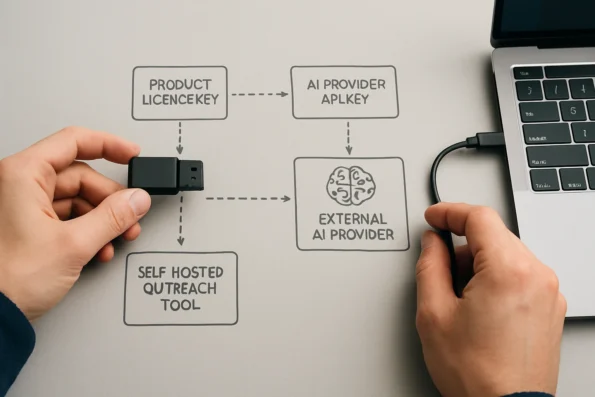
- Privacy: Refers to how the provider stores, processes, and transmits user and prospect data. This encompasses data residency, encryption, provider role (controller or processor), and documented regulatory compliance. Jurisdictional requirements—such as GDPR in the EU—may mandate that certain data never leaves a designated region or that providers fulfill specific obligations.
- Performance: Encompasses request speed, reliability, and supported throughput. For outreach automation, latency and API rate limits directly affect campaign timing and scale. Some providers offer service-level agreements (SLAs) or usage dashboards, while others impose throttling that may disrupt workflows.
- Pricing: Covers the provider’s billing model—per request, per token, or subscription—and the transparency of cost tracking. Hidden or poorly documented pricing can lead to unexpected expenses in high-volume outreach scenarios.
- Integration: Describes the mechanisms by which the provider can be securely connected to outreach automation tools. This includes API key management, endpoint configuration, supported model versions, and error handling protocols.
Interaction modes: self-hosted vs cloud-based outreach tools
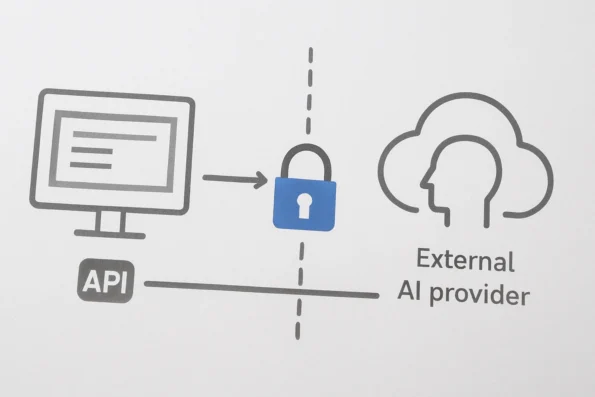
Outreach automation platforms like NextlerAI Outreach may be self-hosted or cloud-based. In a self-hosted setup, organizations retain direct control over data flow and can restrict which data is sent to external AI providers. Cloud-based models may introduce additional data handling steps and require careful review of both the outreach platform’s and the AI provider’s privacy policies. In both models, the outreach tool acts as an orchestrator, relaying only the prescribed data to the AI provider’s API, provided that the integration is configured correctly and all credentials are kept distinct and secure.
Criteria for comparing AI providers: privacy, performance, and cost
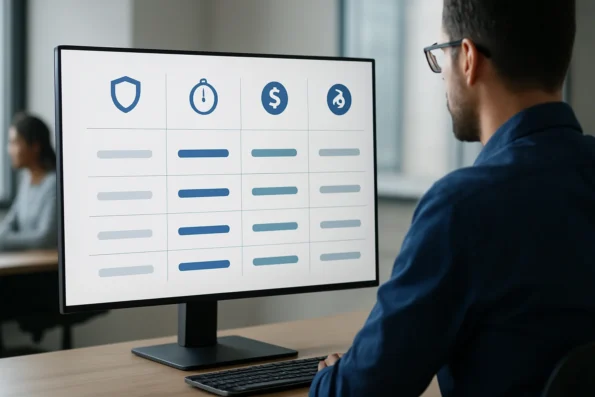
When evaluating AI providers for outreach automation, a systematic comparison across privacy, performance, cost, and integration is essential. Each area presents unique operational, legal, and workflow implications. Below is a criteria table designed to assist decision-makers in weighing approaches for their specific outreach needs, particularly with regard to integrating AI providers into workflows like those supported by NextlerAI Outreach. When assessing outreach automation providers, organizations can refer to IEEE's ethical AI guidance to ensure their selection process aligns with established principles for responsible and transparent use of artificial intelligence.
| Criterion | Key Questions | Evaluation Approach | Impact on Outreach Automation | Source |
|---|---|---|---|---|
| Privacy & Compliance | How does the provider handle data? What regional regulations apply? | Assess data residency, controller/processor roles, and published compliance attestations, including obligations under GDPR, CCPA, or other sector-specific frameworks. Evaluate user control over submitted data and the provider’s policy on data retention or deletion. | Informs legal risk, influences data flow decisions, and determines suitability for regulated outreach where explicit data controller/processor boundaries are required. | UNESCO, AlgorithmWatch |
| Performance & Reliability | What are documented request speeds, uptime, and rate limits? | Review technical documentation for rate limits, API quotas, service-level agreements, and empirical latency ranges. Consider how the provider manages throttling, queued requests, and error handling under load. | Affects prospect response times, delivery guarantees, and the automation system’s ability to scale reliably during high-volume campaigns or peak outreach periods. | Product documentation |
| Pricing Transparency & Control | How are costs calculated and controlled? | Compare per-request pricing models, available usage dashboards, and mechanisms for setting billing limits or alerts. Examine the accessibility and clarity of billing statements to enable proactive cost management. | Directly influences operational budgeting, enables predictable campaign scaling, and mitigates risk of unplanned expenditures due to usage spikes. | Product documentation |
| Integration with NextlerAI Outreach | Is the provider compatible with BYO API key and supported models? | Verify support for API key authentication, endpoint configuration, and model selection as documented for NextlerAI Outreach. Confirm the provider’s API adheres to expected formats and authentication flows, and check for available documentation or support resources. | Determines ease, reliability, and flexibility of connecting the provider to outreach workflows, including support for new model releases and minimal configuration friction. | NextlerAI documentation |
This table illustrates that effective provider selection depends on aligning privacy, operational performance, cost management, and integration specifics with organizational outreach requirements. Regulatory frameworks, such as those published by UNESCO and catalogued by AlgorithmWatch, offer authoritative benchmarks for evaluating provider trustworthiness and regional compliance. Reviewing both technical and legal documentation is critical for ensuring seamless, secure integration with platforms like NextlerAI Outreach. The interplay of these criteria often requires organizations to prioritize based on their specific risk appetite, compliance posture, and desired workflow flexibility, making a thorough comparison process essential before any deployment.
Implementation notes: integrating with NextlerAI Outreach
Integrating an external AI provider with NextlerAI Outreach is a precise process that centers on the bring-your-own (BYO) provider model. In this approach, your organization supplies the AI provider API key and, when necessary, specific endpoint and model details. NextlerAI Outreach itself manages orchestration and workflow logic, but does not embed or license third-party AI models directly. This separation allows you to retain full control over data routing and provider selection, a critical factor for organizations with heightened privacy and compliance needs. For official details on integration steps and supported models, see the NextlerAI Outreach product page.
Supported integration mechanisms
NextlerAI Outreach supports several practical methods for connecting to an external AI provider. The primary mechanism is direct API key entry, where users input a valid provider-issued credential into the Outreach configuration. Some providers may require explicit endpoint specification, particularly if their platform supports multiple regional servers or custom deployments. Model selection is handled within the Outreach interface, enabling teams to choose from those models the provider exposes and supports for their account. This modular design ensures that only authorized and compatible AI services are used in live outreach workflows.
Operational prerequisites and compatibility checks
Successful integration depends on a close match between Outreach and the selected provider’s technical requirements. Key prerequisites include ensuring that the AI provider’s API format, authentication scheme, and supported model types conform to Outreach’s accepted standards. For example, an unsupported API version or authentication method will result in failed requests or access errors. Operationally, any privacy or data handling constraints imposed by your organization or jurisdiction must be reflected in how you configure both the provider account and the Outreach deployment.
Further, organizations must maintain a clear distinction between administrative roles managing the AI provider account and those configuring Outreach access. Credential security is essential; API keys should be stored using secure, access-controlled methods within Outreach and rotated according to internal policy or provider recommendations. Before deployment in a production environment, connectivity should be validated in a controlled context to detect any incompatibilities related to request formatting, rate limits, or provider-specific error handling conventions. If the provider implements regional endpoints or additional authentication layers, these must be explicitly defined within the integration settings, as Outreach will not auto-discover or adapt to undocumented provider variations.
Integration at scale may require mapping Outreach workflow types to corresponding provider models. For example, some outreach campaigns may need access to large language models, while others require more specialized endpoints. This mapping should be documented internally to ensure ongoing alignment between campaign objectives and provider capabilities, especially as either platform updates over time.
Illustrative scenario: configuring and validating a new provider
Consider a scenario where your team is tasked with connecting a newly approved AI provider to NextlerAI Outreach. The process begins by obtaining an API key from the provider’s administrative dashboard. Within Outreach, you navigate to the integration settings and securely enter this key, optionally specifying the provider’s endpoint and selecting an available model. Outreach then attempts to validate connectivity by issuing a test request to the provider. A successful handshake confirms that the integration parameters and credentials are correct. Any errors at this stage—such as credential mismatch or unsupported model—are flagged for immediate review. This controlled process is designed to prevent accidental data exposure, ensure compliance, and minimize operational disruption. Ongoing monitoring is recommended after initial setup to account for any changes in provider API availability or model support, and to maintain the operational integrity of automated outreach workflows.
Key takeaways for privacy and ongoing risk management
When selecting and operating an AI provider for outreach automation, privacy and ongoing risk management require disciplined, evidence-based attention. Your due diligence should begin by mapping how each provider stores and processes outreach data. This includes confirming where data is physically located, the governing legal jurisdiction, and the exact retention and deletion policies spelled out by the provider. For outreach workflows, these factors materially affect regulatory compliance and exposure to cross-border data transfer risks. To understand how different providers impact efficiency and consistency, review how AI workflow automation delivers at each content stage across planning, creation, and review.
Monitoring provider practices and updating organizational policies
Effective risk management is not a one-time task. Providers may update their terms or change infrastructure, necessitating regular reviews of privacy documentation and operational controls. Teams should monitor for changes in provider policies, especially those impacting data residency, subcontractors, or disclosure obligations. Establish a cycle for policy and workflow updates, ensuring technical leads and compliance officers can quickly adapt to new requirements. User controls—such as the ability to rotate API keys or immediately revoke provider access—are essential safeguards for maintaining operational integrity.
Referencing authoritative frameworks for ethical and trustworthy AI
International frameworks provide concrete criteria for evaluating the ethical dimensions of AI providers. The UNESCO Recommendation on the Ethics of Artificial Intelligence outlines requirements for transparency, accountability, and user agency when deploying AI systems in sensitive domains, such as outreach. The IEEE guidance on Autonomous and Intelligent Systems emphasizes traceability, auditability, and the right to contest automated actions. Applying these principles helps align provider selection with both organizational values and global best practices for trustworthy automation.
Operational safeguards: rate limiting, data hygiene, and access control
Technical safeguards underpin privacy and reliability in live outreach scenarios. Implement provider-specific rate limits to avoid service disruptions or accidental overuse, which could trigger additional scrutiny or costs. Regularly audit stored message data and logs to ensure compliance with retention policies and facilitate prompt data cleanup when required. Carefully restrict provider API key usage to only those personnel and systems with a documented need, minimizing the risk of unauthorized actions or data leakage. For details on implementing controls like caching, rate limits, and access boundaries with NextlerAI Outreach, see its official security and integration guidance.
Phased implementation steps for provider onboarding
Successful onboarding of an AI provider for outreach automation requires careful, sequential actions to ensure compliance, compatibility, and operational reliability. This section provides a clear five-step process to guide technical leads and operations teams through the critical tasks needed for integrating an AI provider with NextlerAI Outreach. When evaluating outreach automation platforms, teams should consider the criteria for AI multilingual content automation, especially for organizations with international privacy or localization needs. To streamline onboarding, teams can explore Google Cloud AI solutions for proven frameworks that support scalable and secure AI integration in outreach workflows.
- Map regulatory and privacy requirements for your outreach region and industry. Begin by cataloging all applicable privacy laws, sector standards, and data residency obligations relevant to your outreach targets. For multinational campaigns, this may entail reconciling requirements from multiple jurisdictions. Clearly distinguish between your role as a data controller or processor and the provider’s obligations, as set out in frameworks such as UNESCO’s AI ethics recommendations. Include a thorough review of contractual agreements to clarify provider responsibilities, and document any requirements for explicit consent or data transfer mechanisms for cross-border processing.
- Validate provider compatibility with NextlerAI Outreach integration mechanisms. Confirm that the provider supports integration via API key, endpoint, and model parameters as required by NextlerAI Outreach. Carefully review the provider’s documentation to ensure supported authentication methods and data formats align with the product’s specifications. Evaluate whether the provider’s rate limits, response payloads, and supported model versions align with your workflow needs. Failure to match these technical prerequisites often results in failed connections or limited feature availability.
- Secure and test API key access with least-privilege best practices. Assign API keys with the minimum necessary scope, limiting data access and write permissions. Store keys in secure, access-controlled environments; avoid embedding them in public or multi-user locations. Consider using environment variables or secrets management systems for extra protection. Conduct initial connection tests from a non-production environment to verify both authentication and data boundaries, confirming that the API key only enables intended operations.
- Pilot workflows and monitor for latency, errors, and data handling. Run controlled pilot campaigns using sample data to evaluate provider responsiveness, error rates, and adherence to data handling expectations. Monitor log outputs and workflow traces for unexpected API failures, latency spikes, or unanticipated data exposure. Examine error messages and provider-side logs, if available, to diagnose integration issues. Use these findings to refine workflow boundaries and troubleshoot integration gaps before broader rollout.
- Review and adapt provider settings as operational needs evolve. After initial deployment, periodically reassess provider configurations based on observed performance, regulatory changes, and evolving outreach objectives. Adjust API rate limits, model selections, and privacy controls to remain aligned with both business priorities and compliance frameworks. Establish a regular review cycle to update credentials, monitor provider status, and ensure continued alignment with the latest product and provider changes. Ongoing adaptation is critical for sustained operational fit and risk management.
By following this phased approach, teams can systematically mitigate integration risks, ensure regulatory compliance, and maintain operational control throughout the provider onboarding process. The next section addresses common missteps and their practical solutions.
Common mistakes and fixes when selecting and deploying AI providers
Even with clear selection criteria, teams regularly encounter preventable errors when connecting and operating AI outreach providers. These mistakes can undermine privacy, disrupt automation workflows, and lead to costly troubleshooting cycles. Recognizing these pitfalls—and knowing how to address them—strengthens both operational resilience and compliance. Before configuring any provider, review the decision criteria for integrating with NextlerAI to ensure alignment between your outreach workflow and the CMS environment.
Credential confusion: product licence keys versus provider API keys
A frequent source of integration failure is the misapplication of credential types. Teams sometimes attempt to use the product activation key for NextlerAI Outreach where a provider API key is required, or vice versa. This results in authentication errors and connection failures. To avoid this, always match the credential type to its intended purpose: licence keys activate the NextlerAI product, while provider API keys authenticate requests to the external AI service. Detailed documentation is available for distinguishing these credentials.
Misaligned privacy and compliance obligations
Another common oversight is assuming that a chosen provider’s privacy policy or data processing terms automatically align with your organization’s compliance requirements. Jurisdictional regulations may require specific controller or processor roles, data residency assurances, or breach notification protocols. Before onboarding a provider, verify that its documented terms meet the full set of regulatory and contractual obligations relevant to your outreach activities. Failing to do so can expose your organization to significant legal risk and operational blind spots.
Ignoring technical integration prerequisites
Successful deployment depends on more than credential accuracy. Integration failures often stem from neglecting technical dependencies—such as specifying a supported API endpoint, selecting a compatible model version, or confirming network accessibility. Some providers require explicit configuration of endpoints or restrict model access by account tier. Always review both provider and NextlerAI Outreach documentation to confirm that your planned integration matches supported mechanisms.
Overlooking operational controls and monitoring
After initial setup, teams sometimes underestimate the impact of provider rate limits, incomplete logging, or error-handling omissions. These gaps can lead to missed outreach cycles, unhandled failures, or unexpected cost overruns if not proactively managed. Ensure that your deployment enforces operational controls—such as rate limiting thresholds, granular logging, and robust error handling—to maintain workflow continuity and detect anomalies early.
Practical fixes: troubleshooting and documentation checks
Mitigating these mistakes starts with systematic troubleshooting: verify each credential at the point of entry, cross-check privacy mappings against regulatory needs, and thoroughly test integration endpoints in a controlled environment. Maintain clear internal documentation that differentiates credential types, outlines provider-specific integration steps, and lists escalation contacts for both technical and compliance issues. Regularly consult product and provider guides to stay current with updates or changes in integration requirements.
Checklist for evaluating AI provider fit
To ensure a suitable and reliable AI provider partnership for outreach automation, a focused evaluation process is essential. Use this checklist to systematically address the operational, compliance, and workflow demands of integrating with NextlerAI Outreach. Each item targets a distinct risk or requirement that, if overlooked, could disrupt your implementation or expose your organization to regulatory or operational challenges.

- Validate provider API and model compatibility: Confirm the provider offers both the API key mechanism and the specific AI model versions required for seamless NextlerAI Outreach integration. Do not assume default support—review official provider documentation for compatibility details. Validate technical requirements such as endpoint formats, authentication scheme, and supported model variants, as outlined in both NextlerAI and the provider’s API documentation. Some providers may change model availability or deprecate specific endpoints, so ongoing verification is necessary.
- Examine privacy and compliance documentation for your jurisdiction: Scrutinize the provider’s published data handling, storage, and processing statements. Cross-check against applicable regulations such as GDPR, CCPA, or national privacy statutes relevant to your organization and deployment region. Clarify controller and processor roles up front. Seek explicit statements about data residency, retention periods, and subprocessor disclosures. If your organization operates across borders, confirm that cross-jurisdictional data transfers are addressed in the provider’s documentation.
- Perform a controlled integration test in a non-production environment: Before introducing the provider to live outreach workflows, complete a closed pilot using test data. This reveals integration gaps, API errors, or unexpected behaviors without risking customer data or business continuity. During this pilot, instrument monitoring on API call metrics and error logs. Document all observed anomalies and share them with both provider and internal stakeholders for timely resolution.
- Monitor for cost, latency, and error anomalies: After initial integration, actively track API usage metrics and operational logs to detect spikes in billing, response time, or error rates. Early detection of performance or price variances allows for rapid remediation before escalation. Leverage built-in reporting features in NextlerAI Outreach or external monitoring tools to set alerts for threshold breaches in cost or latency. Establish a regular cadence for reviewing these metrics as part of your operations or compliance review cycles.
- Document provider escalation paths and contacts: Record the provider’s technical support contacts, escalation procedures, and any contractual response time commitments. Ensure this information is accessible to both operations and compliance teams in case of outages or urgent policy reviews. Include backup contacts and specify criteria for escalating issues to provider support versus internal IT or compliance teams. Periodically verify that contact information remains current, as support structures may change over time.
Applying this checklist helps your team avoid common blind spots and establishes a defensible, auditable record of due diligence in AI outreach provider selection. For further detail on workflow automation evaluation, consult sector-specific guidance and frameworks, such as those referenced in the NextlerAI Outreach best practice resources.
FAQ
What are the key definitions for evaluating AI outreach providers?
Key terms for evaluating AI outreach providers include: provider (the company supplying the model/API), API key (the credential granting access), privacy compliance (how provider policies map to regional laws), performance (latency, reliability, and throughput), and integration (the technical fit with your outreach platform). Each definition clarifies the boundaries of responsibility and operational risk when automating outreach workflows.
Which criteria most impact provider selection for outreach automation?
The most influential criteria are privacy compliance, operational performance, transparent pricing, and integration capability. Privacy determines legal fit; performance affects workflow reliability; pricing shapes cost predictability; and integration ensures technical compatibility with your automation stack. The relative weight of each factor will depend on your organizational risk tolerance and regional legal obligations.
How does integration with NextlerAI Outreach affect provider choice?
Integration with NextlerAI Outreach requires providers to support API key authentication and compatible model endpoints. Provider selection must also consider the ease of configuring endpoints, the scope of supported models, and alignment with both the product’s workflow controls and your security standards. A provider lacking these integration points cannot be reliably used within NextlerAI Outreach.
What are the most common mistakes teams make when selecting an AI provider?
Frequent mistakes include confusing product licence keys with provider API keys, neglecting to verify privacy and regulatory alignment, overlooking endpoint or model compatibility, and underestimating operational constraints such as rate limits or quota enforcement. These errors often result in failed integration, compliance exposure, or unexpected outages.
How can teams ensure ongoing compliance and performance after implementation?
Teams should schedule periodic reviews of provider documentation, monitor for changes in privacy practices and contract terms, regularly audit workflow logs for anomalies or policy breaches, and maintain clear escalation paths for support and compliance. Proactive oversight and documented procedures are essential for sustaining regulatory alignment and operational reliability over time.
Conclusion
Choosing an AI outreach provider for automation is not a one-time technical exercise—it is an ongoing operational and governance responsibility. The right provider aligns with your privacy controls, cost structures, and workflow integration needs, but these requirements evolve as regulations, provider policies, and usage patterns change. Decision-makers must treat provider selection as part of a living risk management process, not a set-and-forget purchase. Beyond initial configuration, periodic reviews of provider practices and system boundaries are essential to ensure your outreach automation platform remains compliant and resilient in real business conditions.
Effective oversight requires clearly defined accountability across roles: technical teams manage integration standards and monitor performance, compliance leads interpret jurisdiction-specific privacy and security mandates, and operational managers ensure workflow continuity. Mechanisms such as access control, audit logging, and timely policy documentation updates help maintain transparency and traceability in provider relationships. Additionally, a robust escalation protocol for identifying and resolving integration or compliance issues minimizes disruptions and supports business continuity. Engaging all stakeholders in revisiting provider agreements, technical constraints, and regulatory changes ensures that your outreach infrastructure adapts constructively to evolving risk and business priorities.
As a next step, schedule a joint session between compliance, technical, and operational leads to review your current provider integrations against updated privacy, performance, and integration benchmarks. This collaborative review will surface overlooked risks, clarify accountability, and ensure your outreach workflows are both robust and adaptable to future demands.