






Introduction
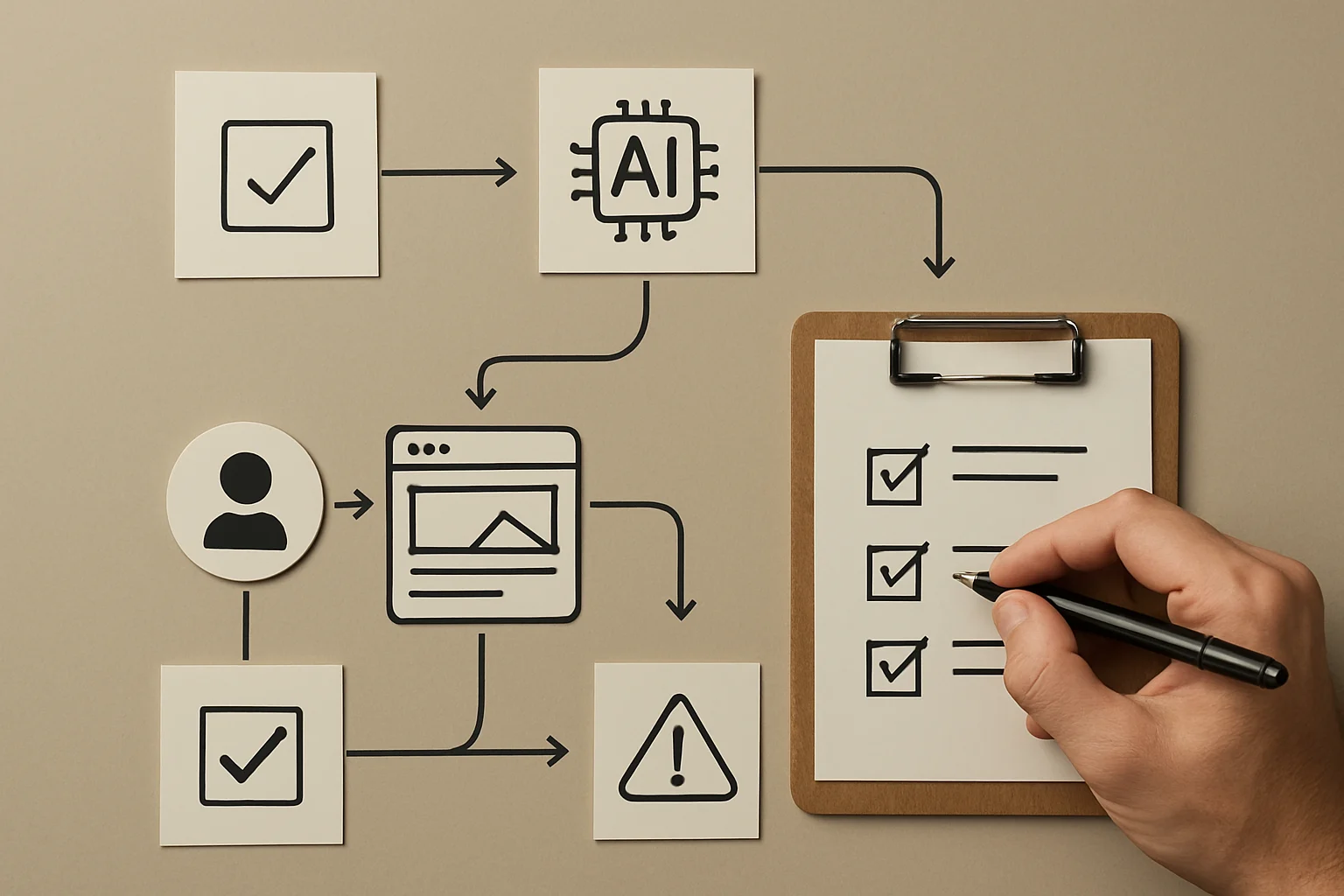
Embedding quality assurance (QA) checkpoints into an AI publishing workflow is essential for maintaining content integrity, compliance, and brand reputation—especially as organizations scale WordPress operations using NextlerAI Publisher. This section answers the core search intent by outlining how you can structure a multi-layered QA system that combines automation with essential human editorial oversight, directly within your WordPress publishing pipeline.
With NextlerAI Publisher, content strategists, editors, and technical leads gain access to configurable review and approval stages that are fully integrated with WordPress’s native draft, scheduling, and publication features. Automated error detection and compliance checks are available to flag or block content that fails to meet legal, regulatory, or internal brand standards before it ever goes live. At the same time, manual QA checkpoints allow for detailed human review, approval, or escalation, ensuring that AI-generated or AI-assisted content receives the oversight required for high-stakes publishing environments.
This strategic balance between automation and manual controls enables editorial and marketing teams to customize quality criteria for each checkpoint, document review outcomes, and route flagged content to higher-level reviewers when necessary. Each checkpoint’s evidence, from automated warnings to manual escalation paths, is recorded and reportable, supporting audit and continuous improvement requirements. The workflow is designed to be transparent, auditable, and adaptable—so you can refine your approach as your organizational needs or compliance landscape changes.
NextlerAI Publisher also supports granular role-based permissions, allowing organizations to assign responsibility for QA checkpoints based on team structure and content type. This ensures that editorial and marketing workflows can adhere to different review protocols or escalation rules as required. For example, marketing teams may emphasize brand alignment and campaign timing, while editorial teams focus on factual accuracy and regulatory compliance. The platform’s logging and reporting features provide traceability for every QA decision and checkpoint, offering administrators the ability to audit the entire content lifecycle. By leveraging these capabilities, you will be prepared to design, implement, and refine a QA framework that meets both your efficiency goals and your accountability standards. The following sections offer a detailed, stepwise framework for integrating automated and manual controls, mapping each mechanism to specific NextlerAI Publisher features and current best practices in AI-powered publishing workflows.
AI Publishing Risks and Quality Controls: Interactive Table
Integrating quality assurance into an AI publishing workflow requires a clear understanding of the most common content and operational risks, as well as the specific controls available to address them. NextlerAI Publisher offers a set of configurable checkpoints—ranging from automated error detection to manual review stages—each designed to align with editorial or marketing requirements. The table below cross-references key risks with the controls NextlerAI Publisher provides, indicating the control type, evidence severity assignment, configurability, and primary use-case applicability. By consulting CMS integration safeguards, teams can ensure that each automated and manual quality assurance checkpoint in the AI publishing workflow is mapped to secure data flow and editorial boundaries. Examining editorial checkpoints for localization demonstrates how quality assurance mechanisms in NextlerAI can be adapted for multilingual and high-volume environments.
| Risk | Quality Assurance Control | Control Type | Evidence Severity | Configurable? | Primary Use-Case | Source |
|---|---|---|---|---|---|---|
| Content Errors (factual, structural, formatting issues) |
Automated error detection rules | Automated | Warning or Blocker (assigned per rule) | Yes (customizable per workflow) | Editorial & Marketing | NextlerAI Publisher documentation |
| Compliance Violations (regulatory, brand, legal) |
Compliance gates with escalation paths | Hybrid (Automated checks plus manual escalation) | Blocker (publication prevented until resolved) | Yes (compliance criteria and roles configurable) | Editorial (regulatory), Marketing (brand/legal) | NextlerAI Publisher guides |
| Duplicate or Overlapping Content | Automated duplication detection; review queue assignment | Automated (detection), Manual (review) | Warning or Blocker (based on threshold) | Yes (thresholds and escalation configurable) | Editorial (originality), Marketing (campaign overlap) | NextlerAI Publisher documentation |
| Scheduling Conflicts (timing, embargo, release coordination) |
Workflow-integrated scheduling with conflict checks | Automated (checks), Manual (override/escalation) | Warning (can escalate to manual review) | Yes (conflict rules, escalation paths) | Editorial (news embargo), Marketing (campaign launch) | NextlerAI Publisher product page |
| Unreviewed AI-Generated Drafts | Configurable multi-stage review and approval | Manual (editorial approval), Hybrid (AI pre-checks) | Blocker (cannot publish without approval) | Yes (roles, stages, criteria customizable) | Editorial (content quality), Marketing (brand tone) | NextlerAI Publisher guides |
| Escalation for Flagged Content | Routing flagged items to senior reviewers or compliance leads | Manual (triggered by automation or human input) | Warning or Blocker (based on risk type) | Yes (escalation roles, routing logic) | Editorial & Marketing | NextlerAI Publisher documentation |
| Auditability and Evidence Reporting | Quality evidence logs and reporting for each checkpoint | Automated (logging), Manual (audit review) | N/A (supports all severity levels) | Yes (reporting depth and recipients) | Editorial & Marketing | NextlerAI Publisher product page |
This matrix demonstrates how NextlerAI Publisher enables teams to balance risk management with operational efficiency. Automated detection and gating handle routine errors and compliance checks, while manual and hybrid controls support nuanced editorial and marketing oversight. Configurability at every stage ensures that workflows remain adaptable to changing quality standards and organizational priorities, with clear evidence trails for audit and continuous improvement.
Severity Assignment and Escalation Logic
The assignment of evidence severity—such as warning versus blocker—plays a central role in enforcing quality controls. NextlerAI Publisher allows rules to be designated as either warnings (which alert users but permit workflow progression) or blockers (which must be resolved before publication or advancement). This distinction enables organizations to calibrate their tolerance for risk and prioritize resources effectively. For example, a minor formatting inconsistency might only trigger a warning, whereas a potential regulatory violation would be configured as a blocker, automatically halting publication until manual review or corrective action is completed. The escalation logic is also customizable, permitting flagged issues to be routed to specific roles, such as legal, compliance, or senior editorial staff, based on the type and severity of the risk—ensuring that the right expertise is applied at the most impactful checkpoint.

Editorial vs. Marketing Workflow Considerations
Editorial and marketing teams often require different quality assurance emphasis and escalation paths. Editorial use-cases typically prioritize regulatory compliance, factual accuracy, and content originality, with automated controls surfacing issues for deeper human review when necessary. Marketing workflows may put greater focus on brand alignment, campaign timing, and avoiding overlapping communications. NextlerAI Publisher supports configuration of distinct quality rules, escalation routes, and evidence thresholds per workflow or team. This separation of concerns assures that risk controls are not only comprehensive but also context-sensitive, reducing unnecessary friction in publishing while safeguarding quality and compliance across varying objectives.
In summary, mapping publishing risks to tailored quality controls—supported by configurable severity and escalation—empowers teams to create robust, auditable, and scalable AI-driven publishing operations. The next section details how these controls can be implemented as actionable QA checkpoints within your editorial and marketing workflows.
QA Checkpoint Checklist for Editorial and Marketing Workflows
Embedding robust quality assurance (QA) into an AI publishing workflow requires a clear, actionable framework. The following checklist enables editorial and marketing teams to configure, document, and refine both automated and manual checkpoints within NextlerAI Publisher. This approach supports error detection, compliance, review, and escalation—ensuring content quality and regulatory adherence at every stage. For detailed steps on establishing review layers, the multi-stage approval configuration guide outlines how to assign roles and set publication blockers in NextlerAI Publisher. By incorporating approaches to quality assurance in AI solutions, organizations can enhance their editorial and marketing workflows with well-placed QA checkpoints.
- Define Checkpoint Objectives: For every QA stage, specify its core function—such as automated error detection, compliance gating, mandatory human review, or escalation. Map each checkpoint to a clear quality or compliance standard relevant to your workflow. In NextlerAI Publisher, this definition can be tied to the specific content type, such as distinguishing between editorial content requiring factual accuracy and marketing materials needing strict brand alignment.
- Configure Review Queues: Set up dedicated review queues in NextlerAI Publisher for editorial and marketing content. Assign roles and permissions to reviewers, ensuring only authorized team members can approve or escalate content. NextlerAI Publisher allows the creation of custom queues and permission sets, so editorial and legal reviewers can be assigned to different content flows based on risk or topic.
- Establish Approval Stages: Sequence approval stages to align with content risk and complexity. For example, route high-stakes marketing posts through additional compliance gates, while routine editorial content may require only single-stage review. Approval stages can be chained, and each stage can be configured to require different levels of reviewer seniority, as documented in deployment guides (NextlerAI documentation).
- Set Up Compliance Gates: Implement compliance gates to enforce regulatory or brand standards before publication. Define criteria for automated checks (e.g., prohibited terms, incomplete metadata) and configure blocking rules to prevent non-compliant posts from advancing. Compliance gates can be tailored for editorial or marketing needs, and are configurable per workflow.
- Integrate Automated Error Detection: Enable automated scanning for common content errors, such as duplication, broken links, or missing fields. Specify whether detection triggers a warning (requiring manual review) or blocks progression (requiring correction). NextlerAI Publisher supports configuration of severity for each error type, allowing teams to distinguish between issues that warrant stopping publication and those that simply flag for further review.
- Document Escalation Paths: For content flagged at any checkpoint, define escalation logic—for instance, routing flagged posts to senior editors or legal specialists. Clearly document escalation criteria and responsible roles for each scenario. Escalation rules can be mapped to content type, risk profile, or origin; for example, a flagged marketing post containing potentially misleading claims can be routed for legal review before publication proceeds.
- Link to WordPress States: Align checkpoint actions with WordPress-native states (draft, pending review, scheduled, published) to maintain workflow visibility and auditability. NextlerAI Publisher’s pipeline integrates natively with these states, ensuring each checkpoint’s result is reflected in the WordPress workflow for clear status tracking.
- Maintain QA Documentation: Record the criteria and rationale for each checkpoint in an accessible knowledge base. Update documentation as workflow standards evolve, and ensure team awareness of all changes. This supports auditability and provides a reference point for onboarding new team members or updating procedures.
- Train Team Members: Provide targeted training for staff on checkpoint purpose, process, and use of NextlerAI Publisher’s interface. Emphasize how to interpret automated feedback, navigate review queues, and execute escalations appropriately. Training should be role-specific, reflecting differences between editorial and marketing review requirements.
- Monitor Checkpoint Effectiveness: Regularly review evidence logs and QA reports generated at each stage. Use these insights to adjust checkpoint criteria, escalate paths, or reviewer assignments to improve efficiency and quality control. NextlerAI Publisher logs each checkpoint’s outcome and escalation in an auditable trail, supporting continuous improvement.
Illustrative Scenario: Legal Review for Flagged Marketing Content
When a marketing post is automatically flagged by a compliance gate—such as for use of a restricted claim or missing disclosure—NextlerAI Publisher’s escalation logic routes it to a pre-defined legal review queue. Only designated legal reviewers have permission to approve, request edits, or reject the post, with every action logged for compliance auditing. This scenario demonstrates how automated detection and manual oversight combine to protect both regulatory compliance and brand integrity, particularly in marketing workflows where legal risk is pronounced.
Optimizing Checkpoints: Steps for Balancing Automation and Oversight
Effective quality assurance in an AI publishing workflow requires deliberate calibration of both automated and manual checkpoints. NextlerAI Publisher enables editorial and marketing teams to customize these controls to match organizational standards and operational realities. The following ordered sequence provides structured steps for optimizing this balance, ensuring neither automation nor human oversight undermines publishing quality or efficiency. Understanding workflow automation triggers is essential for balancing automated actions with required editorial oversight throughout the QA pipeline. Optimizing checkpoints involves strong data quality and governance in AI to maintain oversight while leveraging automation in publishing workflows.

- Analyze workflow data to identify bottlenecks and required manual reviews. Begin by mapping your current publishing workflow, highlighting points where automated checks frequently generate escalations or where manual intervention slows progress. Use reporting features to quantify delays and error rates, focusing on stages with the highest impact on compliance or brand standards. NextlerAI Publisher provides audit logs and review histories, allowing teams to pinpoint repetitive errors or unnecessary review stages that may be hindering throughput. This diagnostic use of workflow data is crucial for making evidence-based decisions about where automation is effective and where human oversight adds irreplaceable value. In practice, teams should assess not only quantitative metrics like turnaround time, but also qualitative feedback from reviewers regarding ambiguous or context-sensitive content.
- Set and refine control criteria for each checkpoint. Adjust the thresholds that determine when a detected issue is flagged as a warning versus a blocker. In NextlerAI Publisher, these criteria can be defined for each checkpoint, enabling teams to escalate only critical compliance violations while permitting minor editorial warnings for post-publication review if appropriate. Teams can leverage rule configuration menus to specify the severity of each automated check—such as spelling, copyright, or forbidden topic detection—ensuring only high-risk issues halt publication while others prompt a documented warning. Establishing clear control logic at this stage helps avoid unnecessary workflow interruptions and ensures that escalation reflects actual risk rather than overreliance on automation.
- Sequence checkpoints for workflow efficiency and coverage. Order automated and manual checkpoints to maximize error detection without introducing unnecessary disruption. For instance, place high-confidence automated error detection early in the workflow to filter out routine issues, reserving manual review for nuanced or high-risk content at later stages. NextlerAI Publisher supports checkpoint sequencing through drag-and-drop interfaces, making it possible to design branched workflows where content flagged by certain checks follows a custom escalation path, such as direct escalation to legal or compliance teams. Carefully sequenced checkpoints also help minimize redundant reviews and reduce editorial fatigue, supporting overall efficiency.
- Integrate reporting and feedback loops to assess checkpoint effectiveness. Use built-in analytics and audit logs to monitor checkpoint outcomes and escalation frequency. Periodic review of this data enables teams to spot trends—such as recurring false positives or missed errors—and adjust checkpoint logic or reviewer training accordingly. NextlerAI Publisher’s reporting module provides summary dashboards and drill-down views showing the frequency, severity, and resolution of checkpoint triggers across editorial and marketing projects, supporting continuous improvement. Incorporating feedback from all roles involved in the workflow is essential for refining both automated and manual review processes over time.
- Document advanced configuration and update processes with team input. For complex workflows or evolving compliance requirements, maintain up-to-date documentation that specifies checkpoint criteria, escalation paths, and reviewer responsibilities. NextlerAI Publisher supports detailed setup guides and rule documentation, making it easier to onboard new team members and adapt to regulatory changes. Teams should regularly review official guides such as Publisher Complete Setup: From Activation to First Article and Publisher Quality Rules, Reports, and Safe Publication to inform configuration and maintenance decisions. This documentation process should incorporate lessons learned from previous QA cycles, ensuring institutional knowledge is preserved and easily accessible for future improvements.
By following these steps, you can achieve a QA system that aligns automation with essential human oversight. This structured approach supports sustained publishing quality as workflows evolve. The next section weighs the pros and cons of strict versus flexible quality assurance to help you calibrate checkpoint rigor for your unique needs.
Pros and Cons of Strict Versus Flexible Quality Assurance
When structuring an AI publishing workflow, the decision to enforce strict or flexible quality assurance (QA) gates has far-reaching implications. A strict QA approach mandates that all content must satisfy every checkpoint, often through automated blockers or enforced manual approvals, before it advances to publication. This framework maximizes compliance and risk mitigation, as each piece of content undergoes exhaustive scrutiny for errors, regulatory adherence, and brand standards. For organizations in highly regulated industries or those managing sensitive reputational assets, strict QA provides concrete guardrails that can prevent costly oversights. To mitigate the risk of errors during content research, approval workflow boundaries can be referenced for best practices in distinguishing between automated checks and manual escalation. Strict quality assurance benefits from continuous delivery and automation pipelines in machine learning, which streamline the implementation of QA standards.
However, increased rigor is not without trade-offs. Strict QA gates can introduce workflow delays and operational friction. Editorial and marketing teams may encounter bottlenecks if every minor issue triggers escalations or blocks publication. In some cases, the pace of content delivery slows, potentially impacting campaign agility or responsiveness to market trends. Additionally, team morale can decline when excessive controls lead to repeated rework, especially on low-risk content types.
By contrast, a flexible QA model leverages adaptive controls—such as warnings rather than blockers, or conditional escalation paths—allowing some content to progress with minor issues noted rather than halted. This approach supports higher publishing velocity and enables teams to respond quickly to time-sensitive opportunities. Flexible QA is particularly valuable for iterative marketing campaigns or ongoing content series, where speed and adaptability are critical. Nevertheless, this agility carries an increased risk of undetected errors reaching publication, which may undermine credibility or lead to compliance lapses if not managed carefully.
The optimal balance between strict and flexible QA often diverges for editorial versus marketing workflows. Editorial teams tasked with authoritative, long-form content or regulatory disclosure may require more stringent approval sequences, backed by manual reviews and escalation for compliance validation. In contrast, marketing teams benefit from configurable controls that prioritize speed, such as automated checks with optional human review for only high-severity findings.
Technical Mechanisms and Workflow Ownership
The implementation of either strict or flexible QA is determined not only by policy but by the underlying mechanisms and role-based decisions within NextlerAI Publisher. Strict QA typically relies on mandatory checkpoints configured as publication blockers—automated rules that prevent content progression if errors or non-compliance are detected. These blockers can be set to trigger on specific criteria such as missing disclosures, duplication, or detected regulatory keywords. Manual checkpoints in a strict model may require approvals from designated reviewers or escalation to higher authority, with the workflow pausing until explicit sign-off is recorded. The ability to set role-specific permissions ensures that only authorized users can override or bypass blockers, reinforcing accountability.

Flexible QA leverages NextlerAI Publisher’s configurable severity system, where warnings do not halt publication but are logged for later review or audit. Conditional escalation paths can be implemented, for example, allowing content flagged for minor issues to proceed if time-sensitive, while automatically escalating high-severity findings to a designated queue or approver. Ownership of these decisions typically resides with workflow administrators or content leads, who tailor the configuration according to campaign, content type, or risk profile. Automation can be blended with selective manual oversight, creating hybrid flows that adapt to changing priorities or resource constraints.
Decision Criteria for Selecting the Right QA Approach
- Content risk profile: Highly regulated or brand-sensitive material generally warrants strict QA gates, while lower-risk content may justify more flexible handling.
- Team structure and capacity: Consider whether your team has the resources to support multiple manual checkpoints or if automation should carry more weight.
- Publishing objectives: Is timeliness paramount, or is error elimination the priority? Workflow objectives should drive the degree of flexibility in QA controls.
- Workflow complexity: Multi-stage, multi-role pipelines often benefit from a combination—strict at early stages, more adaptive at later ones.
- Integration with reporting and auditability: Both models must provide evidence and traceability at each checkpoint, which NextlerAI Publisher natively supports.
Ultimately, your approach should reflect both operational realities and organizational risk tolerance. NextlerAI Publisher enables granular configuration of both strict and flexible QA gates, making it possible to align controls precisely with the needs of editorial and marketing teams. For a practical examination of workflow impacts and configuration options, the discussion of AI editorial workflow automation, approvals, scheduling, and consistency provides further details.
Visual Summary: Workflow Mapping and Escalation Paths
Understanding precisely where and how quality assurance (QA) checkpoints, compliance gates, and escalation paths intersect within the NextlerAI Publisher workflow is essential for effective content governance. This section visually and descriptively maps these components from initial draft to publication, clarifying every control point and how both automated and manual interventions are orchestrated. Integrating SEO workflow automation into quality assurance allows teams to embed structured reporting and error escalation directly within the publishing pipeline. Effective workflow mapping should include controls relevant to quality and assurance in information systems to support systematic escalation paths.
Integrated Workflow Stages: From Draft to Publication
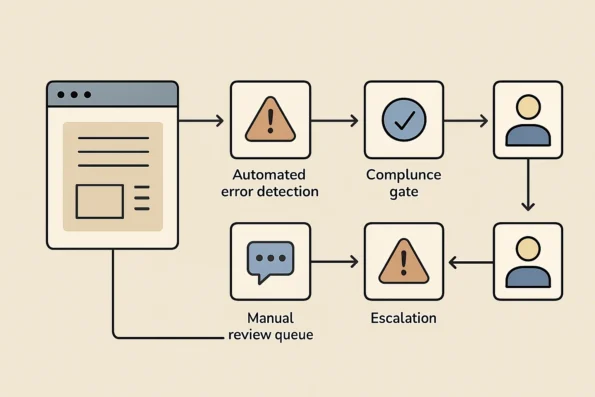
NextlerAI Publisher organizes content progression through configurable workflow stages that align with native WordPress states—such as draft, pending review, scheduled, and published. At defined junctures, automated QA checkpoints assess content for errors, duplication, and compliance breaches. These evaluations are triggered before a post transitions to more public states, ensuring that only content meeting quality criteria proceeds. Each transition can be gated; for example, moving from draft to pending review may require a successful automated scan, while scheduling for publication could mandate a combination of automated and manual approvals. These stages are customizable for both editorial and marketing teams, allowing organizations to control which states invoke additional review or compliance checks based on the nature and intended use of the content.
Automated QA Checkpoints and Compliance Gates
At each checkpoint, Publisher applies automated error detection and compliance scanning. This includes inventory checks to prevent content overlap or cannibalization—critical for large-scale operations. If issues are detected, the system assigns severity (warning or blocker). Blockers halt progression until resolved; warnings allow conditional advancement, depending on workflow configuration. Automated gates can enforce strict adherence to brand or regulatory policies before content is scheduled or published. The implementation leverages a rules engine that can be fine-tuned for organization-specific risk tolerance, explicitly distinguishing between editorial and marketing content streams, and applying differentiated thresholds or escalation triggers where required. These automated controls can be mapped to specific post types or categories, enabling granular targeting and reducing unnecessary interruptions for lower-risk content.
Manual Review and Escalation Routes
When automated checks flag content or when a workflow stage requires human judgment, manual checkpoints activate. Editors or designated reviewers assess flagged items, document findings, and either approve, reject, or escalate the content. Escalation paths are pre-configured to route specific issues—such as legal, regulatory, or reputational risks—to senior editors or compliance teams for higher-level review. This ensures that critical exceptions are handled by appropriate stakeholders before final publication. NextlerAI Publisher supports configurable escalation logic, allowing teams to map distinct escalation routes (e.g., compliance, legal, or management) based on the flagged issue type or severity. Documentation of actions and reviewer decisions is embedded at each manual checkpoint, ensuring a complete audit trail. Teams have the option to include multiple escalation layers, where a checkpoint may trigger subsequent reviews by different roles, providing an additional safeguard for sensitive content.
Inventory Control and Overlap Prevention
To avoid duplicate topics and cannibalization, Publisher maintains a real-time inventory of eligible and in-progress articles. The system cross-references each draft against this inventory before approving advancement, reducing risk of topic overlap. This mechanism is especially important for teams running parallel editorial and marketing pipelines within the same site. Inventory logic is tightly integrated; for instance, when a new draft is created or an existing post is advanced, the system checks for potential conflicts against the live inventory, flagging overlaps as warnings or blockers according to configured criteria (see official guide). Inventory checks are not limited to titles or slugs but can extend to strategic keywords or predefined content clusters, offering a layer of semantic analysis to further reduce cannibalization risks.
Workflow Role Clarity and Auditability
Each stage in the workflow assigns clear responsibilities between automated systems and human roles. Publishers can customize who approves each checkpoint, specify escalation routes, and document every intervention. All actions are auditable, supporting both operational transparency and compliance documentation. The system records timestamps, reviewer identities, checkpoint outcomes, and escalation reasons, creating a persistent workflow log that can be referenced for both internal process improvement and external compliance requirements. Roles and permissions are mapped to WordPress users or custom groups, allowing granular delegation and traceability. This role mapping supports multi-team environments, ensuring that editorial, marketing, and compliance stakeholders only access and act on the checkpoints relevant to their domain.
Workflow Mapping: Visual Pathways and Integration
This mapped workflow enables teams to precisely locate every quality gate, escalation route, and inventory check within their AI-powered publishing pipeline using NextlerAI Publisher. It supports a structured, evidence-driven approach to content quality and risk management directly inside WordPress. For detailed configuration and implementation guidance, refer to the Publisher workflow setup guide.
FAQ
How does NextlerAI Publisher embed QA checkpoints in an AI publishing workflow?
NextlerAI Publisher enables the insertion of configurable QA checkpoints directly within WordPress publishing workflows. Each checkpoint can be set as an automated or manual stage, governing content review, error detection, and compliance verification before allowing progression to the next state, such as scheduling or publication. This structure supports multi-stage approval pipelines tailored to editorial and marketing needs. Internally, checkpoints are implemented as workflow nodes that interact with WordPress core states, ensuring content cannot advance until all gating conditions are satisfied. Teams can configure checkpoints for specific post types, categories, or user roles, enabling a granular approach that reflects varying risk levels and operational requirements across content streams.
What mechanisms exist for error detection and compliance gating?
Publisher offers automated error detection and compliance checks as part of its workflow configuration. These mechanisms can trigger warnings or block publication if predefined criteria—such as regulatory requirements or brand standards—are not met. Teams can define specific rules and thresholds to ensure content aligns with organizational and legal standards at each checkpoint. The system employs metadata scanning, text pattern analysis, and integration with compliance rule libraries, allowing organizations to embed requirements such as copyright declarations, disclaimers, or prohibited terms. For high-assurance use cases, compliance gates can require dual attestation, meaning two separate reviewers must confirm the checkpoint before the workflow proceeds.
How are manual reviews and escalation paths configured?
Manual review stages are established by assigning checkpoints to designated WordPress user roles, such as editors or compliance leads. If content is flagged by automated checks or fails a manual review, escalation paths can route it to higher-level approvers (e.g., legal or senior editorial review). Escalation logic is fully customizable and documented for audit purposes. Implementation involves defining escalation triggers within the checkpoint configuration, specifying both the responsible role for initial review and the subsequent role or group for escalation. Teams can also set notification preferences, such as in-dashboard alerts or email summaries, and maintain an audit log of escalation events, ensuring traceability and accountability throughout the workflow.
What steps optimize the balance between automation and human oversight?
Optimization involves sequencing checkpoints so that automation handles routine checks (e.g., fact consistency, formatting) while reserving manual reviews for high-risk content or exceptions. Teams can adjust warning/blocker thresholds and monitor workflow analytics to identify bottlenecks, periodically refining when and how human intervention is required for maximum efficiency and quality assurance. This includes using historical data to tune which errors should result in warnings versus blockers, shifting less critical checks to automated review, and scheduling periodic policy reviews to ensure the checkpoint configuration remains aligned with evolving risk and regulatory landscapes. Role-based permissions can also be leveraged to delegate low-risk approvals to junior staff, escalating only substantive issues to senior reviewers.
What are the trade-offs of strict QA versus workflow efficiency?
Strict QA maximizes compliance and reduces risk by enforcing mandatory checkpoints and approvals, but may slow throughput and increase editorial workload. More flexible QA settings expedite publishing and enhance agility but can raise the likelihood of undetected issues. The appropriate trade-off depends on content risk, regulatory pressure, and team structure. For example, organizations operating in highly regulated sectors may prioritize strict QA with multiple escalation layers, whereas high-volume marketing teams may opt for a more agile approach, accepting some risk in exchange for faster output. The decision should be informed by a clear understanding of workflow ownership, available automation, and the potential impact of publishing errors or compliance failures.
Conclusion
Embedding quality assurance checkpoints within an AI publishing workflow is not a one-time action but a continuous, adaptive process. NextlerAI Publisher’s granular configuration options allow content and marketing teams to assign clear roles, enforce editorial or regulatory standards, and document outcomes for every piece of published content. The practical value lies in leveraging these mechanisms to ensure your WordPress pipeline evolves alongside changing compliance requirements and editorial objectives.
Strategic implementation requires ongoing decisions about how to balance automation with manual oversight, aligning each checkpoint with the unique risk profile and operational needs of both editorial and marketing workflows. With NextlerAI Publisher, teams can define escalation logic that distinguishes between warning-level and blocker-level issues, ensuring only critical risks halt publication while less severe concerns prompt human review or targeted intervention. Audit trails are automatically generated for every checkpoint interaction, supporting transparency and compliance—especially valuable in regulated sectors or in organizations with distributed editorial control.
Effective QA demands regular calibration: as team structures, legal requirements, or publishing priorities evolve, so too should checkpoint configurations. Publisher’s detailed role mapping and custom checkpoint sequencing make it possible to adapt workflows without disrupting established processes or sacrificing accountability. This adaptability ensures quality assurance remains robust as your publishing environment grows in scale and complexity.
To translate these principles into operational results, identify a single, high-impact workflow—such as your flagship editorial series or regulated marketing content—for a targeted pilot. Configure automated and manual QA checkpoints using documented Publisher controls, then audit the process using built-in reporting. Use these findings to calibrate escalation paths and refine checkpoint criteria before scaling across additional pipelines.