







Introduction
Automating internal linking in WordPress is essential for large publishers seeking to scale SEO impact without sacrificing editorial precision. NextlerAI Publisher addresses this challenge with a structured approach that combines content inventory management, contextual link placement, and anchor text optimization. Unlike generic automation plugins, Publisher integrates conflict detection and editorial controls that guard against content cannibalization and repetitive linking—two of the most common pitfalls in automated internal linking. As a result, editorial teams retain practical oversight at every stage, ensuring each internal link is relevant, contextually appropriate, and fully auditable before publication. The outcome is a safer, more effective way to automate internal linking, supporting consistent SEO improvements while minimizing operational risk.
Automated internal linking is not a one-size-fits-all process; it requires careful attention to site structure, topical relationships, and the specific objectives of each content cluster. Publisher enables teams to map link targets to defined topics, ensuring that each internal link serves a clear SEO purpose and avoids diluting authority across overlapping pages. Its content inventory module allows for granular tracking of published assets, so links are always grounded in current site structure and editorial strategy. Built-in cannibalization controls monitor for competing link targets and overlapping anchor text, prompting manual resolution before publication. This layered approach reduces the risk of over-linking, orphaned content, or the unintentional prioritization of secondary pages. Editorial review workflows and pre-publication audits provide further assurance, allowing teams to spot and correct errors before links go live. By combining these mechanisms, Publisher empowers editorial teams to maintain both the scalability of automation and the precision of manual curation.
Common mistakes and fixes in automated internal linking
Automating internal linking within WordPress can streamline SEO efforts, but several recurring mistakes may undermine both search results and user experience. Recognizing these pitfalls early is crucial for maintaining editorial standards and maximizing the impact of automated strategies like those used in NextlerAI Publisher. Unlike basic plugins, NextlerAI Publisher approaches AI internal linking with structured site data and editorial review workflows to minimize irrelevant or repetitive links. Many common mistakes in automated internal linking, such as over-optimization and irrelevant anchor text, can be avoided by adhering to internal linking best practices outlined in Google’s official SEO recommendations.
Over-linking and Irrelevant Connections
One of the most common missteps is over-linking—where too many internal links are added to an article, or links are inserted into irrelevant contexts. This can dilute the value of each link, confuse readers, and reduce overall user engagement. For SEO, excessive or off-topic linking risks signaling manipulative behavior to search engines, which may harm page authority. These issues often arise when automated systems lack granular controls for link density or fail to assess the contextual relevance of each link within the article’s narrative. Without quality thresholds, automated tools may insert links at nearly every mention of a target term, regardless of its appropriateness or user intent.
Repetitive or Keyword-Stuffed Anchor Text
Uncontrolled automation may produce anchor text that is either repetitive or unnaturally dense with target keywords. This typically happens when linking logic does not sufficiently vary phrases or tailor them to the surrounding context. According to established SEO guidelines, natural, context-aware anchor text promotes clarity and avoids penalties associated with keyword stuffing. In practice, a lack of diversity in anchor text can result in numerous links with identical phrases, which search engines may interpret as manipulative. Furthermore, repetitive anchors can be jarring for readers and reduce trust in editorial quality.
Cannibalization: Competing Link Targets
Cannibalization occurs when multiple pages within a site compete for the same keyword or topic, leading to overlapping internal link targets. This can fragment ranking signals and confuse both search engines and users about which page is most relevant. In large WordPress sites, unnoticed cannibalization is a significant risk when automating link placement without controls. Automated systems that do not cross-reference current topic assignments may inadvertently direct links to several similar pages, rather than consolidating authority. Over time, this can hinder the intended ranking page’s visibility and dilute topical relevance across the site.
Automation Without Editorial Oversight
Relying solely on automation, without human review, often results in incorrect link context, broken links, or links to outdated pages. Even advanced systems benefit from editorial checkpoints that validate the relevance, accuracy, and quality of each suggested link before publication. Automated suggestions may also fail to recognize sensitive or embargoed content, leading to accidental public disclosure or outdated references. Human intervention ensures that strategic priorities, tone, and content freshness are maintained.

Effective Fixes: Structured Inventory and Built-In Controls
Addressing these mistakes requires a structured approach. NextlerAI Publisher, for example, relies on a maintained content inventory to identify the most contextually relevant link targets. Its conflict detection mechanisms scan for cannibalization—flagging potential overlaps so editors can manually resolve them. Mandatory link review workflows ensure that every automated suggestion is vetted for accuracy and editorial fit before posts go live. These safeguards support risk-managed scaling of WordPress internal linking automation, setting Publisher apart from generic plugins. The inventory-driven method means that each link is matched against up-to-date site structure, while configurable link density thresholds and anchor text variation rules provide automated guardrails against over-linking and repetition. Editors can override or adjust suggestions, ensuring editorial intent is preserved at scale.
Publisher’s Cannibalization Controls in Practice
Publisher’s documented cannibalization controls are purpose-built to detect and prevent overlapping internal link targets. By integrating these mechanisms into the editorial workflow, publishers can avoid the common pitfall of competing pages and maintain a clear, focused site structure. The platform’s inventory management and topic assignment features allow editors to specify canonical link targets and suppress links to undesired duplicates. More details on these capabilities and implementation steps are available in the platform’s official documentation at NextlerAI Publisher Content Strategy, Inventory & Cannibalisation Control Guide.
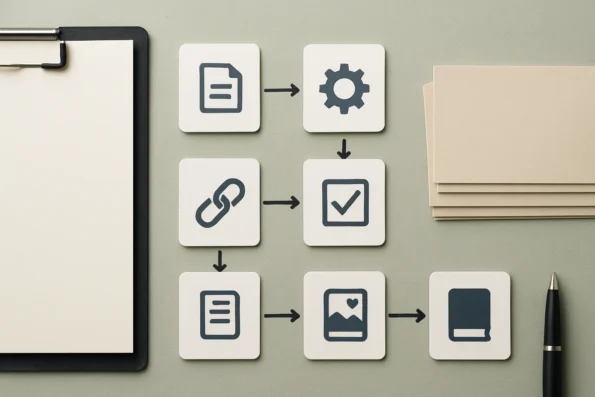
Visual summary: Internal linking automation workflow
Understanding the precise workflow behind automated internal linking is essential for maintaining control, quality, and scalability in WordPress publishing. NextlerAI Publisher uses a structured approach that relies on a content inventory, semantic analysis, and editorial oversight to generate internal links that are both contextually relevant and safe from common SEO pitfalls. Teams already familiar with automated content briefing will recognize the importance of review gates and structured approval checkpoints for safe internal link deployment. The NextlerAI Publisher plugin facilitates a visual workflow for automating internal links within WordPress, enabling users to streamline their site’s linking structure.
How Publisher Automates Contextual Linking
At the core, Publisher inventories your WordPress site to map every eligible article and page. This inventory is not just a URL list—it includes structured data on topics, relationships, and recent updates. By referencing this data, Publisher suggests internal links that fit the specific context of each article section, bypassing the limitations of basic keyword matching. Semantic relevance drives these recommendations, ensuring that links make editorial sense and support your site’s topic structure.
Publisher’s automation engine uses the structured inventory to identify semantically related articles based on their assigned topics and content metadata. The system draws on these relationships to surface candidates for linking, with context awareness extending to section-level relevance within the destination article. This means that, rather than simply linking to every instance of a keyword, Publisher considers the narrative flow, topical hierarchy, and editorial priorities established within the inventory. These mechanisms help prevent irrelevant or forced links that could disrupt user experience or dilute SEO value.
Anchor Text Optimization in Practice
Automated anchor text selection within Publisher is guided by the local context of each link placement. Rather than repeating the same phrases or overusing target keywords, the system varies anchor text to reflect the surrounding narrative and avoid monotony. This reduces the risk of unnatural linking patterns—a common issue with less sophisticated automation tools.
The anchor text generation mechanism leverages both semantic cues and editorial constraints. For each suggested link, Publisher analyzes the immediate textual environment and selects a phrase or partial phrase that is contextually descriptive without being mechanically repetitive. Editorial teams can configure preferred anchor text styles and variation thresholds, ensuring that the automation respects brand voice and SEO guidelines. If Publisher detects anchor text repetition above set limits, it flags the issue for editorial intervention before publication.
Editorial Review and Cannibalization Control
Before any internal link goes live, Publisher inserts a mandatory editorial review stage. Editors can approve, adjust, or reject each suggested link and anchor, maintaining alignment with brand style and SEO policy. Importantly, Publisher flags potential cannibalization conflicts—such as overlapping target topics or multiple links to similar pages—prompting manual review and decision-making. This combination of automation and human oversight is designed to prevent accidental SEO dilution and preserve the strategic value of every link.
The review interface provides editors with visual cues and conflict alerts directly within the linking workflow. For suspected cannibalization, Publisher highlights the affected links and details the overlap in topic or anchor usage, prompting editors to resolve the ambiguity or redirect the link where appropriate. This ensures that the automation process does not inadvertently undermine content differentiation or keyword targeting strategies critical for organic search performance.
Transparency and Workflow Governance
Every stage of the internal linking process, from inventory-driven suggestions to final editorial approval, is auditable within Publisher’s workflow. Teams retain the ability to trace, justify, and adjust automated choices, supporting both compliance and long-term content strategy. This transparency distinguishes Publisher from generic plugins and is particularly valuable for large content operations where risk-managed scaling is a priority.
Detailed logs and workflow records are available for each content batch, documenting link suggestions, editorial actions, and conflict resolutions. These records support post-publication audits and provide the foundation for continuous improvement in linking strategy, as teams can analyze historical decisions and outcomes to refine future automation settings.

For a full breakdown of Publisher’s workflow mechanisms and how they integrate with editorial controls, explore the official product documentation and workflow guides.
Decision steps for contextual linking and anchor text optimization
Structuring automated internal linking in WordPress with NextlerAI Publisher requires a disciplined, stepwise approach to ensure relevance, editorial control, and risk management. The following process outlines each decision and configuration needed to produce contextually accurate links and optimized anchor text throughout your publication workflow. For a stepwise breakdown of the Publisher 3.7.6 system workflow, including how research and linking are sequenced, consult the official NextlerAI Publisher complete guide. Contextual linking decisions and anchor text optimization can leverage the WordPress REST API, which allows automation tools to dynamically analyze and insert relevant links across posts.
-
Set editorial boundaries for anchor text and link placement.
Define what constitutes acceptable anchor text: determine brand voice conventions, minimum and maximum anchor length, and contextual fit. Specify link placement zones within article structures—such as body content, sidebars, or specific sections—to uphold editorial standards and avoid intrusive or distracting links. This step usually involves coordinating with editorial leads to draft clear policies, which are then configured within Publisher’s interface to guide the automation engine’s link suggestions and placements.
-
Configure topic and target inventories for contextual accuracy.
Catalog all eligible internal URLs and assign precise topics or subject tags to each. This inventory serves as the foundation for Publisher’s contextual linking engine, ensuring that only semantically relevant articles are suggested as link targets. Regularly update the inventory to reflect new content, refined taxonomies, or evolving site architecture. Publisher’s inventory management system allows administrators to import, map, and edit link targets, and to resolve overlapping or ambiguous topic tags that could cause cannibalization or irrelevant suggestions.
-
Establish quality rules for link density and anchor diversity.
Create explicit policies on how many internal links are permitted per article, per section, and per paragraph. Set anchor diversity thresholds to prevent repetitive phrasing and ensure varied, natural language. These rules help maintain both user experience and search compliance, as outlined in recognized SEO best practices. NextlerAI Publisher provides configurable settings to enforce these thresholds automatically, alerting reviewers to excessive link density or duplicate anchor patterns. Decision-makers should revisit these rules periodically based on analytics, editorial feedback, and changes in search engine guidance.
-
Review and approve suggested links using the Publisher interface.
Utilize the built-in review panel to audit each autogenerated link and anchor text before publication. Editors can approve, modify, or reject links based on context, tone, and editorial preference. This human-in-the-loop step is critical for catching edge cases—such as accidental self-linking or suggested anchors that do not align with the article’s narrative. Publisher’s workflow supports granular, line-by-line review and provides conflict warnings when multiple links could target similar topics, empowering editors to make nuanced decisions.
-
Integrate link and citation settings with SEO metadata workflows.
Configure Publisher to synchronize internal link placement with broader SEO metadata—including titles, descriptions, and structured data. Ensure that each internal link complements the surrounding metadata strategy, supports site crawlability, and adheres to established SEO protocols for authoritative interlinking. NextlerAI Publisher’s documentation details how to connect internal linking with citation management and metadata generation, facilitating a holistic SEO approach that enhances both user navigation and discoverability (official guide).
-
Reference official documentation for ongoing setup and troubleshooting.
When expanding or maintaining your automated linking configuration, consult NextlerAI Publisher’s official setup and troubleshooting guides. These resources provide detailed, version-specific instructions for inventory management, editorial controls, and quality checks—minimizing missteps and supporting sustainable scaling. Documentation also describes how to address errors surfaced during review or post-publication audits, ensuring that new team members or workflow changes can be quickly onboarded with minimal disruption.
These decision steps form the operational backbone for robust, scalable internal linking automation. Once established, they allow editorial and SEO teams to adapt linking strategies as content portfolios grow in size and complexity. Next, a structured table details risk controls for content and link cannibalization prevention.
Risk-control table for cannibalization prevention
Effective internal linking automation in WordPress must address the risks of content and link cannibalization, particularly at scale. NextlerAI Publisher incorporates specific mechanisms—mapped directly to risks—to ensure each link maintains editorial quality, topic clarity, and SEO integrity. The following table provides a concise, product-specific mapping between common cannibalization risks, the corresponding Publisher controls, available mitigation steps, and the supporting documentation or feature origin. editorial calendar automation with NextlerAI Publisher helps coordinate internal link rollouts in tandem with content scheduling and topic assignment. Following WordPress plugin development standards helps ensure that automated internal linking tools minimize risks like keyword cannibalization and maintain compatibility with site updates.
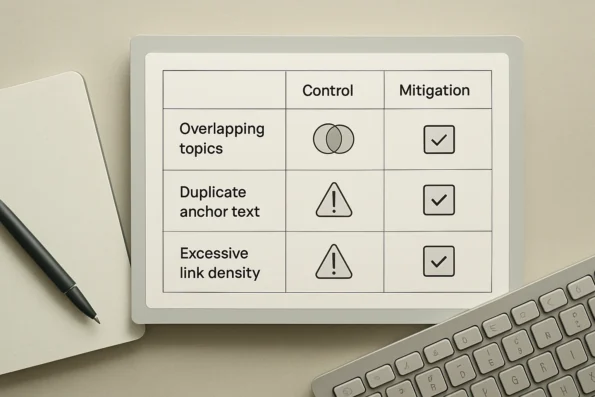
| Risk | Publisher Control | Mitigation Steps | Source |
|---|---|---|---|
| Overlapping topics between articles | Topic Manager conflict detection | Flag conflicts before publication; editorial team reviews and resolves overlaps | Publisher Topic Manager Guide |
| Duplicate anchor text across multiple links | Editorial rules for anchor variation | Set anchor diversity criteria; enforce via pre-publication checks | Publisher Topic Manager Guide |
| Excessive link frequency in a single article | Automated link density thresholds | Warn when limits are exceeded; allow manual override if justified | Publisher Topic Manager Guide |
| Orphaned pages (no internal links) | Content inventory coverage analysis | Identify unlinked content; prompt linking before publication | Publisher Topic Manager Guide |
| Unchecked automation errors | Pre-publication warnings & manual override | Editors review all automated links; override or approve as needed | Publisher Topic Manager Guide |
| Ambiguous link targets due to topic overlap | Granular topic assignment and unique link mapping | Require explicit primary topic per page; enforce unique target mapping during automation | Publisher Topic Manager Guide |
| Unintentional link loops or circular references | Automated link path checks and loop detection | Detect and block circular references prior to link approval | Publisher Topic Manager Guide |
| Excessively broad anchor text (generic anchors) | Contextual anchor optimization engine | Enforce contextual matching between anchor and target using content analysis algorithms | Publisher Topic Manager Guide |
Mapping risks to explicit control mechanisms allows editorial teams to maintain both technical and strategic oversight. NextlerAI Publisher’s Topic Manager enables granular topic assignment, which is critical for distinguishing between closely related articles and avoiding cross-linking conflicts. Editorial rules for anchor diversity and link density are enforced through automated pre-publication checks, reducing the risk of repetitive or excessive links that can undermine user experience or SEO goals. The system’s content inventory ensures that no relevant page is left orphaned, actively prompting for links when gaps are detected. Manual overrides and pre-publication warnings provide a final layer of review, empowering editors to intervene before any automated error is published. In practice, these controls are not isolated; the platform’s automation engine orchestrates them in tandem, running link-path checks while simultaneously enforcing anchor diversity and topic uniqueness rules. When the system detects overlapping topics or duplicate anchors, it prompts editors with targeted warnings and granular options to resolve each issue individually. This enables a highly controlled linking environment where editorial intent and automation safeguards work together. All controls and mitigation steps are documented in the Publisher Topic Manager Guide (nextlerai.com), supporting consistent, auditable processes for cannibalization prevention. This risk-control framework is designed to balance scalable internal linking automation with editorial governance and robust safeguards.
Checklist: Safe rollout and ongoing review
Automating internal linking in WordPress with NextlerAI Publisher delivers meaningful scale and editorial consistency, but only when teams follow a disciplined approach to deployment and ongoing quality assurance. The following checklist synthesizes practical, evidence-based actions for safeguarding content integrity, minimizing risk, and ensuring continuous improvement as automation is introduced and scaled. Incorporating multi-stage automated approval steps ensures that every suggested internal link can undergo compliance, SEO, and editorial review before publication.
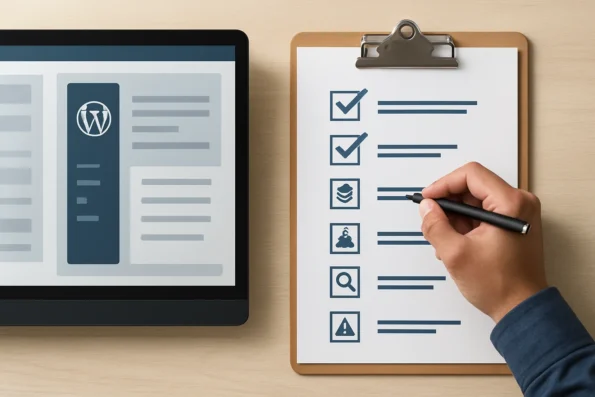
- Back up your WordPress site and content inventory before activating automated internal linking. Protect against unforeseen configuration errors or content rollbacks by ensuring a full backup exists, including the structured content inventory used by NextlerAI Publisher. This action supports rapid restoration if automation introduces unintended changes or if inventory conflicts occur.
- Define explicit review workflows for each content batch before enabling automation at scale. Assign editorial roles and approval checkpoints so that every automated link is reviewed according to your team’s policy, as outlined in official Publisher documentation. Implement logging for reviewer decisions, creating a traceable record of link approvals or rejections. This traceability is crucial for accountability and ongoing process refinement.
- Set enforceable rules for link density and anchor text variation. Use Publisher’s configuration options to establish thresholds for maximum links per post and to require diverse, context-sensitive anchor text, addressing common risks of over-linking and repetitive phrasing. Anchor text variation not only improves SEO but also enhances user readability and navigational cues within the content.
- Test automation on a small, representative subset of content before scaling up. Validate that suggested links, anchor text, and placement align with editorial standards, and confirm that cannibalization controls function as intended. Engage reviewers in this pilot phase to identify edge cases, misapplied rules, or semantic mismatches. Escalate atypical issues for team review before proceeding to a broader rollout.
- Regularly audit link suggestions and published links for context, accuracy, and compliance. Schedule periodic reviews using Publisher’s audit and reporting features, cross-referencing logs to verify that link placement supports user experience and SEO objectives. Use these audits to assess not only compliance with density and variation rules but also to catch evolving issues such as drift in topic coverage or the emergence of new site sections requiring internal linkage.
- Escalate unresolved link conflicts or cannibalization warnings to editorial leads for manual intervention. When Publisher surfaces unresolved conflicts—such as multiple potential link targets for a single anchor or recurring cannibalization alerts—involve senior editors or SEO managers to adjudicate link targets or revise underlying content structure. This preserves long-term site health and prevents automation from compounding structural issues.
- Document changes to linking strategies and inventory modifications. Maintain a change log whenever significant adjustments are made to content inventories, linking policies, or review workflows. This documentation enables teams to track the impact of changes, facilitates onboarding of new editorial staff, and supports compliance with organizational governance standards.
- Review and update quality rules as site content and structure evolve. As new content clusters or sections are added, revisit link density, anchor text, and review policies to ensure that automation adapts appropriately. Periodic policy review mitigates the risk of outdated automation rules causing suboptimal internal link structures or overlooking important content areas.
For further detail on establishing risk-managed editorial automation and safe publication practices, consult the latest official documentation on publisher quality rules, reports, and safe publication workflows.
Illustrative scenario: Deploying automated internal linking in a large WordPress site
This scenario demonstrates how a high-volume editorial team can leverage NextlerAI Publisher to automate internal linking within a complex WordPress environment. Each step reflects operational choices and controls that address real-world requirements for SEO, editorial quality, and scalable governance. For organizations operating in regulated sectors, compliance-centric workflows using NextlerAI Publisher ensure internal linking automation meets sector-specific oversight and audit requirements.
Initial audit and content clustering
The process begins with a thorough site audit. Editorial and SEO leads inventory all published and draft content, identifying main topic clusters and highlighting link gaps between related articles. This mapping clarifies which content requires stronger connections and which areas risk cannibalization—an essential step for building an effective internal linking strategy. Teams also assess metadata, taxonomies, and existing manual links to ensure a holistic understanding of the current site structure.
Publisher inventory import and topic strategy configuration
Next, the team imports the full content inventory into NextlerAI Publisher. This structured import enables Publisher to recognize relationships between articles, topics, and categories. Editorial policies and topic strategies are set within Publisher, ensuring that automated links will align with established site architecture and SEO objectives. This foundational work supports contextual link generation and precise anchor text assignment. Teams make key decisions about topic inclusion, exclusion, and priority, directly influencing which articles become eligible link targets within the automated process.
Configuring link automation with editorial controls
With inventory and strategy in place, link automation is configured. Editors establish rules for anchor text diversity, link density, and contextual placement. Publisher’s automation engine uses these parameters to identify eligible link targets from the inventory, generating contextually relevant internal links within each article draft. Built-in quality controls ensure that links are not placed indiscriminately, and repetitive or generic anchors are flagged for review. Editorial leads may further refine parameters to exclude sensitive or high-priority pages from automated linking, maintaining manual oversight where required.
Batch review and cannibalization resolution
The first batch of automated article drafts undergoes a focused editorial review. Publisher highlights any instances where multiple articles target the same keyword or topic, flagging potential cannibalization risks. Editors manually assess these flagged links, removing or adjusting those that could dilute topic authority or create confusion. This step ensures that automation supports rather than undermines editorial objectives. The review process may involve cross-team collaboration, especially when resolving conflicts in overlapping content areas or updating linking policies based on new editorial priorities.
Ongoing monitoring and process audit
After initial rollout, the team institutes ongoing audits using Publisher’s built-in reporting features. Regular reviews of link performance, anchor text variation, and flagged conflicts help maintain internal linking quality as new content is published. Editorial leads update automation rules and inventory records to reflect evolving site structure and strategy, ensuring sustainable scaling without loss of control. Publisher’s audit tools provide visibility into link distribution and highlight emerging risks, enabling proactive adjustments to linking rules and topic inventories.
Reference documentation at each phase
Throughout the rollout, teams consult the official NextlerAI Publisher setup documentation for detailed guidance on inventory import, rule configuration, and review workflows. This evidence-based approach ensures every implementation phase aligns with verified platform capabilities and avoids common mistakes associated with generic automation plugins.
FAQ
What common mistakes occur when automating internal linking in WordPress?
The most frequent errors include generating excessive or irrelevant links, using repetitive anchor text, and creating conflicts where multiple pages compete for the same keyword or topic. Additionally, failing to review automated links before publication can introduce broken links or contextually inappropriate connections, undermining both user experience and SEO value. A lack of structured inventories also increases the risk of orphaned content, and relying solely on keyword-matching without considering semantic context can lead to misleading or superficial links. Without robust editorial oversight, automation may inadvertently prioritize convenience over strategic site architecture, amplifying these issues at scale.
How does NextlerAI Publisher create contextual internal links and select anchor text?
NextlerAI Publisher identifies potential link targets from a structured inventory of site content. It analyzes the context of each article section to generate relevant internal links and selects anchor text that matches the surrounding narrative. The system enforces diversity in anchor phrasing to avoid redundancy, ensuring each link feels natural and contextually appropriate. Publisher’s underlying mechanism incorporates semantic analysis, not only matching keywords but evaluating topical alignment within the document to propose link placements that enhance both the reader’s journey and SEO strategy. Editorial parameters are configurable, allowing teams to specify acceptable anchor variations and exclude sensitive or low-value targets from automation.
What visual workflow summarizes automated linking and cannibalization control?
The Publisher workflow begins with content inventory analysis, followed by automated link suggestion based on semantic relevance. Each suggested link passes through an editorial review stage, where cannibalization warnings are flagged and must be resolved before publication. The workflow provides transparency by logging all link decisions and conflicts for audit and governance purposes. Within this process, the system continuously cross-references live content against inventory data to detect overlaps, dynamically updating link suggestions as inventory or editorial rules change. Granular user permissions ensure that only authorized editors can approve final link sets. All changes and conflict resolutions are recorded in an auditable system log, supporting quality assurance and compliance obligations.
What steps should teams follow to safely implement automated internal linking at scale?
Teams should start with a full backup of the site and inventory, define clear editorial review workflows, set enforceable rules for link density and anchor variation, and pilot automation on a small batch of content. Ongoing audits and escalation protocols for unresolved conflicts are essential to maintain quality and manage risk as automation scales. Beyond initial deployment, regular reviews of both automated suggestions and published link patterns should be scheduled to identify drift from editorial intent or emergent patterns of cannibalization. Designating roles for editorial oversight—such as reviewers and escalation leads—further ensures accountability and rapid response to quality or compliance concerns.
Which controls and checks mitigate risk when scaling automated internal links?
Risk is managed through structured inventories, automated conflict detection, editorial approval workflows, and review checkpoints. Publisher’s system flags overlapping link targets and ambiguous anchors, enforces maximum link thresholds, and provides override options for manual resolution—ensuring scalable automation does not compromise editorial standards or site structure. Automated pre-publication warnings alert editors to potential cannibalization or excessive density, while integrated reporting surfaces trends that require strategic adjustment. These controls are reinforced by system-level audit logs and configurable permissions, supporting consistency and traceability across large editorial teams and complex site structures.
Conclusion
Automating internal linking in WordPress with NextlerAI Publisher is most effective when approached as a controlled, evidence-driven process rather than a set-and-forget task. The platform’s reliance on structured site inventories, contextual anchor selection, and rigorous editorial oversight distinguishes it from generic plugins or bulk-linking tools. Teams achieve sustainable results only by embedding Publisher’s risk controls and review stages into their broader editorial workflow. This ensures internal links are not just numerous, but contextually relevant and free of cannibalization conflicts.
Under the hood, NextlerAI Publisher’s automation depends on a dynamic mapping of site structure and topic relationships, ensuring that every suggested internal link aligns with the intended editorial narrative. When the platform generates linking suggestions, it references a maintained inventory and applies editorial boundaries, such as exclusion zones or limits on anchor repetition, directly within its configuration interface. This approach prevents the propagation of irrelevant links or keyword-stuffed anchors—common pitfalls in less sophisticated systems. Additionally, the interface facilitates a traceable review process, where each automated link is logged, flagged for potential conflicts, and routed for human validation before publication. These mechanisms enable teams to fine-tune their linking strategy, adapting rules as content scales or editorial priorities evolve, while maintaining full auditability and compliance with organizational policies.
For teams ready to advance, the next practical action is to formally map out your content inventory and define editorial boundaries within Publisher’s configuration interface. This step unlocks the platform’s core automation capabilities while retaining full editorial control and audit transparency. Implementing this foundation allows you to scale internal linking with confidence, knowing that each link passes through a framework designed for both SEO effectiveness and editorial integrity.