







Introduction
AI multilingual content automation is transforming how content managers, editors, and marketers scale global publishing operations. At its core, this approach uses AI to automate the translation and initial localization of articles, product descriptions, and other digital assets for multiple languages and regions. However, relying solely on automation can introduce significant workflow and quality challenges if not carefully controlled.
For organizations seeking to reach international audiences efficiently, AI-driven pipelines offer substantial labor savings and faster turnaround. Yet, true success depends on more than just automated translation—it requires editorial oversight, structured quality controls, and careful adaptation to cultural, legal, and SEO-specific contexts. Automation platforms must handle language variants, support multilingual plugins, and integrate fluidly with existing editorial workflows to maintain brand consistency and regulatory compliance across markets.
Establishing a reliable multilingual content strategy with AI also means making critical decisions about workflow design, division of editorial responsibility, and the precise role of automation at each stage. Teams must determine how to sequence automated translation, human review, and scheduled publication, as well as which steps are appropriate for post-automation review in regulated sectors. Selecting the right automation tools requires a close examination of plugin compatibility, support for fallback scenarios, real-time error reporting, and the ability to enforce editorial checkpoints. By deliberately mapping these mechanisms, organizations can prevent costly errors—such as publishing unverified translations or missing region-specific compliance requirements—and sustain long-term operational efficiency.
This guide delivers a practical, mistake-driven framework for adopting AI multilingual content automation. You will learn how to avoid the most common pitfalls—such as loss of idiomatic nuance, duplication, and misaligned SEO metadata—by applying evidence-based criteria, operational checklists, and robust audit steps. The outcome: a clear path to expanding your global content operations without sacrificing quality, accuracy, or editorial governance.
Where AI Multilingual Automation Breaks Down: Limitations and Risks
Missed Nuance and Regulatory Context
Automated translation systems excel at direct language conversion, but they consistently fall short when interpreting idiomatic expressions, local references, or regulatory context. AI-driven localization often omits the cultural and legal subtleties that define regionally effective content. For example, financial or health-related topics may require region-specific disclaimers, terminology, or compliance markers that generic automation will not reliably insert without explicit human oversight. Even advanced AI cannot reliably distinguish when a phrase loses meaning or creates reputational risk across markets—especially where terminology holds different connotations in each locale. AI Act | Shaping Europe’s digital future documents the relevant background and implementation boundaries.
Risk of Error Propagation Without Human Review
Fully automated pipelines invite duplication of translation errors, omissions, or misinterpretations across all target languages if human review is omitted. Localization is not just about substituting words but adapting messaging, tone, and references for each audience. When editorial checkpoints are bypassed, minor issues—such as inaccurate product claims or culturally insensitive phrasing—can scale into multi-market problems, undermining trust and compliance. Relying solely on machine-generated outputs is particularly risky for content that touches regulatory, legal, or sensitive social domains.
Dependency on Platforms, Plugins, and APIs
Modern multilingual publishing depends heavily on a stable chain of integrations, from content management systems and plugins (such as WPML or Polylang) to third-party APIs for translation or evidence. Any disruption—such as plugin incompatibility after an update, third-party API downtime, or configuration drift—can break the automation pipeline. This exposes teams to risks like incomplete language variants, inconsistent metadata, or delayed publication windows. Robust architecture requires clear fallback routines that maintain workflow continuity when integrations are temporarily unavailable.
SEO Metadata and Navigation Misalignment
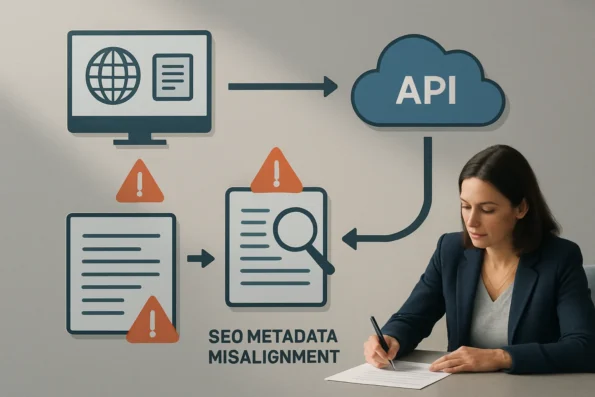
Automated workflows do not guarantee accurate localization of SEO metadata, canonical URLs, or internal navigation. AI systems may replicate original language structures without adapting metadata to the search behavior and technical requirements of each market. This can result in misaligned canonical tags, duplicated content signals, or navigation that fails to guide users to the right language variant—exposing publishers to SEO penalties and user confusion. Effective automation requires built-in checks for localized metadata and navigational logic on every iteration.
Heightened Oversight for Sensitive and Regulated Content
In regulated sectors such as finance or health, automated processes must be supplemented with rigorous human review to ensure all local and jurisdictional requirements are met. According to the European Commission’s AI Act, content deployers remain responsible for compliance—regardless of automation level. Automated tools do not absolve organizations from the duty to verify, document, and, where necessary, intervene in the final output. A robust operational model always includes manual review and approval steps for critical content categories.
Editorial Controls and Safe Fallbacks Remain Essential
AI automation can expedite translation and localization, but it cannot replace explicit editorial controls over brand voice, compliance, and publication readiness. Editorial approval gates, configurable within platforms like NextlerAI Publisher, remain the anchor points for quality and governance. When multilingual plugin integrations or evidence sources are unavailable, the system must default to a safe fallback—logging gaps, pausing affected workflows, and signaling for manual intervention. Automation at scale is only sustainable when safety nets are built in at each failure point.
Criteria Table: Choosing the Right Platform for AI Multilingual Content Automation
To select an AI-powered platform for automated multilingual publishing, content teams must scrutinize factors beyond basic translation capacity. Effective automation depends on robust editorial governance, seamless plugin compatibility, transparency at every workflow step, and operational safeguards that address real-world integration or service failures. The following table outlines essential criteria for evaluating and comparing platforms, focusing on documented mechanisms—not just feature claims—to ensure editorial integrity and continuity across multilingual pipelines. Compare leading AI workflow automation tools and learn how automation platforms differ in their approach to multilingual publishing. AI Risk Management Framework | NIST documents the relevant background and implementation boundaries.
| Criterion | What to Look For | Why It Matters | Vendor/Source Evidence |
|---|---|---|---|
| Editorial Governance | Role-based approvals, configurable checkpoints, audit trails | Prevents errors, ensures brand and legal compliance at each workflow stage | NextlerAI Publisher, Smartling |
| Multilingual Plugin Compatibility | Native or certified integration with WPML, Polylang, or equivalent | Guarantees content is correctly slotted, displayed, and managed in each language | NextlerAI Publisher |
| Workflow Transparency | Pipeline visualization, stepwise logs, error and exception tracking | Supports rapid diagnosis and resolution of automation breakdowns | NextlerAI Publisher |
| Operational Reporting | Job status dashboards, error reporting, exportable logs | Enables ongoing monitoring and process improvement | NextlerAI Publisher |
| Scheduled Publication & Slotting | Automated scheduling, slot management for multilingual articles | Maintains publishing cadence and prevents overlap or omission | NextlerAI Publisher |
| Fallback Handling | Safe continuance or logging when plugins, APIs, or sources are unavailable | Prevents silent errors and protects workflow continuity | NextlerAI Publisher |
| SEO Metadata Localization | Separate metadata fields for each language, automated or manual review options | Improves search visibility and prevents duplicate or conflicting tags | Smartling |
| Custom Workflow Configuration | Flexible mapping of steps, roles, language pairings, and integrations | Adapts to unique editorial, legal, or technical needs | NextlerAI Publisher |
| CMS Integration and API Support | Direct, documented integration with popular content management systems and structured API endpoints | Enables automated delivery and updates of multilingual content directly into publishing environments | NextlerAI Publisher (guide) |
| Quality Control Mechanisms | Built-in review steps, language-specific error detection, support for manual overrides | Reduces propagation of translation or localization errors before publication | Smartling (blog) |
| Resilience During Service Outages | Automated fallback strategies, such as deferred publishing or alerting, when dependencies fail | Ensures content pipelines are robust and minimize disruption from third-party service interruptions | NextlerAI Publisher |
Teams should also consider how platforms expose and manage these criteria programmatically. For example, robust platforms allow administrators to set up conditional logic for slotting and fallback handling, ensuring that if a plugin or service is unavailable, content can be redirected to a review queue or safely postponed. Workflow transparency is enhanced by detailed event logs and notifications that capture each handoff, translation, and localization event, enabling clear attribution and rapid troubleshooting. Integration with multilingual plugins such as WPML or Polylang should support language mapping, slot management, and metadata synchronization for each variant. Operational reporting must be granular enough to isolate failures at the language or step level, and scheduling functions should incorporate rules to avoid duplicate or unslotted publications. By prioritizing platforms that provide configurable safeguards, clear visibility into each automation stage, and documented mechanisms for error handling, organizations can maintain editorial control while scaling multilingual operations. The next section covers key operational safeguards for building sustainable, reliable multilingual content workflows.
Key Takeaways: Building Reliable Multilingual Content Workflows
Balance Automation with Human Editorial Oversight
Effective multilingual content automation demands a thoughtful blend of AI-driven efficiency and deliberate human intervention. While AI can accelerate translation and initial localization, explicit editorial checkpoints are essential at critical workflow stages. These reviews not only safeguard against translation inaccuracies but also ensure that cultural and legal contexts are respected for each market. Organizations using platforms such as NextlerAI Publisher should configure checkpoints that require manual approval before content advances to publication, especially for regulated or high-risk topics. Understanding the limitations of automated translation starts with a solid grasp of the AI topic discovery pipeline, which shapes content selection and prioritization before localization even begins. [2003.04552] Spontaneous emission of a quantum emitter near documents the relevant background and implementation boundaries.
Localize SEO Metadata, Internal Links, and Navigation
Beyond translating visible content, robust workflows localize SEO metadata, canonical and internal links, and site navigation for each language variant. This nuance is vital to preserve search performance and user experience. Automated pipelines must incorporate steps to adapt meta titles, descriptions, and structured data, ensuring each version aligns with local search intent and technical SEO standards. Neglecting this results in reduced discoverability and potential keyword cannibalization across language sites.
Monitor Content Duplication and Keyword Cannibalization
Automated translation engines can inadvertently create duplicate content and overlapping keyword targets within and across languages. To address this, leverage structured inventory controls and pipeline-level monitoring. Platforms with built-in content mapping and reporting, such as NextlerAI Publisher, support teams in detecting and resolving duplication risks early, minimizing SEO dilution and preserving topical clarity across the content estate.
Maintain Workflow Transparency with Structured Reporting
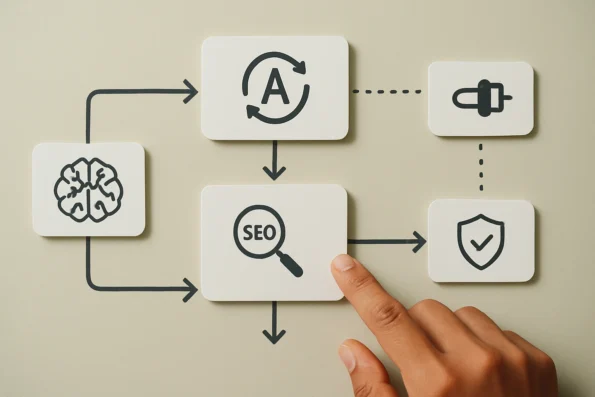
Transparency is indispensable for sustainable automation. Implement structured reporting and error logging to track pipeline status, translation outcomes, and any exceptions. This allows content managers to audit the end-to-end process, diagnose issues, and enforce accountability at each stage. Operational logging also underpins regulatory compliance, especially where multilingual content is subject to review or legal disclosure requirements.
Establish Fallbacks and Recovery for Plugin Failures
Multilingual publishing pipelines are dependent on plugins and third-party integrations. Failures—such as incomplete translations or plugin outages—demand clear fallback and recovery mechanisms. Systems should be designed to pause publication, log the interruption, and enable safe manual recovery rather than pushing incomplete or incorrect content live. Platforms that support evidence-aware fallback logic help maintain content integrity, even when optional integrations are unavailable.
Leverage Platform-Native Quality Controls and Safe Publication
Choose automation platforms that offer native quality controls, including granular workflow configuration, audit trails, and safe publication gates. For example, NextlerAI Publisher supports editorial slotting, structured approvals, and workflow transparency within WordPress, making it possible to manage multilingual pipelines without sacrificing governance. Prioritize solutions that allow custom checkpoints and integrate seamlessly with multilingual plugins to sustain operational reliability.
Definitions: Multilingual Automation Terms Explained
Clear terminology is the foundation for effective AI multilingual content automation. To navigate the complexities of global publishing workflows, you need precise distinctions between translation, localization, cultural adaptation, and operational controls. Each concept shapes how content teams structure their pipelines, make editorial decisions, and mitigate automation risks. Teams implementing workflow automation should establish editorial calendar automation safeguards to maintain clear scheduling, prevent overlap, and ensure timely review across all language versions. Findings of the Second Workshop on Neural Machine documents the relevant background and implementation boundaries.
Translation
Translation refers to the conversion of text from one language to another. In AI-driven workflows, this process is typically performed by a machine learning model that outputs a direct linguistic equivalent. While efficient for baseline content reproduction, automated translation alone cannot guarantee contextual relevance or compliance for every audience.
Localization
Localization extends beyond literal translation, adapting content for a target region or culture. This includes modifying language, adjusting imagery, and ensuring content meets regulatory, legal, and SEO requirements specific to each locale. Platforms supporting AI localization automation must enable teams to customize metadata, internal links, and navigational elements for every language version.
Cultural Adaptation
Cultural adaptation is the fine-tuning of content to respect local customs, idioms, and audience sensitivities. This step addresses nuances that automated translation or standard localization often miss, such as humor, taboos, or culturally loaded phrases. Human review and regionally informed editorial checkpoints remain essential for effective adaptation.
Inventory Control
Inventory control in multilingual workflows involves tracking both source and translated content to prevent duplication, gaps, or cannibalization. Robust inventory management ensures every language variant is accounted for in scheduling, review, and publication. Platforms like NextlerAI Publisher provide built-in inventory mechanisms to support oversight and prevent accidental overlap.
Slot
A slot is a reserved publication window in the editorial calendar for a specific language version. Slotting helps teams coordinate releases, manage workload, and ensure that each language variant is published at the intended time without conflict. Automated multilingual publishing platforms should allow granular control over slot assignment for each language.
Fallback
Fallback refers to automated procedures for handling missing integrations, unavailable translation services, or evidence sources. Effective fallback logic records the absence of optional data and maintains workflow continuity by pausing or rerouting jobs until dependencies recover. This resilience is critical for uninterrupted global content operations.
Editorial Checkpoint
An editorial checkpoint is a manual or automated review step before publication to verify content quality, regulatory compliance, and cultural fit. These checkpoints can be configured at multiple stages—translation, localization, or final review—ensuring that content meets organizational standards before it goes live.
Checklist: Launching an Automated Multilingual Content Pipeline
Launching an AI-powered multilingual content pipeline requires more than simply connecting translation plugins to an automation platform. To safeguard editorial integrity, SEO value, and operational transparency, every stage must be methodically prepared and actively monitored. The following checklist provides a structured approach for content managers and technical leads to implement multilingual automation with the controls and contingencies demanded by real-world publishing environments.
Before scaling up, consult the automated content brief checklist for concrete steps to audit workflow readiness, avoid duplication, and clarify editorial roles in a multilingual environment.
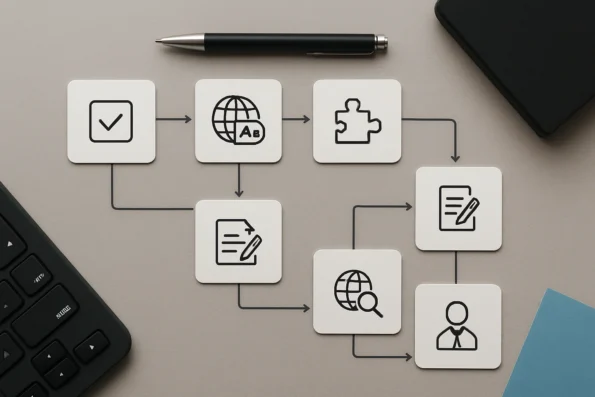
- Inventory and Map Languages: Catalog all required source and target languages, linking each to its intended publishing destination and plugin configuration. Map language-specific site structures and document their interdependencies to avoid orphaned or misrouted content during automation.
- Configure Translation and Localization: Set up translation models and localization logic. Rigorously test multilingual plugin integrations (e.g., WPML, Polylang) to ensure correct language routing and content rendering across your WordPress sites. Validate that language switchers, hreflang tags, and plugin-specific URL structures align with expected outputs.
- Establish Editorial Checkpoints: Define review gates at every language handoff—especially before final scheduling—so that contextual, legal, and brand requirements are validated by qualified editors. Specify which checkpoints require native speakers or subject matter experts, and configure notification workflows to alert reviewers when tasks are ready.
- Enable and Test Fallbacks: Implement automated fallback procedures for plugin or API failures. Confirm that the pipeline safely logs and pauses affected jobs without publishing incomplete or misrouted content. Document escalation paths and assign responsible parties for manual intervention when automated recovery is triggered.
- Validate SEO and Internal Linking: Audit SEO metadata, canonical tags, and internal navigation for each language variant to prevent misalignment or search engine confusion. Coordinate with SEO specialists to verify multilingual sitemaps and schema markup are reflected correctly in each language’s output.
- Monitor Content Duplication: Track for accidental duplication and keyword overlap across translations, using inventory controls to prevent cannibalization and maintain unique value in every region. Leverage plugin or CMS audit logs to reconcile content coverage and identify overlap trends early.
- Log Workflow Status and Errors: Maintain comprehensive logs that capture the status of each automation step, including errors and exceptions, to support rapid troubleshooting and continuous improvement. Ensure logs are accessible to both technical and editorial stakeholders, and set up alerts for critical failures.
- Require Human Review Before Publication: Mandate that localized content undergo human review and sign-off before it is queued for scheduled release, ensuring that automation supports—not overrides—editorial judgment. Define rollback procedures for any content failing review at this stage.
Audit Steps: Fixing Common Multilingual Automation Failures
Detecting and correcting failures in automated multilingual publishing pipelines is essential for maintaining quality, compliance, and operational reliability. The following ordered process outlines evidence-based steps for content managers and technical leads to methodically address automation breakdowns and restore workflow integrity. For organizations requiring advanced publishing pipelines, evaluating custom API integration safeguards is essential to ensure secure, compliant connections between automation platforms and multilingual CMS environments.
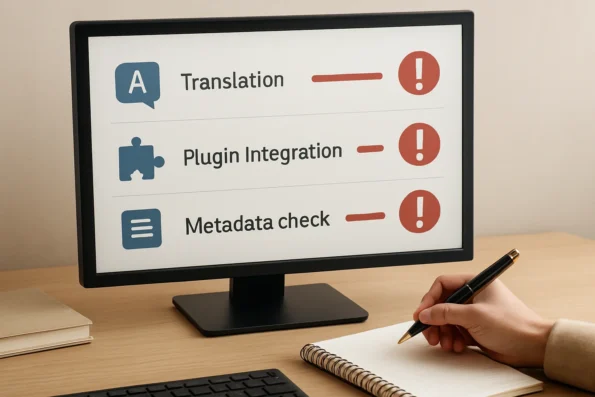
- Review background jobs and logs for failed translations or pipeline errors. Start by examining detailed job logs within your automation platform. Logs typically record each translation attempt, integration step, and scheduled publication, allowing you to identify where failures occurred—such as incomplete translations or interrupted API calls. This granularity is critical for diagnosing the root cause of workflow disruptions. Advanced log viewers, as described in platform documentation, may provide filters for language, job type, and error code, making it easier to pinpoint specific failure patterns over time and across pipeline stages.
- Isolate issues caused by plugin/API outages, model output errors, or scheduling conflicts. Distinguish between failures due to external dependencies (e.g., multilingual plugin downtime or API rate limits), problems with AI model output (such as incomplete or incorrect translations), and misalignments in publication scheduling. Systematically categorizing the failure source enables faster triage and targeted remediation. Some platforms let you correlate error events with system health dashboards or third-party integration status, helping you determine if issues are isolated or systemic.
- Re-run failed steps only after confirming workflow and integration health. Before attempting to reprocess translations or republish content, first confirm that all related plugins, APIs, and platform integrations have returned to a healthy operational state. This prevents recurrence of the initial failure and ensures that re-executed steps are processed under stable conditions. Many automation platforms support job retry/cancellation management, allowing you to selectively requeue failed items, but these should only be triggered after verification using platform health indicators or recent status logs.
- Check for language mismatches, missing metadata, and broken navigation in published outputs. Scrutinize the output for any discrepancies—such as language tags not matching the actual content, absent or untranslated SEO metadata, or navigation links that fail to connect localized versions. These issues can persist even after the primary workflow resumes, so a structured post-recovery audit is necessary. If available, use built-in preview or diff tools to compare language variants and metadata fields before pushing updates live.
- Update or roll back content as needed to preserve SEO and user experience. When errors are detected in live multilingual content, determine whether to update the affected items with corrected data or roll back to a previous, verified version. This preserves both search engine visibility and user trust, especially in high-traffic or compliance-sensitive environments. Platforms that support versioned publishing or automated rollback mechanisms make this process more reliable and auditable.
- Use operational dashboards for continuous monitoring and rapid recovery. Implement dashboards that surface live status of translation jobs, integration health, and error rates. Continuous monitoring enables teams to respond quickly to emerging failures, minimizing downtime and ensuring that multilingual publishing remains robust even in the face of upstream outages or unexpected output errors. Dashboards should be configured to trigger alerts for critical failures, and support drill-down views for faster root cause analysis.
By following these audit steps, your team can proactively detect, diagnose, and correct issues in AI multilingual content automation—safeguarding both workflow efficiency and content quality across all supported languages.
Illustrative Scenario: Multilingual Publishing Pipeline in Action
Illustrative Scenario: A global content team is gearing up to launch a new product simultaneously on their English, Spanish, and German websites. To meet tight deadlines and ensure consistency, they select an AI-powered multilingual content automation platform with documented support for WordPress and leading multilingual plugins. The team configures their workflow to leverage automated translation and initial localization, while explicitly requiring human editorial review for each language variant before publication.
Automated Localization and Editorial Oversight
The publishing pipeline begins with the source English product descriptions. The platform’s AI modules generate target-language drafts in Spanish and German, localizing terminology and formatting. As the workflow progresses, editorial checkpoints pause the process for human review at pre-configured stages. During the German review, an editor identifies a regulatory term in the machine-translated copy that conflicts with local legal standards—a nuance that escaped the initial AI-driven localization. The editor updates the copy to comply with country-specific requirements, demonstrating why editorial governance remains essential for regulated markets.
This editorial checkpoint is not merely a content review; it is configured within the platform as a mandatory approval gate. Only designated language specialists can approve changes, and any detected legal or cultural issues are logged through the platform’s reporting interface. This ensures traceability and accountability for each adjustment, with the option to compare revision histories directly in the editorial dashboard. The configuration also enables customizable escalation paths: if a critical compliance issue is flagged, publication is automatically paused until a qualified reviewer resolves the concern.
Resilience to Plugin and Integration Failures
As the Spanish content moves through the pipeline, the system detects an outage in the site’s multilingual plugin integration. Rather than publishing incomplete or potentially misaligned content, the platform’s fallback mechanism logs the error, halts further publication, and issues a notification for manual intervention. This safeguards against partial rollouts, helping teams avoid SEO and user experience risks from language mismatches or broken navigation.
The fallback protocol is configured to trigger not only for plugin outages, but also for API rate limits, missing translation assets, and detected discrepancies in content synchronization. Errors are automatically categorized and routed to the relevant team members via the operational dashboard, minimizing response time. The system’s logging provides a concise audit trail, allowing administrators to diagnose the precise source of failure and coordinate recovery steps.
Recovery, Publication, and Operational Monitoring
Once the plugin service is restored, the workflow resumes from the exact interruption point. Editors complete their final reviews with updated dashboards highlighting any residual issues. Only after all language variants are confirmed accurate and compliant does the system release the product pages across all sites. Throughout the process, operational dashboards continuously track job status, error logs, and the health of each integration, ensuring no error goes unaddressed.
Lessons from the Scenario
This scenario underscores the importance of blending automation with structured editorial checkpoints, resilient fallback protocols, and transparent operational reporting. Teams prioritizing these mechanisms can achieve both the speed of AI automation and the reliability required for global, multilingual publishing at scale.
FAQ
What are the real-world limitations of AI in multilingual content publishing?
AI-driven translation and localization can accelerate multilingual publishing, but they are constrained by limited understanding of idiomatic expressions, legal context, and market-specific nuances. Automated systems may also misinterpret cultural references, miss compliance obligations, or propagate subtle translation errors without structured human oversight. These limitations underscore the need for editorial checkpoints and specialized review, especially in regulated or sensitive domains.
Which criteria should guide platform selection for AI multilingual content automation?
Prioritize platforms that offer transparent workflow controls, granular editorial governance, proven compatibility with multilingual plugins, and robust operational reporting. Evaluate whether the system supports slotting, fallback handling, and structured checklists. The ability to separate language layers and maintain publication integrity during plugin or API outages is essential for sustainable automation.
What operational safeguards and workflow steps ensure translation quality and cultural relevance?
Implement configurable editorial review points, ensure SEO metadata and navigation are adapted per language, and require native speaker validation for culturally sensitive outputs. Activate structured error logging and recovery protocols, and validate each stage with both automated and manual checks to prevent duplication, omissions, or misaligned messaging across regions.
How do definitions like ‘localization’, ‘cultural adaptation’, and ‘inventory control’ differ in the automation context?
In automation, localization refers to modifying content for regional context—including local regulations, SEO, and imagery—while cultural adaptation focuses on aligning with local norms and idioms, often needing nuanced human review. Inventory control manages tracking and reconciliation of all language variants, preventing duplication and ensuring complete multilingual coverage across the publishing pipeline.
What practical checklist can help teams launch an automated multilingual content workflow?
Effective launch checklists should include mapping all required languages, testing multilingual plugin integrations, defining editorial checkpoints, enabling and validating fallback procedures, auditing SEO and navigation per language, and setting up workflow status logs. Human review and escalation protocols are mandatory before content is scheduled for publication.
How can you audit and fix common breakdowns in automated multilingual publishing pipelines?
Audit by reviewing workflow and error logs, isolating failures related to plugins, APIs, or model outputs, and categorizing issues for targeted recovery. Fixes include rerunning failed jobs only after confirming system health, correcting language mismatches or metadata errors, and using dashboards for continuous monitoring. Always update, roll back, or escalate issues as required to preserve publishing quality.
Conclusion
AI multilingual content automation has reached a level of technical maturity where it can reliably accelerate translation and initial localization. However, sustainable success in global content operations hinges on more than just deploying automated workflows. To maintain editorial quality and cultural accuracy at scale, your next priority should be to formalize a closed-loop review process. This means establishing clear checkpoints where both automated logs and designated human reviewers verify output before release. By structuring this oversight early—integrating robust error reporting, fallback mechanisms, and transparent handoff procedures—you ensure that automation reliably supports, rather than undermines, your multilingual publishing objectives.
As your organization grows its multilingual publishing footprint, invest in training your editorial and technical teams on these operational controls. Encourage active collaboration between platform administrators and native-language editors, so errors or context gaps are surfaced and resolved promptly. This approach embeds resilience and adaptability into your AI-driven pipeline, safeguarding both your brand and your compliance obligations as you expand into new markets.
The most effective implementations allocate ownership for each checkpoint, define escalation paths for unresolved issues, and use operational dashboards to track pipeline health in real time. This requires coordination between content leads, technical teams, and compliance stakeholders. By empowering teams to act on workflow alerts and audit logs, organizations can catch subtle translation or localization failures before they impact customers or regulatory standing. As a practical next action, schedule a cross-functional review of your current pipeline to identify checkpoint gaps, clarify roles, and ensure all critical error reporting and fallback triggers are actively monitored and maintained.