







Introduction
AI SEO automation for publishing transforms how content-driven organizations manage search optimization within their editorial workflows. Instead of relying solely on manual processes, modern platforms now embed AI-driven capabilities—such as automated metadata creation, AI internal linking, and real-time SEO audits—directly into the publishing pipeline. This approach streamlines the journey from draft to publication, reducing repetitive tasks and supporting editors with reliable, evidence-backed SEO enhancements at each stage.
For content strategists, editors, SEO managers, digital publishers, and WordPress site owners, understanding this evolution is essential. Automated SEO now means more than just plug-ins or simple field generation. It encompasses integrated workflows where AI tools collaborate with human oversight, enforce structured data standards like Schema.org, and work in tandem with industry-proven SEO plugins. Platforms such as NextlerAI Publisher exemplify this shift by automatically generating titles, descriptions, and contextual links—all within a framework that prioritizes editorial control, transparency, and compliance with search engine guidelines.
What distinguishes this new generation of automated SEO is its direct integration with publishing infrastructure. Rather than acting as after-the-fact add-ons, AI systems now participate in the live editorial workflow, delivering actionable SEO recommendations and programmatically updating fields as content is created or edited. Editorial checkpoints, manual overrides, and quality reporting are built into these pipelines, giving teams granular oversight over every automated change. Configurable rules allow editors to define boundaries for automation, ensuring that published content aligns with brand, legal, and search requirements. Real-time audits flag SEO blockers before publication, and structured logs let stakeholders trace every automated decision for compliance and review. This guide explains how to harness these mechanisms for scalable, safe, and effective SEO automation.
Clarifying Key Terms in AI SEO Automation
Defining Automated SEO in AI-Driven Publishing Pipelines
AI SEO automation for publishing refers to the systematic use of artificial intelligence to generate, update, and validate search engine optimization elements as an integrated part of the editorial workflow. Unlike ad hoc tools or post-publishing fixes, automation in this context operates natively within the content creation and approval pipeline, ensuring that SEO-critical elements—such as metadata, contextual internal links, and structured data—are addressed before any article goes live.
Core Terms and Mechanisms
Successful SEO workflow automation depends on understanding the following foundational terms:
- Automated metadata creation: The process by which AI tools generate SEO titles, meta descriptions, and structured data (such as schema markups) for each article. This ensures consistency and compliance with search engine guidelines, as defined by standards like Schema.org and documented in Google’s official SEO guidance.
- AI internal linking: The contextual placement of links to relevant site content, determined by automated analysis of each article’s subject, with the goal of improving site structure and discovery for both users and search engines.
- Real-time SEO audits: Automated evaluation of content against configurable SEO rules or plugin standards during the publishing process, immediately flagging missing or problematic elements so they can be addressed before publication.
- Editorial checkpoints: Human review stages embedded in the workflow, where editors can verify, override, or approve AI-generated SEO outputs before content is published.
Integration and Scope in Modern Publishing Environments
Modern systems such as NextlerAI Publisher exemplify how these mechanisms can be orchestrated within a WordPress environment. This solution enables the automatic generation of SEO metadata and contextual internal links, seamlessly delivering them to active SEO plugins. Importantly, it incorporates manual override and verification steps, so editorial teams retain control over what is published. The result is a workflow where automation accelerates routine SEO tasks, but final quality remains under human oversight.

Editorial Controls and Quality Safeguards
Effective AI SEO automation is not simply a matter of switching on tools. It requires clearly defined boundaries for what is automated versus what must be reviewed or customized. Editorial checkpoints serve as quality gates, ensuring that generated metadata, links, and structured data meet both brand and regulatory standards. Additionally, automated validation against search engine best practices—such as those outlined by Google and Bing—supports ongoing compliance and performance.
Another key mechanism is the configuration of automation rules, which control how AI components determine the scope and detail of metadata and internal links. For instance, teams may set parameters for title length, schema types to include, or contextual relevance thresholds for internal linking. NextlerAI Publisher’s architecture allows these settings to be tailored per publication or section, integrating with WordPress roles and permissions so that only authorized editors can approve or modify automated outputs. Furthermore, each SEO-relevant component generated by the system is logged and made available for audit as part of the publishing history. This traceability ensures that editorial teams can trace the origin and rationale of each automated change, supporting accountability and transparency throughout the pipeline. With these mechanisms, automated SEO is both scalable and tightly controlled within professional publishing workflows.
Key Takeaways: What Automation Changes in SEO Publishing
Automating SEO within publishing pipelines brings immediate, practical benefits for content teams. AI-powered systems such as NextlerAI Publisher accelerate routine SEO tasks—most notably, generating metadata and internal links—directly within content workflows. The reduction of manual effort not only speeds up publication but also helps maintain uniform standards, minimizing inconsistencies that can arise with human-only processes. To understand governance and change management in automated workflows, see the post on AI editorial workflow automation.
However, the introduction of automation does not mean that editorial oversight becomes optional. To prevent risks such as keyword cannibalization, duplicate content, or overlooked technical issues, robust control measures are essential. Effective pipelines embed configurable checkpoints and approval gates, ensuring that automated changes are reviewed before publication. Quality reporting and audit logs further enable teams to trace decisions, flag anomalies, and maintain compliance with both internal standards and search engine guidelines.
Another significant transformation is the integration of real-time SEO audits as a native part of the automated workflow. For example, when using NextlerAI Publisher, real-time warnings alert editors to SEO blockers—such as missing metadata fields or unresolved content conflicts—before a post is published. This allows teams to intervene at critical points, correcting issues that might otherwise undermine SEO performance or content eligibility.
Automation also enforces consistency at scale. By standardizing how metadata, internal links, and structured data are generated, content teams reduce the risk of human error. Automated workflows can be configured to align with established SEO plugins and structured data standards, supporting both Google and Bing webmaster requirements. Still, the effectiveness of these systems depends on the quality of the initial content and the clarity of editorial boundaries set by the organization.
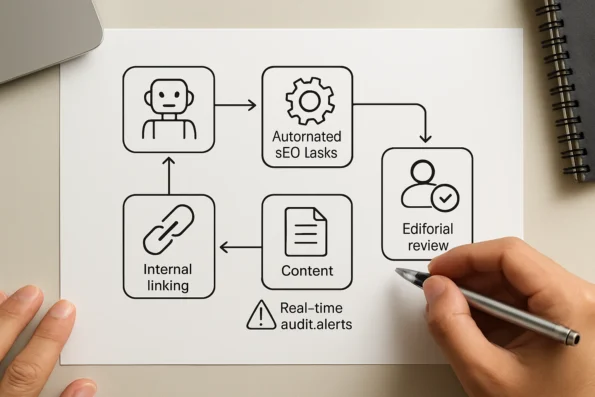
Digging deeper, automation in SEO publishing shifts the editorial decision-making process. Instead of focusing on repetitive manual inputs, editors allocate more attention to refining automation rules and adjusting approval logic. For instance, teams may define which metadata fields must always be manually reviewed or set topic boundaries to prevent the automation from introducing off-strategy keywords. With NextlerAI Publisher, editors can configure these boundaries and triggers directly within the workflow, specifying when human intervention is required before finalizing SEO-critical elements. This approach keeps the automation adaptive to changing editorial policies and evolving SEO guidelines, while maintaining traceability for every automated change.
It is important to recognize the limits of automation. No matter how advanced the AI, safe and effective SEO publishing still requires manual checkpoints, periodic review of pipeline outputs, and clear escalation for unresolved errors. Teams that combine automation with transparent oversight gain the most from these advances—streamlining repetitive work without compromising editorial integrity or SEO compliance.
Decision Criteria: Selecting AI SEO Automation Tools
Choosing an AI SEO automation tool for publishing pipelines requires careful alignment with your editorial workflow, technical infrastructure, and quality control standards. Begin by evaluating how the tool integrates with your existing content management system. Native compatibility with platforms like WordPress is crucial for uninterrupted publishing and seamless delivery of SEO metadata to popular SEO plugins. For example, NextlerAI Publisher offers direct WordPress integration and hands off metadata to the active SEO plugin, minimizing manual configuration. About – Schema.org documents the relevant background and implementation boundaries.
Editorial Control and Automation Granularity
Examine the level of transparency and manual intervention available within the automation process. Effective solutions allow editorial teams to review, override, or approve AI-generated SEO outputs before publication. This includes configurable checkpoints, approval gates, and the ability to audit automated actions. With NextlerAI Publisher, teams can enforce manual review stages and topic strategy controls directly within the live pipeline, ensuring that automation augments rather than replaces editorial oversight. Granularity in automation means being able to define which SEO elements are automated—such as titles, descriptions, internal links, or schema—and which require human sign-off. Flexible rules and permissions let organizations choose when automation acts autonomously and when editorial input is mandatory, reducing the risk of over-automation or unintended changes slipping through.
Structured Reporting and Error Escalation
Structured, real-time reporting is essential for tracking automation outcomes and identifying conflicts or errors early. Prioritize tools that provide clear audit trails, actionable status updates, and escalation mechanisms when issues arise. Such reporting should surface unresolved content conflicts, metadata anomalies, or internal linking errors—supporting rapid intervention without disrupting the overall workflow. Look for solutions where error states and warnings are delivered within the publishing interface, and where unresolved issues can be escalated to the appropriate editorial or technical roles for resolution, maintaining accountability across teams.
Support for Structured Data and External Evidence
Modern search engine guidelines emphasize the importance of structured data, multilingual support, and verifiable external evidence in automated publishing. Evaluate whether the tool can generate and validate Schema.org-compatible structured data, handle multilingual content requirements, and integrate with external evidence sources for citation accuracy. These capabilities ensure your published content meets the technical standards set out by search engines such as Google and Bing. Additionally, the automation tool should allow configuration of schema markup at the template or article level and manage language variants without loss of metadata fidelity, aligning with international SEO demands.
Workflow Compatibility and Quality Safeguards
Finally, assess each solution’s compatibility with your existing editorial processes and its capacity for inventory and topic management. Automation should not introduce new risks, such as duplicated topics or missed content updates. NextlerAI Publisher, for instance, supports real-time reporting, internal linking automation, and inventory tracking to prevent cannibalization within large publishing operations—all governed by transparent manual checkpoints and topic strategy configuration. Critically, ensure that the automation platform provides integration points for inventory synchronization, supports role-based topic assignments, and enables proactive detection of topic overlap or outdated entries, which are essential for maintaining high-quality, distinct SEO content at scale.
Workflow Optimization: Steps for Automated SEO in Publishing
Optimizing an AI-driven publishing pipeline for SEO automation requires a disciplined, stepwise approach. The goal is to harness automation for speed and consistency, while maintaining editorial oversight and compliance with search engine standards. Below is a structured process for integrating and refining automated SEO within a publishing workflow, designed for WordPress environments and tools like NextlerAI Publisher. When evaluating AI SEO automation for publishing, understanding the scope and boundaries of AI content research automation can clarify how topic discovery integrates with the rest of your workflow. Get help with Yoast products! documents the relevant background and implementation boundaries.
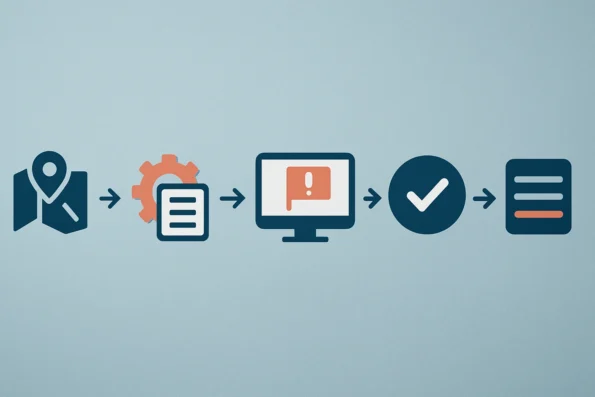
- Map all source materials and define editorial boundaries. Catalog every input, from topic briefs to final articles, and specify which SEO tasks are eligible for automation. Delineate areas where AI will operate—such as metadata generation and link placement—while reserving complex editorial decisions or sensitive content for manual review. This step should also include setting permissions for who can override or approve automated outputs, ensuring editorial controls are tightly integrated with the automation system.
- Configure automated metadata and internal link generation. Set up your pipeline to automatically create SEO titles, descriptions, and contextual internal links. Ensure the system hands off this data to your active SEO plugin, allowing the plugin to apply any final schema or structured data formatting. In the case of NextlerAI Publisher, metadata and link suggestions are generated and delivered directly to compatible plugins, allowing manual override where needed. This preserves compatibility with established WordPress SEO workflows and enables traceable handoff between automation and human review.
- Enable real-time SEO quality audits with automated reporting. Integrate a mechanism that scans each draft or scheduled post for SEO compliance before publication. Use automated reporting to flag blockers such as missing metadata, broken links, or keyword duplication, so editorial teams can address issues proactively. Advanced implementations allow the automation platform to surface warnings directly within the editorial interface, making it easier to spot and resolve issues in context, and logging all flagged items for subsequent review or escalation.
- Establish approval gates and review checkpoints. Introduce mandatory review steps at key stages—such as before scheduling or publishing—to ensure that automated outputs meet editorial standards. Approval gates help balance rapid automation with necessary human oversight and reduce the risk of publishing errors or non-compliant content. In platforms like NextlerAI Publisher, these checkpoints can be configured to require manual approval before content proceeds to the next stage, with full traceability of automated and manual changes for audit purposes.
- Maintain and update inventory and topic strategy controls. Regularly synchronize your topic inventory and content strategy settings to prevent duplication and unwanted keyword cannibalization. Automation platforms that monitor inventory in real time help enforce unique coverage and adjust workflows as your publishing calendar evolves. With NextlerAI Publisher, inventory checks and topic strategy controls can be updated to reflect new content, ensuring that automation does not inadvertently overlap existing coverage or introduce conflicts.
This disciplined process positions teams to maximize the advantages of AI SEO automation, while avoiding the pitfalls of unchecked automation or content overlap. Each step can be tailored to the unique requirements of your site and editorial policies. As the next section covers, practical deployment tips and troubleshooting are critical to sustaining these optimizations over time.
Implementation Notes: Practical Considerations and Pitfalls
Supplying Comprehensive URLs and Verifiable Evidence
AI SEO automation tools—such as those supporting automated metadata creation and internal linking—rely fundamentally on the accuracy and completeness of the URLs and supporting evidence provided. Without a comprehensive inventory of target pages and authoritative sources, the automation may misattribute internal links or generate incomplete citations. Maintain a curated, up-to-date sitemap and a vetted list of reference URLs to ensure both contextual relevance and compliance with structured data standards such as Schema.org. Evaluation of the best AI workflow tools can help teams anticipate integration and operational challenges. A structured approach to automated content brief generation helps teams establish editorial safeguards and maintain quality as they scale publishing operations.
Monitoring Site Structure and Detecting Content Silos
Automated internal linking and citation mechanisms can falter when site architecture changes. If new content clusters or isolated topic islands are introduced, automation logic may fail to recognize these connections, resulting in missed opportunities for contextual relevance or, conversely, improper cross-linking. Establish a routine review of your site structure, especially after significant content migrations or expansions, to verify that automation rules and inventories are aligned with the live environment.
Testing Automation Outputs in Controlled Environments
Before deploying automation capabilities—such as real-time SEO audits or AI-driven link placement—into a live publishing workflow, conduct thorough quality assurance within a staging environment. This includes validating that all automated metadata, links, and audit outputs align with editorial standards and plugin integrations. Controlled testing prevents inadvertent errors from propagating to the production site and allows for iterative refinement of automation parameters.
Referencing Operational Guides for Recurring Issues
Recurring operational challenges—such as failed SEO metadata hand-off, unexpected job cancellations, or missed internal links—are best addressed by referencing master troubleshooting guides and workflow logs. These resources, maintained alongside platform documentation, enable teams to trace the root causes of automation inconsistencies and recover from disruptions efficiently. Establish clear ownership of operational checklists and ensure all team members are trained to interpret diagnostic outputs and escalation paths.
Reviewing AI Workflow Tools for Integration and Scaling
Choosing the right workflow automation tool is crucial for long-term reliability and scalability. Evaluate solutions based on their integration depth with your CMS, transparency of automation logs, and ability to flexibly manage editorial boundaries as your publishing needs evolve. Review comparative evidence of leading AI workflow automation tools to anticipate system bottlenecks, manage permissions, and align with organizational compliance requirements as you scale content operations.
Criteria Table: Comparing AI SEO Automation Approaches
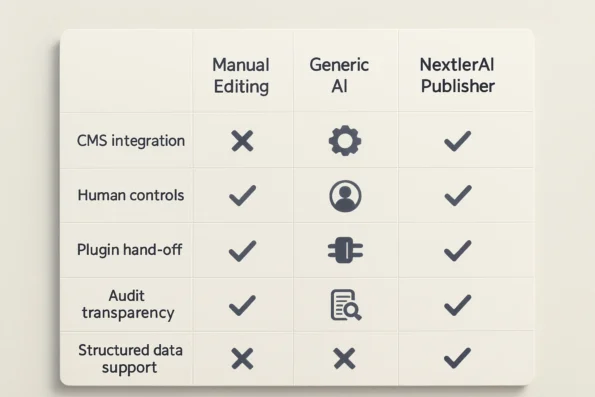
Choosing an AI SEO automation approach for publishing pipelines requires precise evaluation of how each method fits with your content management system, editorial process, and compliance requirements. The following comparative table outlines evidence-backed criteria—spanning integration, human oversight, plugin compatibility, workflow transparency, and structured data support—so you can match technology capabilities to your operational needs. Each criterion is grounded in documented features or recognized industry standards to support reliable decision-making. To ensure a safe transition and avoid disruptions, teams should review the detailed guidance on migrating content operations to NextlerAI Publisher, which outlines risks, safeguards, and essential workflow checkpoints.
| Criterion | Manual SEO Editing | Generic AI Automation | NextlerAI Publisher | Source |
|---|---|---|---|---|
| CMS Integration (WordPress Native) | Direct, but no automation | Usually through export/import; may require plugins | Native pipeline integration with direct WordPress hand-off | Publisher SEO metadata, internal links, citations and sitemaps |
| Human-in-the-Loop Controls | Full manual control, no automation | Often limited; configurable only in advanced setups | Configurable checkpoints, manual override, and approval gates | Publisher Create Articles and Live Pipeline |
| SEO Plugin Hand-Off | Manual entry into SEO plugins | Not always supported or reliable | Automated transfer of metadata to active WordPress SEO plugins | Publisher SEO metadata, internal links, citations and sitemaps |
| Audit Transparency (Logs/Reporting) | Change history via CMS, but no automation logs | May offer limited logging; often opaque | Real-time audit reporting, clear traceability of automated steps | Publisher Content Strategy Inventory and Cannibalisation Control |
| Structured Data (Schema.org) Support | Hand-coded or plugin-driven; manual oversight required | Dependent on AI tool and plugin compatibility | Automated metadata generation compatible with structured data standards | Publisher SEO metadata, internal links, citations and sitemaps; Schema.org |
| Manual Override and Approval | Always available | Varies widely; not guaranteed | Explicit manual override and staged approval for each publishing batch | Publisher Create Articles and Live Pipeline |
| Audit and Compliance with Search Engine Guidelines | Editor-driven; prone to inconsistency | Compliance depends on correct configuration | Aligns automated outputs with Google and Bing guidelines; reviewable before publication | Bing Webmaster Guidelines; Publisher SEO metadata, internal links, citations and sitemaps |
| Inventory and Cannibalization Control | Manual review; time-consuming and error-prone | Rarely automated; some tools offer basic detection | Automated inventory tracking and cannibalization warnings, supporting editorial review before publication | Publisher Content Strategy Inventory and Cannibalisation Control |
| Granular Role-Based Permissions | Controlled by CMS permissions only | Often limited or requires custom setup | Integrates with WordPress roles; defines publish, review, and override privileges for editorial staff | Publisher SEO metadata, internal links, citations and sitemaps |
This table highlights the spectrum from fully manual to highly automated, policy-driven approaches. NextlerAI Publisher, per official documentation, offers native CMS integration, real-time audit reports, granular permissions, structured data compatibility, and automated inventory monitoring—features designed to minimize routine manual work while supporting editorial oversight and regulatory compliance. When comparing solutions, scrutinize not just feature lists but also the transparency and reliability of automation, the ease of manual intervention, and the extent of error reporting and compliance safeguards. These criteria are essential for sustainable, scalable SEO publishing pipelines as automation becomes more deeply embedded in editorial operations. The next section will address widespread myths and clarify what AI SEO automation can—and cannot—guarantee.
Myth Versus Fact: Common Beliefs About AI SEO Automation
Misconceptions about AI SEO automation for publishing are common, yet they can lead to significant workflow and compliance risks. This section separates widespread beliefs from operational realities, grounding each clarification in documentation and industry standards.
Editorial Oversight Cannot Be Eliminated
It is a myth that AI SEO automation tools can operate entirely without human intervention. In documented publishing environments, including platforms like NextlerAI Publisher, editorial checkpoints, quality reporting, and approval gates are required for safe publication. These mechanisms are essential to prevent errors, ensure accurate attribution, and maintain compliance with search engine guidelines. Complete removal of editorial review increases the risk of unvetted or conflicting changes reaching live content—contradicting both official guidance and practical deployment experience. Editorial oversight also extends to configuring rules that determine what level of automation is permitted per content type or workflow stage, and to verifying system logs that trace all automated changes before final approval (NextlerAI documentation).
Automated Metadata and Linking Require Contextual Review
Another common belief is that automated generation of metadata and internal links will always boost rankings. In practice, only outputs that are contextually relevant and properly reviewed have a positive impact. Search engines, as outlined in their official guidelines, evaluate not just the presence of metadata or links but their alignment with user intent and site architecture (Google SEO Starter Guide). Automated tools must be configured to respect content boundaries, and editorial review remains necessary to ensure that generated tags and links serve the intended SEO strategy, rather than introducing noise or redundancy. Teams must also determine what constitutes a contextually relevant anchor or description, often by maintaining controlled vocabularies or review protocols within the publishing system.
SEO Plugins Remain Integral to Safe Automation
It is incorrect to assume that any automation tool can fully replace WordPress SEO plugins. Effective automation relies on seamless hand-off between AI-generated outputs and established SEO plugins for validation, schema handling, and compatibility. NextlerAI Publisher, for example, explicitly integrates with WordPress SEO plugins, ensuring that metadata and structured data are managed in accordance with both platform standards and site-specific rules. This integration supports auditability and rollback options, allowing editors to compare automated outputs with plugin validation reports before accepting changes. Bypassing these integrations risks conflicts, incomplete markup, or missed optimization opportunities.
Duplicate Content Risks Require Purpose-Built Controls
The idea that automation eliminates duplicate content or cannibalization risks is a myth. Only platforms that implement real-time inventory management and topic tracking—such as those documented for NextlerAI Publisher—can effectively monitor for and prevent accidental duplication before publication. Without these safeguards, automated systems may inadvertently publish overlapping articles or metadata, undermining search visibility and compliance with canonicalization best practices. Implementation of inventory-driven controls relies on synchronizing new drafts with a centralized topic database and flagging any potential overlaps or keyword conflicts for manual resolution.
Manual Intervention Is Still Needed for Error Resolution
Finally, the belief that all workflow errors in AI SEO automation are auto-resolvable is unfounded. While automated systems can flag and, in some cases, correct routine issues, certain errors—such as ambiguous topic assignments or critical validation failures—require manual review and editorial judgement. Automated escalation and audit trails support transparency, but do not eliminate the need for human decision-making at key junctures. Editors must routinely consult error logs and validation reports to distinguish between issues that can be safely auto-corrected and those that need explicit intervention, ensuring the publishing pipeline remains robust and compliant.
FAQ
What core terms define automated SEO in AI publishing?
Automated SEO in an AI publishing context refers to the integration of algorithms that generate, update, and validate optimization-critical elements—such as metadata, internal links, and structured data—within the publishing pipeline. Key terms include metadata automation, contextual internal linking, structured data (for example, Schema.org), real-time SEO audits, and configurable editorial checkpoints that ensure compliance and quality. These mechanisms are embedded within the workflow so that every piece of content passes through automated checks and enhancements before publication, ensuring that optimizations remain current with search engine standards and site-wide strategies.
What are the essential benefits and risks of automating SEO in publishing pipelines?
The essential benefits include increased speed, consistency, and reduction of manual errors in publishing optimized content. Automation can enforce uniform standards across large content volumes and allows teams to scale their publishing efforts while reducing repetitive manual work. Major risks involve over-reliance on automation, which can lead to unchecked duplication, misaligned links, or failure to adapt to evolving search guidelines if editorial oversight is absent. Automation may also introduce subtle errors if underlying rules or source material are not regularly reviewed. Effective automation balances efficiency with robust quality controls, requiring teams to design workflows where automated actions are transparent, traceable, and subject to editorial sign-off when thresholds or exceptions are detected.
How should teams choose the right AI SEO tool for their workflow?
Teams should consider compatibility with their CMS and existing SEO plugins, the transparency and granularity of automation controls, support for workflow escalation, and structured reporting. Evaluation must include how the tool handles role-based permissions, audit trails, and whether it provides editors with the ability to review, edit, or reject automated outputs before publishing. Solutions that support real-time error reporting, allow for the insertion of manual checkpoints, and offer clear documentation of each automated change are preferable. Additionally, teams should assess the vendor’s support for structured data formats, multi-language content, and integration with inventory or topic management systems as these features directly impact the long-term reliability and safety of the publishing pipeline.
What are the concrete steps to optimize a publishing pipeline for automated SEO tasks?
Optimization starts with mapping source material and defining editorial boundaries for automation, which clarifies which elements will be handled by AI and which require human intervention. Next, configure the pipeline to automate metadata generation and internal linking, ensuring real-time SEO audits and reporting are embedded. Teams must implement approval gates and checkpoints at critical junctures—such as before content goes live or when audit warnings are triggered—to maintain oversight. It is also essential to establish a process for regularly updating content inventory and topic controls, as this prevents duplication and ensures the automation system remains aligned with strategic goals. Finally, monitoring the impact of automation through audit logs and feedback loops allows for continuous improvement and early detection of emerging issues.
Which claims about AI SEO automation are true, and which are common misconceptions?
It is true that AI can automate routine SEO tasks, such as metadata and internal linking, and support faster publication. Automation can also standardize outputs and provide real-time feedback on SEO blockers. However, misconceptions include the belief that automation removes the need for human oversight—editorial review remains essential for quality and compliance. It is also incorrect to assume all AI tools provide the same level of customization, or that automation guarantees improved search rankings; the effectiveness of automation depends on the quality of input rules, the relevance of automated outputs, and the vigilance of editorial teams in reviewing and refining both automation and content strategies over time.
Conclusion
Integrating AI SEO automation into your publishing pipeline is not simply an operational upgrade—it establishes a disciplined framework for editorial efficiency, compliance, and long-term scalability. By embedding automation at the metadata, internal linking, and audit stages, your team can shift focus to higher-order editorial strategy and quality assurance, rather than repetitive manual tasks.
The real value of automation emerges when you set clear editorial boundaries, leverage structured reporting, and maintain oversight at every step. This approach ensures that your content not only meets technical SEO requirements, but also aligns with evolving search engine guidelines and your site’s unique publishing goals. Automation tools such as NextlerAI Publisher demonstrate that safe, scalable SEO optimization in WordPress can be achieved with the right blend of workflow integration and human governance.
Crucially, embedding automation into your publishing infrastructure requires careful planning around decision checkpoints, audit traceability, and the assignment of editorial permissions to ensure only validated outputs are published. This means configuring automation rules that reflect your site’s taxonomy, adjusting workflows to ensure automated outputs are reviewed before publication, and maintaining full audit logs for accountability. These mechanisms underpin compliance with both organizational standards and regulatory requirements, providing a transparent record of all automated and manual interventions. Teams should also establish processes for regularly reviewing automation performance and updating rules to adapt to changing SEO best practices and content strategies.
Your next step is to audit your current publishing pipeline for integration points—identify where automation of metadata, internal linking, and audit controls will deliver the most operational and editorial value. Consult official guides and product documentation to align new automation with both technical requirements and existing editorial review practices, setting your team up for sustainable, compliant growth.