







Introduction
Effective content governance in WordPress demands a structured, transparent approach to approvals. NextlerAI Publisher automated approval workflows deliver multi-stage, configurable checkpoints tailored to the needs of editorial managers, compliance leads, and content strategists. By establishing clear review stages—each with defined roles, quality criteria, and audit trails—Publisher helps organizations enforce both editorial standards and regulatory obligations without unnecessary delays or manual errors.
From first draft to scheduled publication, Publisher’s automation mechanisms sequence each review and approval, ensuring that no content can bypass essential checks. Approvers at every stage can be assigned specific responsibilities, such as compliance verification, SEO evaluation, or final editorial oversight. Quality rules distinguish between minor warnings and true publication blockers, supporting safe progression through the workflow while flagging critical issues when human intervention is required.
Publisher’s automated system integrates directly with WordPress scheduling, reserving publication slots only after all approvals are secured. This approach not only streamlines content throughput but also provides traceability: every action, decision, and approval is recorded for audit and diagnostic purposes. As a result, content leaders gain confidence that published material meets both internal quality benchmarks and external compliance mandates.
NextlerAI Publisher’s workflow engine allows granular configuration of approval routes, enabling organizations to mirror their precise editorial structure. Each workflow is defined by a series of checkpoints: at each, approvers are notified and can accept, reject, or return content for revision. The system enforces mandatory sequencing, ensuring that downstream stages only activate when all upstream requirements are satisfied. Quality rules can be set globally or for individual steps, allowing nuanced policy enforcement that can adapt to changes in compliance expectations or editorial guidelines. Logs are preserved for each action, supporting robust auditability—critical for regulated sectors or organizations seeking to demonstrate process integrity. With built-in scheduling tied to approval completion, the Publisher reduces manual coordination effort while maintaining absolute control over publication timing and status.
With this foundation, you will be equipped to configure, adapt, and monitor automated, multi-stage approval workflows in NextlerAI Publisher—ensuring both efficiency and governance remain central to your publishing pipeline. The following sections break down each workflow mechanism, illustrate scenario-based applications, and provide tools to clarify stage responsibilities and auditability.
Optimising Multi-Stage Automated Approval Steps
Effective governance of WordPress content requires a structured, auditable approval pipeline. NextlerAI Publisher provides granular control over each stage of this process, allowing content leaders to define, sequence, and enforce review checkpoints. Below is a concise, ordered guide to configuring multi-stage automated approval workflows in Publisher, with attention to the platform’s unique mechanisms and compliance capabilities. For a deeper exploration of editorial workflow automation principles, see AI editorial workflow automation. Broker-Dealer Marketing Approval Software 2026 | Luthor documents the relevant background and implementation boundaries.

- Define Sequential Approval Checkpoints
Create distinct workflow stages for each critical review—such as initial draft, compliance, SEO, and final publication. Publisher requires every checkpoint to be explicitly configured; content cannot advance unless each prior stage is satisfied. This staged approach supports robust editorial oversight and regulatory compliance. The platform enables administrators to architect the workflow graph by adding or reordering checkpoints as business logic dictates. At each point, checkpoint logic can be tailored to specific content types or categories, ensuring relevant reviews are triggered for different editorial streams. - Assign Approvers and Roles per Stage
For each checkpoint, select approvers whose permissions and expertise align with the review’s intent. Publisher’s role-based assignment ensures that draft content, compliance checks, and SEO reviews are handled by appropriate personnel, minimizing risk of unqualified approvals and supporting clear editorial boundaries. Role management within Publisher is tied to WordPress’s native user roles, but extends to custom roles or groups if granular control is needed. Only designated approvers are notified of pending tasks, and only their actions move content forward, reducing ambiguity in responsibility and ensuring traceable accountability at every decision node. - Configure Slot Reservation Mechanism
Publisher’s slot reservation ties each article to a specific publication slot, with progression contingent on prior approvals. If a slot is reserved but not all approval checkpoints are cleared, publication is paused automatically. This prevents premature release and maintains integrity of the editorial calendar. The slot reservation system can be configured to consider time zones, embargoes, or recurring publication cycles. Editors may adjust or release reserved slots if priorities shift, but the system will not allow content to bypass incomplete approvals, thus preserving process discipline even under deadline pressure. - Activate and Calibrate Quality Rules
Publisher distinguishes between warnings—flagging issues that do not block progression—and blockers, which halt workflow advancement. Configure quality rules to reflect your organization’s standards for structural completeness, SEO, and compliance. Only content clearing all blockers proceeds to the next stage or publication. Administrators can define custom rules for each checkpoint, such as minimum word count, prohibited phrases, SEO keyword density, or required metadata. Warnings can be set to require acknowledgment, while blockers must be resolved before the workflow can proceed, ensuring both flexibility and rigor in enforcement. - Enable Native Scheduling for Workflow Automation
Workflow transitions—including movement from draft to scheduled status—are managed by Publisher’s native scheduling, fully integrated with WordPress. Automation is tied to approval completion, ensuring that no article is published out of sequence or before all checks pass. This integration streamlines production without sacrificing control. The scheduling engine listens for completion of all mandatory checkpoints before triggering the next stage or slotting the article for automatic publication. This eliminates manual intervention at transition points and supports consistent delivery even across distributed editorial teams. - Document Workflow Actions for Auditability
Each approval, rejection, or revision is logged within Publisher’s persistent audit trail. These records support compliance by allowing retrospective review of every decision and transition point. Maintaining comprehensive logs satisfies both internal governance and external regulatory requirements, as recognized by workflow design standards and best practices. Logs are indexed by article, user, timestamp, and action, making it straightforward to reconstruct the full approval history for any published content, which is critical for demonstrating diligence to auditors or responding to regulatory inquiries.
By following this sequence, editorial managers can structure a reliable, transparent approval pipeline that meets quality and compliance objectives within the WordPress environment. The next section demonstrates these mechanisms in a practical editorial workflow scenario.
Illustrative Scenario: Editorial Workflow in Action
Scenario: To demonstrate how NextlerAI Publisher automated approval workflows safeguard editorial quality and compliance within a WordPress environment, consider the following concrete use case. Each stage highlights a distinct mechanism, mapped to real platform features, and underscores the value of clearly segmented responsibilities. NIST Special Publication 800-162: Guide to Attribute Based documents the relevant background and implementation boundaries.
Stage 1: Editor Submission and Initial Checkpoint
An editor completes a draft article and submits it into the Publisher pipeline. This triggers the first configured approval checkpoint. The system immediately reserves a publication slot, but the draft remains locked from scheduling or release until the required review is complete. Publisher records the submission and slot reservation in the workflow log, establishing a clear audit trail from the outset. At this point, the workflow configuration determines which users or groups are permitted to access and modify the draft, enforcing role-based access aligned with the approval matrix set in Publisher’s settings.
Stage 2: Compliance Review
The draft is routed to a compliance officer, as designated in the workflow’s approval roles. Compliance review focuses on regulatory and brand safety standards; any blockers identified—such as missing disclosures or prohibited claims—must be resolved before advancing. Publisher’s quality rules enforce this by distinguishing publication-blocking issues from non-blocking warnings. Only if the compliance officer approves does the pipeline advance to the next checkpoint. If a blocker is triggered, Publisher holds the article at this stage and notifies the relevant contributor for remediation, ensuring issues are addressed before any further workflow progression.
Stage 3: SEO Specialist Review
After compliance approval, the article is flagged for SEO review. The specialist inspects metadata, link structures and keyword use, referencing Publisher’s quality criteria. If optimizations are flagged, the article is returned to draft for revision; otherwise, approval is granted. At this stage, Publisher again logs each action, capturing who approved or requested changes and why, contributing to a persistent and auditable workflow record. The workflow engine enforces that only designated SEO approvers can provide approval at this checkpoint, maintaining clear separation of duties.
Stage 4: Final Editorial Sign-Off
With compliance and SEO approvals secured, the managing editor is notified for final sign-off. This step is intentionally manual: Publisher does not bypass human authority unless explicitly configured to do so. The managing editor confirms readiness for publication, optionally reviewing automated quality reports for residual warnings. Upon approval, the article’s scheduled publication slot is activated, and the content is queued for release via WordPress’s native scheduling system. The system also updates the audit log to reflect the completion of all required checkpoints and the transition to the publication queue.
Stage 5: Publication and Full Audit Logging
Once all checkpoints are cleared and the scheduled time arrives, Publisher autonomously publishes the article. Every action—from submission to final approval and publication—is logged for audit and diagnostic purposes. This ensures transparent traceability for compliance inquiries or post-publication reviews, supporting robust content governance. The audit log includes precise timestamps, approver identities, and a changelog of any revisions or returns to draft, allowing administrators to reconstruct the full editorial journey if needed.
This scenario demonstrates how clearly defined approval roles, automated checkpoints, and strict logging in NextlerAI Publisher support both editorial quality and regulatory compliance without sacrificing transparency or control.
Key Definitions for Workflow Configuration
Clear terminology is crucial when configuring automated multi-stage approval workflows in NextlerAI Publisher. Each core term below represents a specific control point or enforcement mechanism within the system, directly impacting how content moves from draft to scheduled publication under strict editorial and compliance boundaries. About the Business Process Model and Notation Specification documents the relevant background and implementation boundaries.
Approval Checkpoint
An approval checkpoint is a defined workflow stage where content must be formally reviewed and approved by a designated user or role. In NextlerAI Publisher, these checkpoints are fully configurable, enabling organizations to match stages to their editorial or regulatory requirements. Approval checkpoints can be aligned with custom roles—such as section editors, legal reviewers, or compliance officers—providing fine-grained oversight for every workflow. System logic ensures that each checkpoint enforces sequential progression; the next stage cannot be accessed until all required approvals are secured at the current checkpoint. This reduces the risk of accidental bypassing of critical controls and enables granular auditability by capturing the identity and decision of each approver at every step.
Slot Reservation
Slot reservation refers to the system mechanism that holds a specific publication date and time for content pending approval. When a workflow reaches a checkpoint, Publisher automatically reserves the proposed slot, preventing overbooking and ensuring that only content meeting all approval criteria will occupy a publication window. Slot reservation is dynamically linked to approval outcomes: if a publication blocker is triggered, the reserved slot remains inaccessible to other content until the original item either clears all blockers or is removed from the approval queue. This mechanism helps editorial teams reliably plan releases, manage capacity, and avoid scheduling conflicts, while also providing an audit trail of slot allocation and usage.
Quality Rule
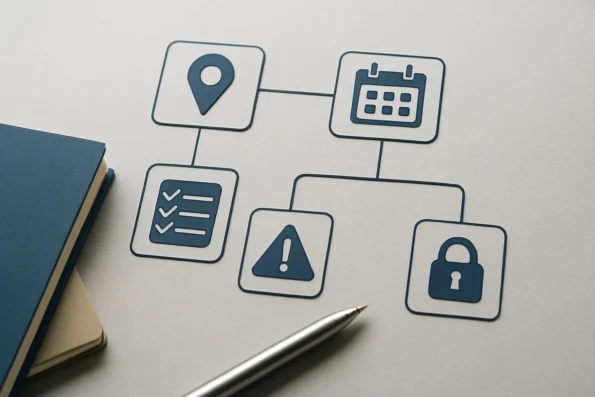
A quality rule in Publisher is a pre-set criterion that evaluates aspects such as structure, length, voice or compliance with editorial guidelines. Quality rules generate two types of feedback: warnings, which allow content to continue through the workflow, and publication blockers, which halt progress until the underlying issue is resolved. Administrators can define custom quality rules for each workflow stage, specifying which rule outcomes should act as blockers and which as warnings. This allows teams to tailor the workflow to organizational risk tolerance, compliance obligations, and editorial priorities. The system applies quality rules automatically at each checkpoint, logging all rule outcomes for traceability and later review. For more detail, see the official documentation: Publisher Quality Rules, Reports, and Safe Publication.
Publication Blocker
A publication blocker is any failed approval, critical issue, or unmet quality rule that prevents content from proceeding to the next workflow stage or being published. In NextlerAI Publisher, blockers are enforced by workflow logic: if a checkpoint is assigned a blocking rule or an approver rejects the submission, the content cannot move forward. Blockers may result from unresolved compliance violations, missing legal sign-off, or failed technical checks. The system provides clear feedback to contributors, indicating which specific rule or action triggered the block, and records the event for compliance review. Blockers play a central role in risk-managed content automation by guaranteeing that no content is published until all critical controls are satisfied.
Audit Log
The audit log is a persistent, tamper-resistant record of all workflow actions and approvals within Publisher. Each entry details the action taken, the user or system responsible, the time of the change, and any relevant notes or outcomes. The audit log is automatically updated whenever content transitions between workflow stages, approvals are granted or denied, or quality rules trigger warnings or blockers. This provides organizations with a comprehensive, chronological account of every workflow event, supporting regulatory audits, internal investigations, and accountability. Audit logs are accessible to authorized roles for diagnostic and governance purposes, ensuring that the full history of editorial decisions remains transparent and provable.
Pros and Cons of Automated Approval Workflows
Automated approval workflows in NextlerAI Publisher offer a structured way to streamline content review, but their effectiveness depends on careful alignment with editorial and compliance objectives. Understanding both strengths and constraints is critical to making informed decisions about workflow design and implementation. Read more about content settings and editorial boundaries to see how governance structures influence workflow outcomes. Integrating editorial calendar automation with NextlerAI Publisher ensures that multi-stage approval workflows align with content scheduling and slot reservations. The Digital Services Playbook — from the U.S. documents the relevant background and implementation boundaries.
Key Advantages: Efficiency, Consistency, and Accountability
Automating multi-stage approvals accelerates routine content reviews by routing submissions through clearly defined checkpoints. This significantly reduces bottlenecks commonly seen in manual hand-off environments, particularly for large teams or high-frequency publishers. Every workflow stage can enforce editorial and compliance standards by applying pre-configured quality rules and assigning roles tailored to specific review tasks. The system’s structured audit log records each approval decision, reviewer identity, and timestamp, ensuring a defensible trail for future audits and internal diagnostics. These capabilities directly address the challenges of scaling content production without compromising governance, as supported by workflow best practices and Publisher’s design documentation.
Another advantage is the ability to customize approval chains for different content types or business units. NextlerAI Publisher supports granular segmentation of approval responsibilities, letting organizations tailor checkpoints to match the complexity of their editorial and regulatory environment. For instance, a sensitive legal update may require added compliance review stages compared to a routine blog post. Slot reservation ensures that scheduled publication cannot proceed until all requisite sign-offs are complete, providing an additional safeguard against premature release. This mechanism is particularly useful for orchestrating embargoed releases or coordinating cross-team reviews, as it inherently prevents content from bypassing necessary scrutiny. Quality rules can be configured to trigger warnings or hard blockers at any stage, and their outcomes are fully logged, strengthening auditability and providing clarity when issues arise.
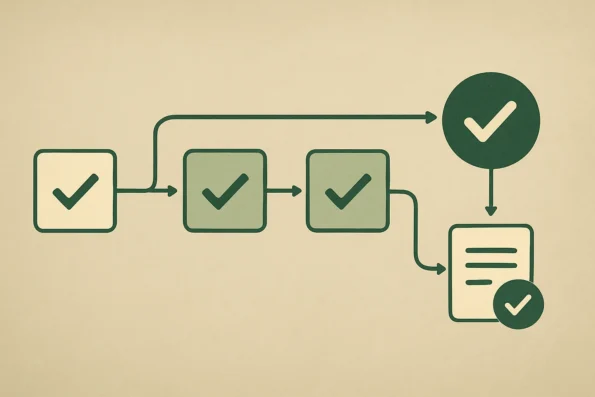
Publisher’s audit log functionality further fortifies accountability by persistently recording each reviewer’s input, the nature of their decision (approval, request for changes, or rejection), and the precise timing. This comprehensive traceability is valuable for both internal oversight and external compliance requirements, as it enables organizations to demonstrate adherence to documented processes without relying on ad hoc evidence. The combination of these features means automated workflows can support both scale and rigor, provided governance practices are clearly codified within the system.
Main Limitations: Oversight Gaps and the Boundaries of Automation
While automation can routinize many decisions, it is only as robust as the criteria and boundaries set by the organization. Over-reliance on generic approval criteria risks allowing nuanced editorial or compliance issues to slip through undetected. Each automated step in Publisher must be explicitly defined—using granular role assignments and qualified quality rules—to prevent accidental publication and to align with regulatory standards. The platform is designed so that human authority remains central; automated progression to publication is only possible if final approval is deliberately configured as an automated action. Otherwise, the last checkpoint always requires a manual, auditable sign-off. This preserves editorial judgment and mitigates the risk of unreviewed content going live.
Complex workflows, particularly in regulated or fast-changing environments, can introduce their own challenges. Over time, workflow stages and quality rule criteria may become misaligned with evolving policies or business priorities. If organizations do not regularly revisit their configuration, approval bottlenecks or unintended approval shortcuts may emerge. For example, a newly introduced compliance obligation may not be captured by existing quality rules, or staff turnover may leave approval roles outdated. Additionally, certain nuanced editorial or legal decisions may simply be too complex for automation, requiring robust manual oversight regardless of workflow sophistication. Publisher’s reliance on explicit configuration means the responsibility for ongoing accuracy and appropriateness remains with workflow administrators and stakeholders.
Ongoing Workflow Adjustment and Organizational Alignment
Complex organizations or those operating under evolving regulatory frameworks may find that initial workflow configurations require regular adjustment. Publisher’s flexibility allows for the segmentation of review responsibilities and the updating of approval boundaries as needs change. However, maintaining effective governance demands periodic workflow audits to ensure that checkpoint criteria, approval roles, and blocking conditions remain fit for purpose. Audit log records support this process by providing clear evidence of every decision and transition, facilitating both internal review and external compliance reporting.
Visual Summary: Mapping Approval Flow
Effectively controlling a multi-stage automated approval pipeline in NextlerAI Publisher requires clear visualization of every checkpoint, responsible role, and compliance safeguard. This section presents a visual summary of the approval process, emphasizing how automation, manual oversight, and audit mechanisms interlock to enforce content quality and governance. For a detailed technical overview of each automation step and control, consult the complete Publisher workflow guide to understand the end-to-end process.
Approval Flowchart: Stages and Transitions
A conceptual flowchart begins at the initial draft submission and proceeds through all configured checkpoints—each representing a distinct review, such as compliance, SEO, or editorial sign-off. At every stage, the chart labels the accountable role, such as reviewer, compliance officer, or managing editor. Solid arrows indicate automated transitions (where Publisher advances content after rule-based checks or automated approvals), while dashed arrows denote mandatory manual intervention, including final sign-off or overrides. This distinction ensures workflow designers and approvers can quickly identify where human authority is preserved and where automation accelerates progression.
Integration of Quality and Compliance Checks
Publisher enforces quality rules and compliance checks at relevant points in the process, visually marked within the flowchart. Warnings may permit progression, but any publication blocker is signaled as a stop point, preventing automated advancement. This mechanism guarantees that compliance requirements and editorial policies are not bypassed by automation. The visual clearly distinguishes between stages that merely notify approvers of issues and those that halt the workflow pending resolution.
Audit Log Creation and Diagnostic Coverage
At every approval or rejection event, the flowchart highlights audit log creation nodes. These nodes ensure that each workflow action—approval, revision, comment, or escalation—is time-stamped and attributed to a specific user role. Logs are stored persistently for diagnostic review and regulatory audits, providing a transparent sequence of decisions. This is essential for organizations subject to internal or external compliance requirements, as it underpins full traceability from draft to publication.
Visual Encoding of Workflow Mechanisms
To maximize clarity, the flowchart uses distinct visual encodings: color-coded shapes to represent the type of checkpoint (e.g., draft review, compliance, SEO), and icons indicating whether a step is automated or manual. Branching paths visually signal optional review loops or escalation routes, such as re-routing to a previous stage if a blocker is triggered. This encoding supports rapid comprehension of workflow complexity and helps teams diagnose bottlenecks or inefficiencies within multi-stage processes.
Manual Versus Automated Steps
The visual summary clarifies which steps are triggered automatically by Publisher’s configured logic and which require manual confirmation. Automated steps might include rule-based progression or slot reservation enforcement, while manual steps are reserved for critical review or final publication authority. This dual structure helps teams allocate resources, anticipate bottlenecks, and design workflows that fit both operational efficiency and risk management needs.
Diagram Placement and Access
In NextlerAI Publisher, visual workflow diagrams are often referenced alongside configuration panels or workflow logs, supporting both setup and post-publication diagnostics. These diagrams provide a shared reference for stakeholders—editors, compliance leads, and administrators—to validate that the actual workflow matches organizational policy. For more detail on how job and approval logs are generated and accessed, refer to the official documentation at NextlerAI Publisher: Jobs, Logs, Cancellation, Retry, and Recovery.
Workflow Table: Stages, Roles, and Actions
To ensure transparent, compliant, and efficient publishing, a well-structured approval workflow in NextlerAI Publisher divides responsibilities across editorial, compliance, and SEO functions. Each workflow stage is mapped to a responsible role and a specific required action, with clear indications of which steps are automated and which demand manual intervention. Quality criteria and persistent audit log entries are integral to each stage—ensuring every approval, revision, or escalation remains traceable for post-publication review. Teams managing regulated content should review privacy and compliance safeguards to ensure every approval stage meets sector-specific regulatory requirements.
| Stage | Responsible Role | Action Required | Automated/Manual | Quality Criteria | Audit Log Entry |
|---|---|---|---|---|---|
| Draft Submission | Content Editor | Submit draft for initial review | Manual | Meets structural and topic requirements | Draft submitted; timestamp, author ID |
| Compliance Review | Compliance Officer | Verify regulatory and brand adherence | Manual | All compliance checks passed; no blockers | Compliance review outcome; reviewer ID, issues flagged |
| SEO Optimization | SEO Specialist | Assess and approve for SEO standards | Manual | SEO rules: warnings allowed, blockers prevent progression | SEO review completed; status, notes recorded |
| Final Editorial Sign-off | Managing Editor | Approve for publication | Manual | All prior stages approved; no unresolved blockers | Final approval recorded; approver ID, timestamp |
| Slot Reservation & Native Scheduling | System (Publisher) | Reserve publication slot, schedule post | Automated | All approvals complete; slot available | Slot reserved, scheduled; event log updated |
| Publication & Archiving | System (Publisher) | Publish to WordPress, archive actions | Automated | Passed all blocker checks; audit trail finalized | Publication event, full audit log snapshot |
This structured table clarifies operational responsibilities, distinguishes manual review from system automation, and illustrates how quality and compliance gates are enforced at every stage. Each significant action—whether performed by a human or triggered by Publisher’s automation—is logged with full context, supporting transparency and robust post-publication auditability.
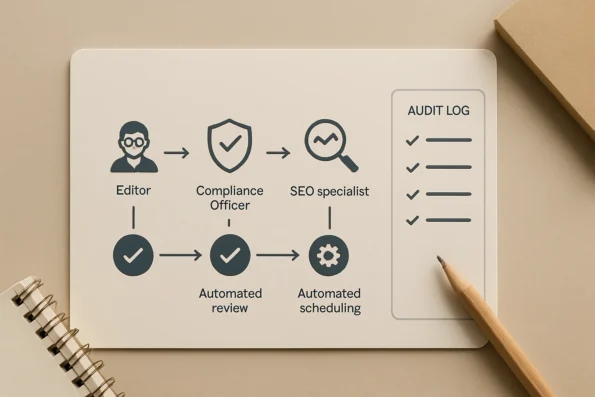
NextlerAI Publisher’s workflow structure is designed to maximize both control and traceability. The division of labor into distinct roles ensures subject matter expertise is applied at each checkpoint, while the system enforces a strict sequence: content cannot move forward until the required action is completed and logged. For each approval stage, Publisher creates a secure, timestamped entry in the audit log, capturing not only the outcome but also the responsible user’s identity and any notes or issues raised. Automated stages—such as slot reservation and scheduling—are executed by the system only after all human-driven criteria are satisfied, and these events are likewise recorded with full details for later verification. This approach supports detailed compliance auditing and enables organizations to reconstruct the entire publication history if needed. By centralizing workflow configuration and auditability, NextlerAI Publisher helps teams meet both internal governance and external regulatory requirements through defensible, well-documented processes.
Additional workflow enhancements include the capability to define conditional paths, where a specific stage may trigger escalation or parallel review streams if a blocker or high-priority issue is identified. Publisher’s automation can also be configured to send notifications or reminders to assigned roles at each checkpoint, reducing the risk of bottlenecks. For organizations with strict separation of duties, the workflow can require multiple independent approvals within a stage, each generating a distinct audit entry. These advanced mechanisms reinforce the platform’s ability to adapt to complex editorial and compliance structures while preserving the integrity and traceability of every action. The workflow table thus serves as both a configuration reference and a living operational map, directly supporting ongoing governance, accountability, and process improvement initiatives within Publisher.
FAQ
How do you configure automated, multi-stage approval checkpoints in NextlerAI Publisher?
To configure multi-stage approval in NextlerAI Publisher, start by defining explicit checkpoints in the workflow settings for each review stage—such as draft, compliance, SEO, and final editorial approval. Assign approver roles at each checkpoint to align with organizational responsibility and compliance needs. Within each stage, configure quality rules: designate which issues are warnings (allowing progression) and which are blockers (halting advancement). Enable slot reservation to ensure that a publication slot is held but not released until all approvals are obtained. Native scheduling can be linked to approval completion, so articles move forward automatically only when all checkpoint criteria are met. Each action, decision, and transition is recorded in the audit log to support traceability and compliance.
What does a typical multi-step approval scenario look like?
A typical scenario begins with a contributor submitting a draft, which triggers the first checkpoint. This initial review is handled by an editor, followed by a compliance officer verifying regulatory and policy adherence. If passed, the workflow moves to an SEO specialist for optimization review. Each stage is handled by the designated approver, and progression is contingent on approval and fulfillment of any configured quality rules. The final editorial sign-off occurs only after all prior checkpoints are cleared. Only then does the article enter the publication queue, with every decision, approval, and note meticulously logged for post-publication auditing.
Which workflow terms have specific meanings in the context of NextlerAI Publisher?
In NextlerAI Publisher, key workflow terms have platform-specific meanings: An approval checkpoint is a mandatory review step configured in the workflow. Slot reservation refers to the automatic holding of a publication date/time for content awaiting full approval. Quality rules are system-defined criteria that classify detected issues as either warnings (which allow continued progression) or blockers (which prevent further advancement until resolved). A publication blocker is any failed approval or blocker-level issue that stops content at its current stage. The audit log is a persistent, timestamped record capturing all workflow actions, status changes, and user decisions, supporting compliance and traceability requirements.
What are the primary advantages and limitations of automated approval workflows?
Automated approval workflows in Publisher offer operational efficiency by accelerating routine reviews and reducing bottlenecks, while segmenting responsibility and enforcing quality and compliance standards. The audit log ensures that every decision is fully traceable for governance and regulatory review. However, limitations arise if workflow checkpoints or quality rules are set too generically, potentially allowing issues to go undetected. Publisher maintains human oversight by default, requiring explicit configuration to enable full automation of final sign-off—preventing unintentional publication without adequate review. Complex workflows may require regular updates to stay aligned with evolving compliance or editorial standards.
How does a structured workflow table clarify the sequence and responsibilities at each stage?
A structured workflow table in Publisher details the sequential flow of content through each approval stage, mapping out the responsible roles, required actions, automation/manual boundaries, and quality criteria for each checkpoint. By including specific audit log entries, the table makes accountability transparent—showing exactly who acted, what was decided, and when. This visibility facilitates internal governance, simplifies the audit process for compliance teams, and helps teams identify inefficiencies, bottlenecks, or emerging risks within a multi-stage workflow. The table’s structure supports continuous process improvement by providing a clear operational blueprint for all stakeholders.
Conclusion
Configuring automated multi-stage approval workflows in NextlerAI Publisher provides editorial managers and compliance teams with the structure required for rigorous content governance. Leveraging system-enforced checkpoints, selective role assignments, and granular quality rules, you can ensure only reviewed and compliant content advances toward publication. Distinct audit logs and slot reservation mechanisms not only support transparency but also deliver a defensible record of all actions and approvals for post-publication analysis and regulatory review.
To translate this framework into practice, review your organization’s existing approval pipeline and map it directly to Publisher’s configuration options. Begin by identifying the precise sequence of review stages and assigning clearly defined approvers for each checkpoint. This alignment will maximize the benefits of automation without compromising editorial authority or compliance standards.
Once your workflow is mapped, use Publisher’s documentation to implement each approval stage and verify that slot reservations and quality rules meet your operational requirements. Testing the end-to-end process with representative content will expose any gaps in enforcement or auditability, allowing for timely adjustment. This approach grounds your automation in evidence and ensures every published article adheres to your organization’s standards.
As a next step, assign a dedicated workflow administrator to monitor audit logs and periodically review quality rule outcomes. This proactive oversight enables early detection of bottlenecks or recurring blockers, ensuring your automated approval process remains responsive to evolving editorial, legal, and compliance expectations. Routinely calibrating these controls within Publisher not only strengthens compliance but also supports continuous process improvement and operational resilience.