






Introduction
Managing large-scale localization projects in WordPress or WooCommerce requires a disciplined approach—especially when dealing with high content volumes and multiple languages. NextlerAI Translator is purpose-built for these scenarios. It allows you to localize not only pages and posts, but also WooCommerce products, public custom post types, taxonomies, and SEO metadata, all while safeguarding your site’s original design and technical structure.
If you are a project manager, localization lead, or WordPress administrator responsible for coordinating multi-language publishing, you need more than just machine translation. Success at scale hinges on your ability to orchestrate batch processing, progress tracking, and rollback procedures in a way that protects editorial quality and operational continuity. NextlerAI Translator’s deep integration with core WordPress tools and multilingual plugins—including Polylang, WPML, and TranslatePress—enables a modular workflow tailored for high-volume environments.
The complexity of localization increases with the number of languages, content types, and stakeholder requirements. NextlerAI Translator addresses these complexities by preserving technical relationships between content objects, ensuring that translations do not disrupt permalink structures, product attributes, or taxonomy hierarchies. This guarantees that both user experience and backend data integrity are maintained across all localized variants. Site administrators can also leverage NextlerAI Translator’s support for full-site batch operations, reducing manual overhead when synchronizing large product catalogs or updating metadata at scale. By automating repetitive localization tasks and centralizing oversight within WordPress, teams can minimize bottlenecks and ensure consistent quality management, even as content volumes grow. This approach supports compliance with recognized international standards and aligns with enterprise-grade operational requirements.
This resource delivers a clear, actionable roadmap for orchestrating large-scale localization using NextlerAI Translator. You will discover precisely how to segment and automate translation batches, apply progress controls, and maintain recovery options—all grounded in the plugin’s verified capabilities. As you proceed, you will also find guidance on aligning your workflow with industry standards from the W3C and regulatory best practices recognized by leading public-sector and enterprise localization operations.
Core Concepts and Definitions for Large-Scale Localization
In the context of WordPress and WooCommerce, large-scale localization with NextlerAI Translator involves the systematic adaptation of an entire site’s content—including pages, posts, products, public custom post types, taxonomies, and SEO metadata—across multiple languages, while explicitly maintaining the original technical and visual foundations. This is not a superficial translation layer: the plugin’s operations are designed to interact directly with native WordPress content structures without overwriting layouts, themes, or embedded code. To understand the full technical scope, refer to the NextlerAI Translator product page. Public sector organizations often rely on government-backed localization workflows to ensure consistency, scalability, and compliance across multilingual content.
Content Coverage and Technical Boundaries
NextlerAI Translator’s scope includes all publicly accessible structured content types as defined within the WordPress ecosystem. For each supported type—such as WooCommerce products or custom post types—the system localizes content fields and attached metadata while respecting registered custom fields and taxonomy relationships. This ensures integration with existing templates and display logic, but does not extend localization to private or non-public post types, nor does it modify system-level templates or theme assets.
Design and Data Structure Safeguards
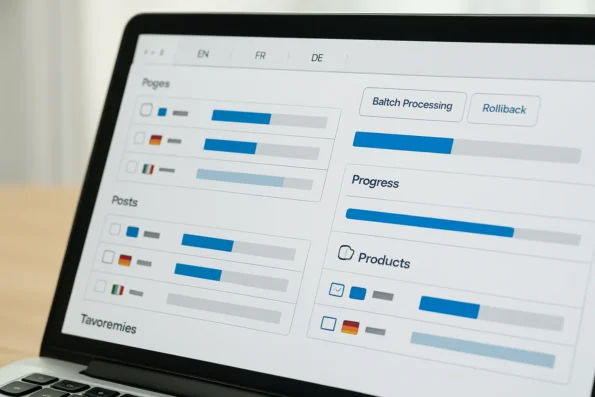
The plugin operates at the content data layer, ensuring that visual presentation and technical configuration remain unaffected during translation. It does not alter theme files, widget areas, or global settings. Instead, localized content is mapped to existing structures, preserving navigational hierarchies, menu assignments, and permalink consistency. This guarantees that a multilingual rollout does not disrupt user experience or trigger reindexing issues with search engines, as the underlying markup and schema remain static. Internal mechanisms also ensure that asset references (such as images or downloadable files linked to posts or products) are retained, so that content dependencies do not break in localized versions. The mapping logic relies on WordPress’s post and taxonomy IDs to keep links, parent-child relationships, and breadcrumbs intact throughout batch localization runs.
Workflow Mechanisms: Discrete Controls in High-Volume Environments
Three discrete workflow mechanisms are fundamental and independently managed within NextlerAI Translator: batch processing, progress tracking, and rollback. Batch processing enables segmentation of content into logical groups for translation, governed by content type or taxonomy. Progress tracking is implemented via the WordPress administrative interface, logging the state of each batch and surfacing completion or error states without overlapping with translation or review workflows. Rollback is architected as a reversible operation at both the batch and individual content item level, providing a safety net against accidental overwrites or failed translations without requiring manual intervention or database manipulation.
Edge Cases and Diagnostic Constraints
During large-scale localization, certain implementation constraints must be factored. For example, if a custom post type registers dynamic fields via third-party plugins, NextlerAI Translator will localize only fields exposed through the WordPress REST API or standard content editing screens. Taxonomy terms with nested relationships are preserved, but changes in taxonomy structure during localization (such as term merges or splits) are not automatically synchronized, requiring separate administrative oversight. Additionally, error states—such as failed content writes due to permission issues or site-level conflicts—are reported in the WordPress dashboard, allowing for targeted diagnostics and minimizing the risk of silent data loss.
Technical Integrity in High-Volume Updates
The plugin’s architecture enforces technical integrity by operating within WordPress’s permissions and revisioning systems. Localization operations are logged per user role and timestamped, ensuring traceability. In WooCommerce environments, product variations and linked metadata (such as attributes and stock data) are localized in-place, but only insofar as these are registered as public fields; direct modification of pricing logic, downloadable assets, or external integrations is explicitly out of scope and protected from alteration during translation runs. The system further supports auditability by maintaining a record of localization actions within the WordPress dashboard, allowing administrators to review modification histories for compliance or quality assurance purposes. This granular tracking is especially significant in enterprise or regulated environments, where accountability and data provenance are required as part of standard operating procedures.
With these foundational mechanisms and constraints established, the next section addresses how to select optimal decision criteria for tailoring a localization workflow to your site’s unique scale and requirements.
Selecting Decision Criteria for Large-Scale Localization
Establishing effective decision criteria is essential before scaling any content localization project in WordPress or WooCommerce. The optimal NextlerAI Translator workflow depends on the intersection of content type, anticipated language count, and the total volume targeted for translation. Early clarity in these areas ensures your approach aligns with both technical limits and organizational priorities. For more on the common risks in scaling AI-powered localization, see this analysis of AI multilingual content automation pitfalls. When choosing localization strategies, organizations should consult established guidelines and standards for internationalization to address format compatibility, language support, and cultural appropriateness.
Match Workflow Structure to Content and Volume
Begin by categorizing your site’s content: public pages, posts, WooCommerce products, custom post types, taxonomies, and SEO metadata. Large, homogenous datasets—such as product catalogs—favor batch processing, which NextlerAI Translator supports natively within the WordPress environment. For more heterogeneous or editorially sensitive content, segment workflows by content type or business function, preserving review cycles for high-risk or regulatory-bound materials. The number of target languages also dictates batch sizing and parallelization, directly shaping resource allocation and timeline expectations. Site administrators can further refine batch groups by mapping them to business priorities, seasonal campaigns, or cross-functional dependencies, which ensures that high-impact content receives additional scrutiny or expedited handling as needed.
Editorial Oversight, Risk Tolerance, and Rollback Needs
High-volume localization increases the likelihood of propagating errors or inconsistencies. Assess your editorial oversight requirements—such as mandatory review steps, language expert sign-off, and compliance checkpoints—before initiating bulk operations. NextlerAI Translator’s rollback and recovery functionality should be factored into your risk mitigation plan. Projects with low tolerance for public-facing errors or regulatory missteps demand granular rollback mechanisms and frequent snapshotting, while lower-risk environments may rely on batch-level recovery alone. It is also advisable to define escalation paths for handling translation disputes or compliance issues, assigning clear responsibility for rollback authorization and post-rollback quality assurance.
Integration with Existing Editorial and Technical Pipelines
Successful localization at scale rarely operates in isolation. Evaluate how NextlerAI Translator’s batch localization and rollback features integrate with your existing editorial management, version control, or deployment pipelines. For WordPress and WooCommerce sites, this often means mapping localization tasks to editorial roles, workflow stages, and automated backup policies. Compatibility with established plugins and infrastructure safeguards both operational continuity and data integrity. Consider how localization events will be logged and surfaced for audit—decisions about notification policies and integration with security or compliance monitoring tools should be made up front to avoid gaps in accountability.
Applying Global Best Practices
Authoritative guidance from the W3C and EU institutions emphasizes robust workflow segmentation, explicit handoff points, and auditing for all large-scale localization projects. Their standards support the use of modular translation workflows, progress tracking, and documented rollback procedures, all of which align with NextlerAI Translator’s design. Adhering to these principles reduces risk and promotes project transparency at every stage. When selecting workflow milestones and audit criteria, reference the latest guidelines from these bodies to ensure regulatory alignment across all supported locales.
Automation Pitfalls and Corrective Strategies
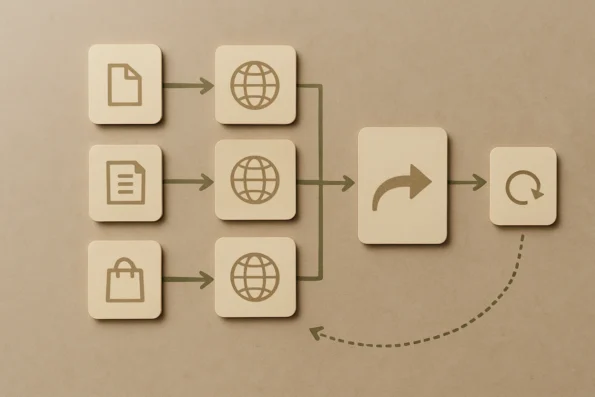
While automation can accelerate batch translation, project managers must remain vigilant against common pitfalls. Evidence highlights the risk of context loss, format breakage, and regulatory blind spots if processes are left unchecked. Mitigate these risks by maintaining strong editorial controls, establishing rollback policies, and verifying language outputs against compliance requirements. Regular auditing, as recommended in recent multilingual content automation analyses, further reduces the chance of error propagation. Assign routine review gates at defined batch intervals, and utilize error-logging to support rapid corrective action if unintended changes are detected.
Stepwise Implementation: Batch Processing, Progress Tracking, and Rollback
Executing a large-scale localization project in WordPress or WooCommerce requires a structured, risk-aware approach. NextlerAI Translator enables project managers to control scope, track progress, and recover swiftly from setbacks by leveraging its native integration with WordPress. This section breaks down the implementation into a clear sequence, ensuring each phase is manageable and resilient to common pitfalls. Utilizing a robust translation management system helps teams coordinate batch processing, track project status, and maintain version control throughout the localization process.
Phased Approach to High-Volume Localization
- Inventory and Segment Content: Begin by mapping the full set of WordPress pages, posts, WooCommerce products, and public custom post types eligible for localization. Group content logically into batches by type, business priority, or campaign schedule. This granular segmentation supports predictable resource allocation and allows for focused quality checks between phases.
- Prepare Site Backups: Before initiating any batch localization, create and verify a comprehensive backup of your WordPress database and content files. NextlerAI’s official recovery guidance underscores the importance of this step, as it provides a guaranteed fallback against accidental overwrites or technical failures during translation runs.
- Configure Batch Localization: Using NextlerAI Translator’s native workflow, select and queue each content batch for translation. The plugin’s batch processing capability is specifically designed for high-volume operations, ensuring that multiple items are localized efficiently while preserving the site’s layout and technical structure.
- Track Progress with WordPress-Native Tools: Monitor the status of each batch directly within the WordPress admin interface. Project managers can leverage built-in post statuses, custom dashboard filters, and taxonomy tags to visualize translation progress, flag issues, and coordinate review cycles. This native integration reduces friction and eliminates the need for external tracking tools.
- Review and Validate Each Batch: After a batch is processed, assign editorial review to verify language quality, SEO metadata accuracy, and technical integrity. Consistent validation at this stage limits the risk of mass error propagation and aligns with best practices recommended by global localization standards bodies.
- Employ Rollback and Recovery Features: If errors are detected—whether linguistic inaccuracies or structural inconsistencies—utilize NextlerAI Translator’s recovery options to revert affected content to its last known good state. According to the official guide, rollback can target individual translations or entire batches, providing essential protection in large-scale deployments.
- Iterate Batches and Update Backups: Once a batch is approved and published, update your site backup to capture the new state. Proceed with additional batches following the same controlled process. This stepwise method ensures continuous recoverability and operational stability across even the largest multilingual sites.
Why This Sequential Model Matters
This structured, phase-by-phase workflow is not just a project management best practice—it is a technical safeguard. By combining batch processing, native progress tracking, and robust rollback protocols, organizations can confidently scale their localization initiatives while minimizing the risk of data loss, workflow disruption, or compliance failures.
Implementation Notes: Collaboration and Editorial Workflows
Effective large-scale localization demands not only robust automation and technical controls, but also well-defined editorial and collaboration processes. For multilingual WordPress and WooCommerce environments, aligning team roles and ensuring editorial checkpoints are critical to maintaining content quality and operational accountability throughout the localization lifecycle. For a step-by-step breakdown on preparing WordPress and safely scaling up from a single page to a full site, consult the NextlerAI Translator complete guide. Effective collaboration in multilingual projects is supported by thorough localization documentation, which outlines editorial workflows and integration methods for global teams.
Editorial Role Assignment and Segmentation
Begin by mapping editorial roles to your project’s multilingual structure. Assign language leads or regional editors to oversee specific content sets. This segmentation is essential when localizing diverse content types—such as product taxonomies, SEO metadata, or custom post types—across multiple languages. Role clarity reduces miscommunication and ensures that no segment of the content inventory advances without domain-specific review. When working with high-volume or multi-regional projects, consider grouping editors by market or business unit to reflect organizational priorities and streamline the localization review pipeline. These assignments should be documented as part of your editorial governance policy and reviewed periodically to adapt to changing content strategies or personnel.
WordPress Permissions for Workflow Control
Leverage WordPress’s permission and user role architecture to segment access and responsibilities. By setting granular permissions, you can restrict translation initiation, batch approvals, and publication to authorized personnel. For example, translators may be allowed to submit drafts, while only senior editors or project managers can authorize publication. Such segmentation promotes transparency and aligns with best practices for editorial governance and audit trails recommended in international localization standards. Implementing custom roles or capabilities—using WordPress’s built-in role editor or compatible plugins—enables organizations to reflect their unique editorial hierarchies. It is important to regularly audit user permissions, especially after personnel changes or organizational restructuring, to ensure only appropriately trained individuals have access to sensitive batch actions like rollback and mass publishing.
Draft-Review-Publish Cycles in Collaborative Localization
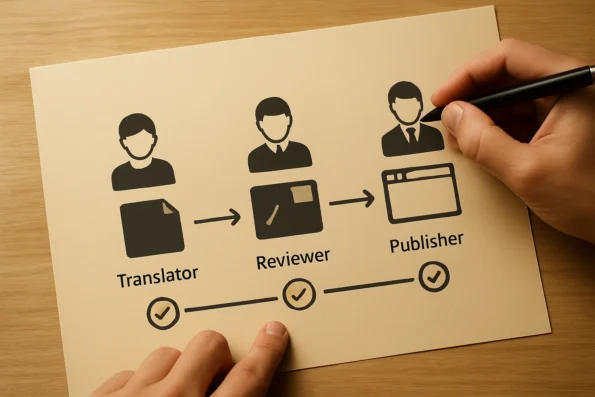
Adopt a draft-review-publish workflow to formalize collaboration. After batch localization with NextlerAI Translator, each content group should move through a structured review phase before publication. Editors evaluate linguistic accuracy, regulatory compliance, and contextual appropriateness. This checkpoint-driven approach is particularly important for regulated industries or regionally sensitive content, reflecting guidelines from leading localization authorities. Where WordPress’s native workflow does not provide sufficient granularity, third-party workflow plugins or editorial calendar tools can be introduced to specify review rounds, assign tasks, and notify stakeholders of pending approvals. Documentation of review outcomes and change requests should be maintained within the content management system for traceability and future reference.
Defining Handoffs Between Translation, Review, and Publication
Clear handoff protocols are essential. Specify when a batch is ready to leave translation, what review criteria must be met, and who is responsible for final signoff. Documenting these transitions prevents bottlenecks and ensures that rollbacks—when required—can be isolated to specific batches without affecting the broader project. Maintaining audit logs and change histories within WordPress further strengthens process integrity. For larger teams, it can be effective to document standard operating procedures (SOPs) for each handoff, including required checklists, escalation contacts, and signoff forms. This structure helps reinforce accountability and provides a reference point in the event of content disputes or compliance requests.
Integration With Editorial Workflow Automation Tools
For high-volume projects, integrate WordPress and NextlerAI Translator workflows with external editorial automation tools where appropriate. These may include approval routing systems, notification frameworks, or scheduling platforms that help orchestrate complex, multi-stage publishing. Automation tools should complement—not replace—human editorial controls, ensuring consistency, traceability, and compliance with international best practices as outlined by the W3C and EU official standards. Integration can be achieved using WordPress hooks, REST APIs, or compatible workflow automation plugins, allowing detailed status updates and approval notifications to flow between systems. When configuring integrations, define clear roles for automated actions versus manual checkpoints, and establish fallback procedures for automation errors or missed notifications, as recommended in the official NextlerAI workflow guide (nextlerai.com).
By investing in structured collaboration, granular permissions, and editorial automation that supports—but does not override—human oversight, organizations can mitigate the risks associated with high-volume multilingual localization and ensure a consistent, accountable, and audit-ready content operation. The next section will compare these collaborative mechanisms with other scale localization approaches to help guide your workflow design.
Comparative Criteria Table: Approaches to Localization at Scale
Choosing the right localization approach in WordPress environments hinges on technical controls, editorial oversight, and risk management. The table below compares principal mechanisms—batch processing, manual workflows, and automated pipelines—against essential criteria for large-scale projects. This side-by-side assessment clarifies tradeoffs in recoverability, error handling, and integration, helping organizations align process to content type, team size, and compliance demands. Each approach supports specific use cases, and understanding their differences is critical for sustained localization quality and project safety. To clarify exactly which content types and workflows are supported, refer to the comprehensive overview of NextlerAI WordPress WooCommerce integration.
| Approach | Recoverability (Rollback) | Editorial Oversight | Integration | Risk Mitigation | Best Suited For | Migration & Fallback Practices | Source |
|---|---|---|---|---|---|---|---|
| Batch Processing | Built-in batch rollback and recovery; supports phased restoration of localized content | Checkpoint review after each batch; progress tracked within WordPress | Native with WordPress content types, WooCommerce, SEO metadata | Structural backups required before each batch; error isolation at batch level | High-volume, multi-language projects with structured content; teams requiring strong audit trails | Recommended: pre-batch backups, staged migration, batch-level rollback | NextlerAI Translator documentation; NextlerAI Publisher Install, Update, Migration and Safe Rollback Guide |
| Manual Workflows | Individual item revision history; limited or no automated rollback for bulk errors | Direct editorial review per item; granular control | Compatible with all WordPress content, but labor-intensive for large volumes | Manual checkpoints reduce automation risk but increase human error potential | Small teams, low-volume or high-sensitivity content, compliance-driven reviews | Manual export/backup before changes; revert via individual revisions | W3C Internationalization Activity Blog |
| Automated Pipelines | Rollback depends on custom implementation or third-party plugins; not always batch-specific | Oversight requires integrated checkpoints or external review tools | Advanced integration via APIs and workflow automation plugins | Automation accelerates scale but increases risk of unreviewed propagation; fallback must be planned | Enterprise-scale localization, high-content volume, advanced workflow integration | Enforce routine backups, version control, external rollback scripting | SDL Trados Studio – Managing Large Translation Projects; Microsoft Globalization documentation |
This comparative table highlights the foundational mechanisms and safeguards that define each localization approach at scale. Batch processing is distinguished by its use of isolated transactional batches, allowing teams to localize large volumes of content methodically while preserving the ability to revert only affected segments if an error occurs. This mechanism, detailed in NextlerAI’s migration and rollback guide, also supports audit logging and checkpoint verification, enabling both technical and editorial leads to validate changes before advancing. Manual workflows, though offering granular content-by-content oversight, require careful coordination and pre-change exports to ensure data can be restored if needed—making them less suited to fast-moving projects where rollback needs to be immediate and comprehensive. Automated pipelines depend heavily on the implementation of external controls: without custom scripting or robust plugin support, errors can propagate unchecked, which elevates the necessity for routine system-wide backups and enforced version management. Across all methods, organizations must weigh the required level of editorial review, technical integration, and fallback assurance against the project’s scale and risk profile. These distinctions inform not only the initial selection but also long-term governance and operational resilience for localization at enterprise scale. Next, we’ll illustrate these tradeoffs in practice through a multi-language WooCommerce rollout scenario.
Illustrative Scenario: Managing a Multi-Language WooCommerce Launch
Illustrative Scenario: Consider a project lead tasked with launching a WooCommerce storefront in five new languages, covering hundreds of products and their associated categories, attributes, and SEO metadata. To ensure accuracy and oversight, this rollout adopts a phased, risk-controlled approach using NextlerAI Translator’s batch localization features and WordPress-native collaboration tools. When handling multilingual projects involving user data, the GDPR compliance workflow for WordPress and WooCommerce outlines actionable steps for privacy and audit logging with NextlerAI Translator.
Segmenting the Product Catalog for Prioritized Localization
The team begins by grouping the product catalog into logical batches—starting with high-revenue products and flagship categories. This segmentation enables focused translation assignments, allowing language specialists to tackle the most business-critical content first before proceeding to lower-priority inventory. These batches are mapped to project milestones, ensuring that progress remains transparent and manageable at scale. The segmentation also takes into account dependencies, such as shared product attributes and taxonomy terms, to avoid duplicated translation effort and preserve relational integrity across localized content. The team further refines batch assignments by grouping products that share similar technical requirements or are subject to specific regulatory conditions, ensuring each batch can be managed with the appropriate expertise and compliance checks.
Tracking Progress With WordPress Dashboards
To oversee the translation process, project managers use custom dashboards within WordPress. These dashboards are configured to display real-time batch status, language completion rates, and any flagged content requiring review. Such tracking enables immediate identification of bottlenecks and helps allocate editorial resources where they are needed most. The visibility supports timely interventions without disrupting ongoing localization work. Dashboards pull directly from NextlerAI Translator’s progress logs and WordPress post statuses, giving both technical and non-technical stakeholders accessible insight into batch flow, assignment status, and review timestamps. For added control, the dashboard includes filters for language, content type, and workflow stage, allowing granular oversight and facilitating rapid response to shifting project priorities or urgent quality concerns.
Enabling Batch Rollback for Quality Assurance
NextlerAI Translator’s rollback mechanism becomes critical when post-translation reviews uncover language issues or technical inconsistencies. Editors can revert specific batches to their pre-localized state, ensuring that problematic translations do not propagate to live environments. This safeguard allows the team to iterate translations without risking overall project stability or SEO integrity—especially important in high-traffic e-commerce launches. Rollbacks are logged at the batch level, with audit trails maintained for each change, enabling compliance with internal governance and external regulatory requirements. The mechanism supports selective rollback of only the affected language or content type within a batch, minimizing disruption to unaffected content and maintaining momentum for other language teams.
Establishing Editorial Checkpoints and Language Validation
For each language and product group, editorial checkpoints are defined. These include pre-publication reviews by native speakers, verification of product attributes, and metadata checks for compliance with local search requirements. WordPress user roles are leveraged to assign responsibility and document approvals, ensuring that every batch passes through consistent quality gates before publication. The use of custom workflow statuses and comment threads within WordPress further documents review conversations and approval criteria, supporting traceability and future audits. Editorial checkpoints are scheduled in alignment with market launch windows, and checkpoint outcomes are stored within the batch’s metadata, providing a permanent record of who approved each stage and when.
Integrating With Broader Workflow Automation Tools
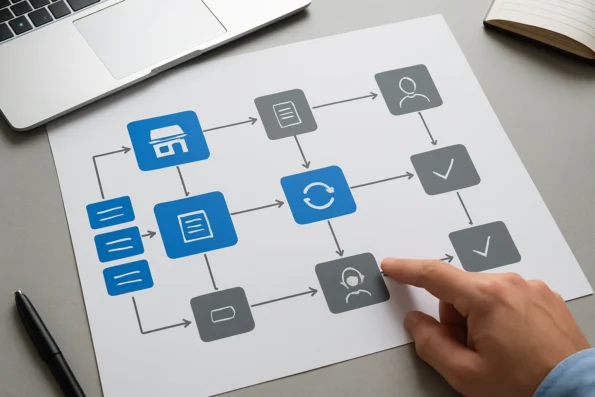
To further streamline the launch, the team examines integration options with enterprise workflow tools that monitor content status and automate notifications when batches are ready for review or rollback. This integration supports cross-departmental coordination—connecting localization progress with broader marketing, compliance, and technical operations while maintaining native WordPress control over publishing. According to NextlerAI’s article on workflow automation tools, connecting these systems via supported APIs or connectors can reduce delays and centralize stakeholder communication. Implementation may involve configuring webhook endpoints or API tokens in both WordPress and external tools, with permissions managed to ensure that only authorized actions—such as triggering rollbacks or sending review alerts—are permitted from external systems.
This scenario demonstrates how structured batch processing, progress tracking, rollback, and collaboration—supported by NextlerAI Translator—can be orchestrated for complex, multi-language WooCommerce deployments without sacrificing oversight or technical reliability.
FAQ
What types of content can NextlerAI Translator localize at scale?
NextlerAI Translator is engineered to handle high-volume localization across WordPress and WooCommerce, supporting the translation of pages, posts, WooCommerce products, public custom post types, taxonomies, SEO metadata, and any structured content natively managed by WordPress. During the localization process, NextlerAI preserves the original layout and technical data, including embedded media, custom fields, and relational links between content types. This ensures that content integrity is maintained regardless of the scale of the project, with all parent-child relationships, menu references, and asset paths preserved as part of the translation workflow.
How can project managers effectively track progress in multi-language projects?
Project managers can utilize WordPress-native tracking tools, such as status dashboards and content filters, to monitor localization progress. These capabilities provide real-time batch-level visibility and allow the segmentation of inventories by language, content type, or editorial responsibility. For high-volume projects, progress tracking can be further refined through customized taxonomies or grouping logic, which enables managers to monitor completion percentages, flag bottlenecks, and assign remedial actions. Every change, status update, or review action can be logged using WordPress audit tools or workflow plugins, supporting both oversight and compliance reporting needs.
What are the key criteria for choosing a large-scale localization workflow?
Key criteria include the nature and quantity of content, the number of target languages, editorial oversight needs, and organizational risk tolerance. Additional considerations involve the technical integration with existing editorial or compliance tools, auditability of the process, and the robustness of rollback and recovery options. For organizations subject to regulatory or accessibility standards, alignment with W3C and EU localization best practices is recommended. The workflow should support clear batch segmentation, maintain a verifiable change history, and enable quick restoration if issues arise. These criteria ensure that localization can proceed at scale without compromising site performance, compliance, or editorial control.
How do rollback and recovery options safeguard large localization projects?
Rollback and recovery mechanisms enable selective reversion of localized content batches, allowing teams to undo recent changes without disturbing the underlying site structure or unrelated content. These features protect against translation errors, accidental overwrites, or regulatory compliance lapses by restoring content to a previously validated state. Robust rollback controls are especially vital in large-scale deployments, where a single error can impact hundreds or thousands of content items. NextlerAI Translator’s transactional rollback functionality ensures that all related metadata, asset links, and structural relationships are preserved during recovery, minimizing downtime and reducing the risk of data loss.
What collaboration workflows are supported or recommended?
Effective collaboration in large-scale localization is facilitated by explicit editorial role assignments and access segmentation using WordPress permissions. Structured draft-review-publish cycles ensure content is reviewed by the appropriate stakeholders before publication. Teams can further enhance these systems with workflow plugins that provide granular task management, automated notifications, and full audit trails for every action. This approach helps ensure accountability, prevents unauthorized changes, and documents all handoffs and approvals. Regular audits of custom roles and permissions are recommended to maintain workflow integrity and compliance as team structures evolve.
How does NextlerAI Translator compare to other AI translation approaches for scale?
NextlerAI Translator differentiates itself through its deep integration with WordPress and WooCommerce, supporting batch processing and transactional rollback directly within the CMS environment. Unlike standalone AI translation services or generic machine translation APIs, NextlerAI maintains content structure, metadata, and technical integrity throughout the localization process. Its ability to manage large inventories, preserve relational links, and support enterprise-grade auditability makes it uniquely suited for organizations with complex, high-volume localization requirements—capabilities not universally available in external translation tools.
Conclusion
Coordinating large-scale localization in WordPress or WooCommerce requires more than technical automation; it demands a structured approach to risk management, editorial oversight, and workflow segmentation. By leveraging NextlerAI Translator’s batch processing, native integration, and rollback capabilities, organizations can orchestrate multilingual rollouts with confidence that site structure and content integrity will be preserved. This approach aligns with global standards for internationalization, ensuring that localization operations scale without compromising compliance or auditability.
Effective localization at scale is fundamentally a process of informed decision-making and disciplined implementation. Choices about content inventory segmentation, batch size, and language priorities should be grounded in both technical constraints and business objectives. The mechanisms provided by NextlerAI Translator, such as transactional batch localization and fine-grained rollback, support these decisions by enabling granular control over change management and error recovery. Editorial oversight—facilitated through WordPress-native roles and checkpoints—plays a critical role in maintaining quality, while integration with existing workflow automation tools ensures cross-team alignment and minimizes operational friction. Each of these elements reduces the potential for disruptive errors, accelerates response to quality issues, and supports traceability for compliance audits. By synthesizing risk controls, technical safeguards, and collaborative review within a unified workflow, organizations can scale localization projects with predictable outcomes and robust governance.
As your next step, assemble an interdisciplinary project team to define clear role assignments, audit your current content inventory by type and language, and map out phased localization batches. This upfront investment in planning and governance is essential for maintaining control and quality as localization efforts expand.